Thank you for visiting SNEWPapers!
Sign up free
Literary
May 29, 1841
The Mississippi Creole
Canton, Madison County, Mississippi
What is this article about?
A collection of anecdotes describing the final moments of renowned intellectuals and writers, including Rousseau bidding farewell to nature, Roscommon reciting verse, and Keats sensing his grave.
Clipping
OCR Quality
98%
Excellent
Full Text
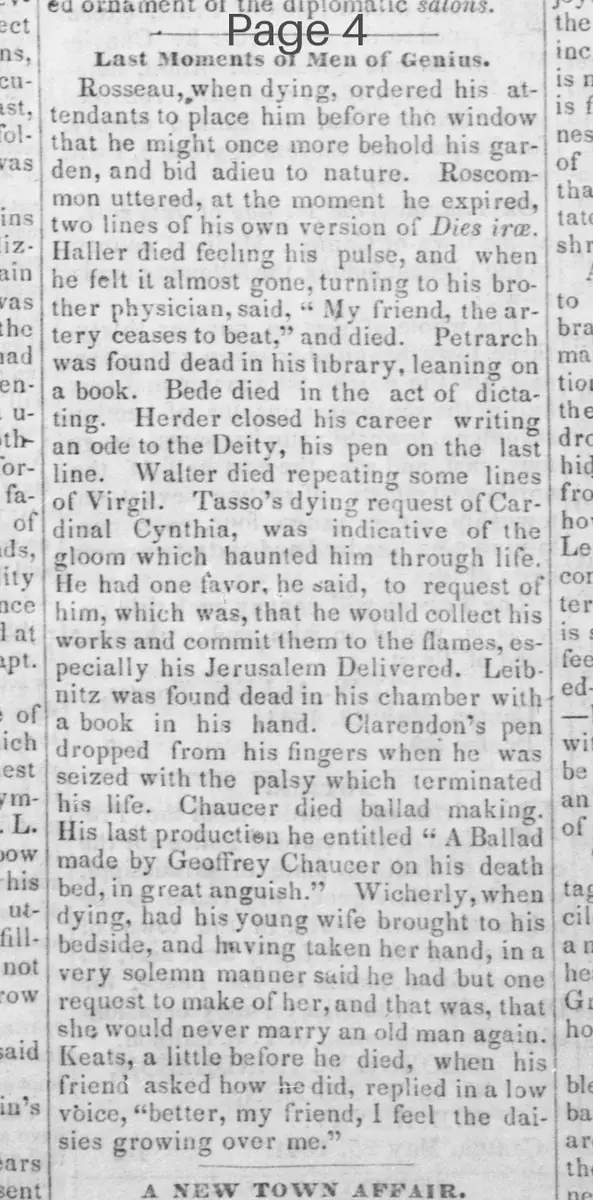
Last Moments of Men of Genius.
Rousseau, when dying, ordered his attendants to place him before the window that he might once more behold his garden, and bid adieu to nature. Roscommon uttered, at the moment he expired, two lines of his own version of Dies iræ.
Haller died feeling his pulse, and when he felt it almost gone, turning to his brother physician, said, "My friend, the artery ceases to beat," and died. Petrarch was found dead in his library, leaning on a book. Bede died in the act of dictating. Herder closed his career writing an ode to the Deity, his pen on the last line. Waller died repeating some lines of Virgil. Tasso's dying request of Cardinal Cynthio, was indicative of the gloom which haunted him through life.
He had one favor, he said, to request of him, which was, that he would collect his works and commit them to the flames, especially his Jerusalem Delivered. Leibnitz was found dead in his chamber with a book in his hand. Clarendon's pen dropped from his fingers when he was seized with the palsy which terminated his life. Chaucer died ballad making.
His last production he entitled "A Ballad made by Geoffrey Chaucer on his death bed, in great anguish." Wycherly, when dying, had his young wife brought to his bedside, and having taken her hand, in a very solemn manner said he had but one request to make of her, and that was, that she would never marry an old man again.
Keats, a little before he died, when his friend asked how he did, replied in a low voice, "better, my friend, I feel the daisies growing over me."
Rousseau, when dying, ordered his attendants to place him before the window that he might once more behold his garden, and bid adieu to nature. Roscommon uttered, at the moment he expired, two lines of his own version of Dies iræ.
Haller died feeling his pulse, and when he felt it almost gone, turning to his brother physician, said, "My friend, the artery ceases to beat," and died. Petrarch was found dead in his library, leaning on a book. Bede died in the act of dictating. Herder closed his career writing an ode to the Deity, his pen on the last line. Waller died repeating some lines of Virgil. Tasso's dying request of Cardinal Cynthio, was indicative of the gloom which haunted him through life.
He had one favor, he said, to request of him, which was, that he would collect his works and commit them to the flames, especially his Jerusalem Delivered. Leibnitz was found dead in his chamber with a book in his hand. Clarendon's pen dropped from his fingers when he was seized with the palsy which terminated his life. Chaucer died ballad making.
His last production he entitled "A Ballad made by Geoffrey Chaucer on his death bed, in great anguish." Wycherly, when dying, had his young wife brought to his bedside, and having taken her hand, in a very solemn manner said he had but one request to make of her, and that was, that she would never marry an old man again.
Keats, a little before he died, when his friend asked how he did, replied in a low voice, "better, my friend, I feel the daisies growing over me."
What sub-type of article is it?
Essay
What themes does it cover?
Death Mortality
What keywords are associated?
Deathbed Moments
Men Of Genius
Literary Deaths
Historical Anecdotes
Final Words
Literary Details
Title
Last Moments Of Men Of Genius.
Subject
Dying Moments Of Famous Men Of Genius
Key Lines
Rousseau, When Dying, Ordered His Attendants To Place Him Before The Window That He Might Once More Behold His Garden, And Bid Adieu To Nature.
Keats, A Little Before He Died, When His Friend Asked How He Did, Replied In A Low Voice, "Better, My Friend, I Feel The Daisies Growing Over Me."