Thank you for visiting SNEWPapers!
Sign up free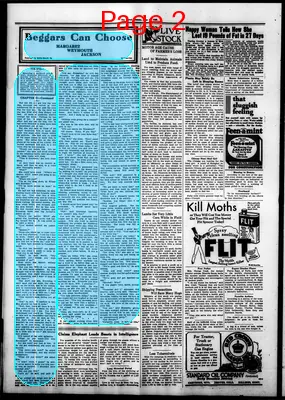
Literary
June 19, 1930
The Ronan Pioneer
Ronan, Lake County, Montana
What is this article about?
In this chapter continuation, Ernestine anxiously reunites with Will after his absence, caused by his mother's concerns about their secret romance due to class differences. They confess their love and decide to marry secretly that day, then announce it to her shocked family at tea, defying parental disapproval.
Clipping
OCR Quality
95%
Excellent
Full Text
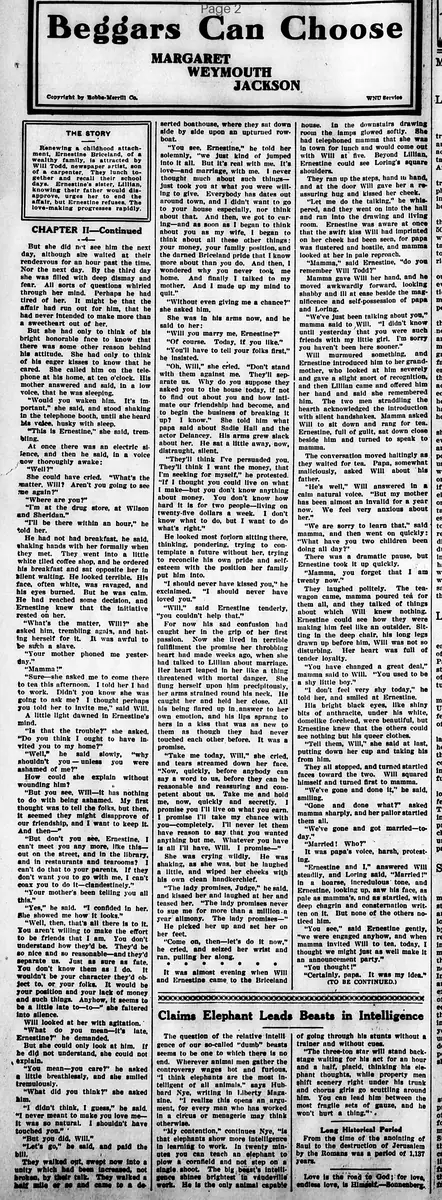
Beggars Can Choose
MARGARET WEYMOUTH JACKSON
Copyright by Bobbs-Merrill Co. WNU Service
CHAPTER II--Continued
The story Renewing a childhood attachment, Ernestine Briceland, of wealthy family, is attracted by Will Todd, newspaper artist, son of a carpenter. They lunch together and recall their school days. Ernestine's sister, Lillian, knowing their father would disapprove, urges her to end the affair, but Ernestine refuses. The love-making progresses rapidly.
But she did not see him the next day, although she waited at their rendezvous for an hour past the time. Nor the next day. By the third day she was filled with deep dismay and fear. All sorts of questions whirled through her mind. Perhaps he had tired of her. It might be that the affair had run out for him, that he had never intended to make more than a sweetheart out of her. But she had only to think of his bright honorable face to know that there was some other reason behind his attitude. She had only to think of his eager kisses to know that he cared. She called him on the telephone at his home, at ten o'clock. His mother answered and said, in a low voice, that he was sleeping. "Would you waken him. It's important," she said, and stood shaking in the telephone booth, until she heard his voice, husky with sleep. "This is Ernestine," she said, trembling. At once there was an electric silence, and then he said, in a voice now thoroughly awake: "Well?" She could have cried. "What's the matter, Will? Aren't you going to see me again?" "Where are you?" "I'm at the drug store, at Wilson and Sheridan." "I'll be there within an hour," he told her. He had not had breakfast, he said, shaking hands with her formally when they met. They went into a little white tiled coffee shop, and he ordered his breakfast and sat opposite her in silent waiting. He looked terrible. His face, often white, was ravaged, and his eyes burned. But he was calm. He had reached some decision, and Ernestine knew that the initiative rested on her. "What's the matter, Will?" she asked him, trembling again, and hating herself for it. It was awful to be such a slave. "Your mother phoned me yesterday." "Mamma!" "Sure she asked me to come there to tea this afternoon. I told her I had to work. Didn't you know she was going to ask me? I thought perhaps you told her to invite me," said Will. A little light dawned in Ernestine's mind. "Is that the trouble?" she asked. "Do you think I ought to have invited you to my home?" "Well," he said slowly, "why shouldn't you--unless you were ashamed of me?" How could she explain without wounding him? "But you see, Will--it has nothing to do with being ashamed. My first thought was to tell the folks, but then it seemed they might disapprove of our friendship, and I want to keep it. And then--" "But don't you see, Ernestine? I can't meet you any more like this--out on the street, and in the library, and in restaurants and tearooms? I can't do that to your parents. If they don't want you to go with me, I can't coax you to do it--clandestinely." "Your mother's been telling you all this." "Yes," he said. "I confided in her. She showed me how it looks." "Well, then, that's all there is to it. You aren't willing to make the effort to be friends that I am. You don't understand how they'd be. They'd be so nice and so reasonable--and they'd separate us. Just as sure as fate. You don't know them as I do. It wouldn't be your character they'd object to, or your folks. It would be your position and your lack of money and such things. Anyhow, it seems to be a little late to--to--" she faltered into silence. Will looked at her with agitation. "What do you mean--it's late, Ernestine?" he demanded. But she could only look at him. If he did not understand, she could not explain. "You mean--you care?" he asked a little breathlessly, and she smiled tremulously. "What did you think?" she asked him. "I didn't think, I guess," he said. "I never meant to make you love me--it was so natural. I shouldn't have touched you." "But you--did, Will." "Let's go," he said, and paid the bill. They walked out, swept now into a unity which had been increased, not broken, by their talk. They walked to the deserted boathouse, where they sat down side by side upon an upturned rowboat. In the downstairs drawing room the lamps glowed softly. She had telephoned mamma that she was in town for lunch and would come out at five. "You see, Ernestine," he told her solemnly, "we just kind of jumped into it all. But it's real with me. It's love--and marriage, with me. I never thought much about such things just took you at what you were willing to give. Everybody has dates out around town, and I didn't want to go to your house especially, nor think about that. And then, we got to carrying--and as soon as I began to think about you as my wife, I began to think about all these other things: your money, your family position, and the darned Briceland pride that I know more about than you do. And then, I wondered why you never took me home. And finally I talked to my mother. And I made up my mind to quit." "Without even giving me a chance?" she asked him. She was in his arms now, and he said to her: "Will you marry me, Ernestine?" "Of course. Today, if you like." "You'll have to tell your folks first," he insisted. "Oh, Will," she cried. "Don't stand with them against me. They'll separate us. Why do you suppose they asked you to the house today, if not to begin the business of breaking it up? I know." She told him what papa said about Sadie Hall and the actor Delancey. His arms grew slack and he turned to speak to mamma. "They'll think I've persuaded you. They'll think I want the money, that I'm seeking for myself," he protested. "If I thought you could live on what I make--but you don't know anything about money. You don't know how hard it is for two people--living on twenty-five dollars a week. I don't know what to do, but I want to do what's right." "We are sorry to learn that," said mamma, and then went on quickly: "What have you two children been doing all day?" There was a dramatic pause, but Ernestine took it up quickly. "Mamma, you forget that I am twenty now." "I should never have kissed you," he exclaimed. They laughed politely. The tea-wagon came, mamma poured tea for them all, and they talked of things about which Will knew nothing. Ernestine could see how they were making him feel like an outsider. Sitting in the deep chair, his long legs drawn up before him, Will was not so disturbing. For now his sad confusion caught her in the grip of her first passion. Now she lived in terrible fulfillment the promise her throbbing heart had made weeks ago, when she had talked to Lillian about marriage. Her heart was full of tender loyalty. "You have changed a great deal," mamma said to Will. "You used to be a shy little boy." "I don't feel very shy today," he told her, and smiled at Ernestine. She flung herself upon him precipitously. Her arms strained round his neck. He caught her and held her close. His bright black eyes, like shiny bits of anthracite under his white, domelike forehead, were beautiful, but Ernestine knew that the others could see nothing but his queer clothes. All his being flared up in answer to her own emotion, and his lips sprang to hers in a kiss that was as new to them as though they had never touched each other before. It was a promise. "Tell them, Will," she said at last, putting down her cup and taking his from him. "Take me today, Will," she cried, and tears streamed down her face. They all stopped, and turned startled faces toward the two. Will squared himself and turned first to mamma. "I've gone and done it," he said smiling. "Gone and done what?" asked mamma sharply, and her pallor startled them all. "We've gone and got married--to-day." "Married! Who?" It was papa's voice, harsh, protesting. She was crying wildly. He was shaking, as she was, but he laughed a little, and wiped her cheeks with his own clean handkerchief. "Ernestine and I." answered Will steadily, and Loring said, "Married!" in a hoarse, incredulous tone, and then Ernestine, looking up, saw his face, as pale as mamma's, and as startled, with deep chagrin and consternation written ten on it. But none of the others noticed him. "The lady promises, Judge," he said. He picked her up and set her on her feet. "You see, we were engaged anyhow, and when mamma invited Will to tea, today, I thought we might just as well make it an announcement party." "You thought!" "Certainly, papa. It was my idea." "Come on, then--let's do it now." he cried, and seized her wrist and ran, pulling her along. It was almost evening when Will and Ernestine came to the Briceland home. (TO BE CONTINUED.)
MARGARET WEYMOUTH JACKSON
Copyright by Bobbs-Merrill Co. WNU Service
CHAPTER II--Continued
The story Renewing a childhood attachment, Ernestine Briceland, of wealthy family, is attracted by Will Todd, newspaper artist, son of a carpenter. They lunch together and recall their school days. Ernestine's sister, Lillian, knowing their father would disapprove, urges her to end the affair, but Ernestine refuses. The love-making progresses rapidly.
But she did not see him the next day, although she waited at their rendezvous for an hour past the time. Nor the next day. By the third day she was filled with deep dismay and fear. All sorts of questions whirled through her mind. Perhaps he had tired of her. It might be that the affair had run out for him, that he had never intended to make more than a sweetheart out of her. But she had only to think of his bright honorable face to know that there was some other reason behind his attitude. She had only to think of his eager kisses to know that he cared. She called him on the telephone at his home, at ten o'clock. His mother answered and said, in a low voice, that he was sleeping. "Would you waken him. It's important," she said, and stood shaking in the telephone booth, until she heard his voice, husky with sleep. "This is Ernestine," she said, trembling. At once there was an electric silence, and then he said, in a voice now thoroughly awake: "Well?" She could have cried. "What's the matter, Will? Aren't you going to see me again?" "Where are you?" "I'm at the drug store, at Wilson and Sheridan." "I'll be there within an hour," he told her. He had not had breakfast, he said, shaking hands with her formally when they met. They went into a little white tiled coffee shop, and he ordered his breakfast and sat opposite her in silent waiting. He looked terrible. His face, often white, was ravaged, and his eyes burned. But he was calm. He had reached some decision, and Ernestine knew that the initiative rested on her. "What's the matter, Will?" she asked him, trembling again, and hating herself for it. It was awful to be such a slave. "Your mother phoned me yesterday." "Mamma!" "Sure she asked me to come there to tea this afternoon. I told her I had to work. Didn't you know she was going to ask me? I thought perhaps you told her to invite me," said Will. A little light dawned in Ernestine's mind. "Is that the trouble?" she asked. "Do you think I ought to have invited you to my home?" "Well," he said slowly, "why shouldn't you--unless you were ashamed of me?" How could she explain without wounding him? "But you see, Will--it has nothing to do with being ashamed. My first thought was to tell the folks, but then it seemed they might disapprove of our friendship, and I want to keep it. And then--" "But don't you see, Ernestine? I can't meet you any more like this--out on the street, and in the library, and in restaurants and tearooms? I can't do that to your parents. If they don't want you to go with me, I can't coax you to do it--clandestinely." "Your mother's been telling you all this." "Yes," he said. "I confided in her. She showed me how it looks." "Well, then, that's all there is to it. You aren't willing to make the effort to be friends that I am. You don't understand how they'd be. They'd be so nice and so reasonable--and they'd separate us. Just as sure as fate. You don't know them as I do. It wouldn't be your character they'd object to, or your folks. It would be your position and your lack of money and such things. Anyhow, it seems to be a little late to--to--" she faltered into silence. Will looked at her with agitation. "What do you mean--it's late, Ernestine?" he demanded. But she could only look at him. If he did not understand, she could not explain. "You mean--you care?" he asked a little breathlessly, and she smiled tremulously. "What did you think?" she asked him. "I didn't think, I guess," he said. "I never meant to make you love me--it was so natural. I shouldn't have touched you." "But you--did, Will." "Let's go," he said, and paid the bill. They walked out, swept now into a unity which had been increased, not broken, by their talk. They walked to the deserted boathouse, where they sat down side by side upon an upturned rowboat. In the downstairs drawing room the lamps glowed softly. She had telephoned mamma that she was in town for lunch and would come out at five. "You see, Ernestine," he told her solemnly, "we just kind of jumped into it all. But it's real with me. It's love--and marriage, with me. I never thought much about such things just took you at what you were willing to give. Everybody has dates out around town, and I didn't want to go to your house especially, nor think about that. And then, we got to carrying--and as soon as I began to think about you as my wife, I began to think about all these other things: your money, your family position, and the darned Briceland pride that I know more about than you do. And then, I wondered why you never took me home. And finally I talked to my mother. And I made up my mind to quit." "Without even giving me a chance?" she asked him. She was in his arms now, and he said to her: "Will you marry me, Ernestine?" "Of course. Today, if you like." "You'll have to tell your folks first," he insisted. "Oh, Will," she cried. "Don't stand with them against me. They'll separate us. Why do you suppose they asked you to the house today, if not to begin the business of breaking it up? I know." She told him what papa said about Sadie Hall and the actor Delancey. His arms grew slack and he turned to speak to mamma. "They'll think I've persuaded you. They'll think I want the money, that I'm seeking for myself," he protested. "If I thought you could live on what I make--but you don't know anything about money. You don't know how hard it is for two people--living on twenty-five dollars a week. I don't know what to do, but I want to do what's right." "We are sorry to learn that," said mamma, and then went on quickly: "What have you two children been doing all day?" There was a dramatic pause, but Ernestine took it up quickly. "Mamma, you forget that I am twenty now." "I should never have kissed you," he exclaimed. They laughed politely. The tea-wagon came, mamma poured tea for them all, and they talked of things about which Will knew nothing. Ernestine could see how they were making him feel like an outsider. Sitting in the deep chair, his long legs drawn up before him, Will was not so disturbing. For now his sad confusion caught her in the grip of her first passion. Now she lived in terrible fulfillment the promise her throbbing heart had made weeks ago, when she had talked to Lillian about marriage. Her heart was full of tender loyalty. "You have changed a great deal," mamma said to Will. "You used to be a shy little boy." "I don't feel very shy today," he told her, and smiled at Ernestine. She flung herself upon him precipitously. Her arms strained round his neck. He caught her and held her close. His bright black eyes, like shiny bits of anthracite under his white, domelike forehead, were beautiful, but Ernestine knew that the others could see nothing but his queer clothes. All his being flared up in answer to her own emotion, and his lips sprang to hers in a kiss that was as new to them as though they had never touched each other before. It was a promise. "Tell them, Will," she said at last, putting down her cup and taking his from him. "Take me today, Will," she cried, and tears streamed down her face. They all stopped, and turned startled faces toward the two. Will squared himself and turned first to mamma. "I've gone and done it," he said smiling. "Gone and done what?" asked mamma sharply, and her pallor startled them all. "We've gone and got married--to-day." "Married! Who?" It was papa's voice, harsh, protesting. She was crying wildly. He was shaking, as she was, but he laughed a little, and wiped her cheeks with his own clean handkerchief. "Ernestine and I." answered Will steadily, and Loring said, "Married!" in a hoarse, incredulous tone, and then Ernestine, looking up, saw his face, as pale as mamma's, and as startled, with deep chagrin and consternation written ten on it. But none of the others noticed him. "The lady promises, Judge," he said. He picked her up and set her on her feet. "You see, we were engaged anyhow, and when mamma invited Will to tea, today, I thought we might just as well make it an announcement party." "You thought!" "Certainly, papa. It was my idea." "Come on, then--let's do it now." he cried, and seized her wrist and ran, pulling her along. It was almost evening when Will and Ernestine came to the Briceland home. (TO BE CONTINUED.)
What sub-type of article is it?
Prose Fiction
What themes does it cover?
Love Romance
Social Manners
What keywords are associated?
Romance
Class Difference
Secret Marriage
Family Opposition
Childhood Sweethearts
Social Class
Elopement
What entities or persons were involved?
Margaret Weymouth Jackson
Literary Details
Title
Chapter Ii Continued
Author
Margaret Weymouth Jackson
Subject
Renewing A Childhood Attachment Leading To Secret Marriage Despite Family Disapproval
Form / Style
Romantic Narrative Chapter
Key Lines
"Will You Marry Me, Ernestine?" "Of Course. Today, If You Like."
"We've Gone And Got Married To Day."
"Take Me Today, Will," She Cried, And Tears Streamed Down Her Face.
"I Should Never Have Kissed You," He Exclaimed.
It Was Almost Evening When Will And Ernestine Came To The Briceland Home.