Thank you for visiting SNEWPapers!
Sign up free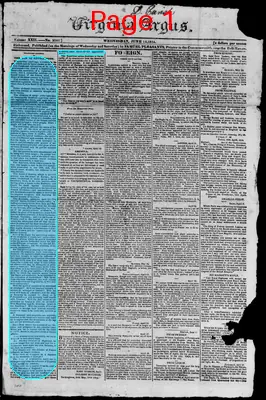
Editorial
June 15, 1814
Virginia Argus
Richmond, Virginia
What is this article about?
This editorial reflects on the French Revolution's 24-year span, its profound impacts on Europe, the restoration of the Bourbons, and shifts in power among monarchies like Austria and Russia. It questions future consequences for commerce, industry, and peace, and urges the United States to actively shape its fortunes amid European monarchs' influences, especially England's.
Clipping
OCR Quality
98%
Excellent
Full Text
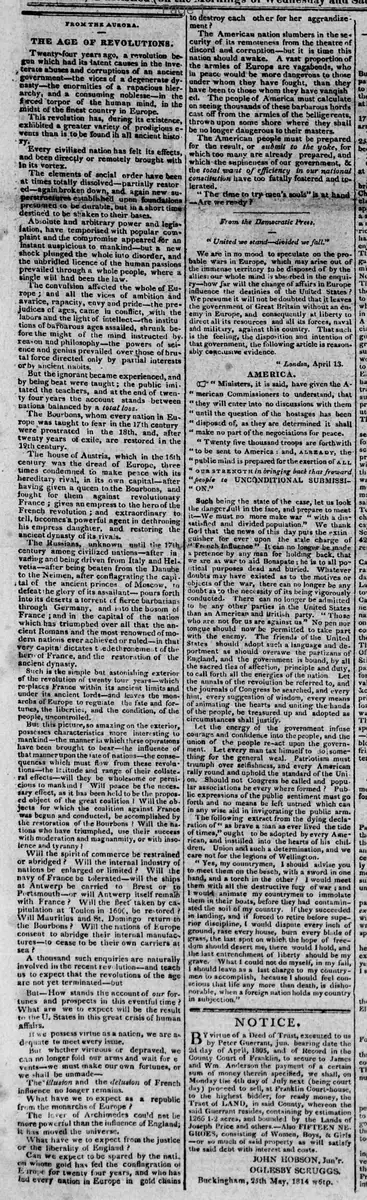
THE AGE OF REVOLUTIONS
Twenty four years ago, a revolution begun which had its latent causes in the inveterate abuses and corruptions of an ancient government—the vices of a degenerate dynasty—the enormities of a rapacious hierarchy, and a consuming noblesse—in the forced torpor of the human mind, in the midst of the finest country in Europe.
This revolution has, during its existence, exhibited a greater variety of prodigious events than is to be found in all ancient history.
Every civilized nation has felt its effects, and been directly or remotely brought within its vortex.
The elements of social order have been at times totally dissolved—partially restored—again broken down, and again new superstructures established upon foundations presumed to be durable, but in a short time destined to be shaken to their bases.
Absolute and arbitrary power and legislation, have temporised with popular complaint and this compromise appeared for an instant auspicious to mankind but a new shock plunged the whole into disorder, and the unbridled licence of the human passions prevailed through a whole people, where a single will had been the law.
The convulsion affected the whole of Europe; and all the vices of ambition and avarice, rapacity, envy and pride—the prejudices of ages, came in conflict, with the labors and the light of intellect—the institutions of barbarous ages assailed, shrunk before the might of the mind instructed by reason and philosophy—the powers of science and genius prevailed over those of brutal force directed only by partial interests or by ancient habits.
But the ignorant became experienced, and by being beat were taught; the public imitated the teachers, and at the end of twenty four years the account stands between nations balanced by a total loss.
The Bourbons, whom every nation in Europe was taught to fear in the 17th century were prostrated in the 18th, and, after twenty years of exile, are restored in the 19th century—
The house of Austria, which in the 15th century was the dread of Europe, three times condemned to make peace with its hereditary rival, in its own capital—after having given a queen to the Bourbons, and fought for them against revolutionary France; gives an empress to the hero of the French revolution; and extraordinary to tell, becomes a powerful agent in dethroning his empress daughter, and restoring the ancient dynasty of its rivals.
The Russians, unknown until the 17th century among civilized nations—after invading and being driven from Italy and Helvetia—after being beaten from the Danube to the Niemen, after conflagrating the capital of the ancient princes of Moscow, to defeat the glory of its assailant—pours forth into its deserts a torrent of fierce barbarians through Germany, and into the bosom of France; and in the capital of the nation which has triumphed over all that the ancient Romans and the most renowned of modern nations ever achieved or ruled—in that very Capital! dictates the dethronement of the hero of France, and the restoration of the ancient dynasty.
Such is the simple but astonishing exterior of the revolution of twenty four years—which re-places France within its ancient limits and under its ancient lords—and leaves the monarchs of Europe to regulate the fate and fortunes, the liberties, and the condition, of the people, uncontrolled.
But this picture, so amazing on the exterior, possesses characteristics more interesting to mankind—the manner in which these operations have been brought to bear—the influence of that manner upon the state of nations—the consequences which must flow from these revolutions—the latitude and range of their collateral effects—will they be wholesome or pernicious to mankind? Will peace be the necessary effect, as it has been held to be the proposed object of the great coalition? Will the objects for which the coalition against France was begun and conducted, be accomplished by the restoration of the Bourbons? Will the nations who have triumphed, use their success with moderation and magnanimity, or with insolence and tyranny?
Will the spirit of commerce be restrained or abridged? Will the internal industry of nations be enlarged or limited? Will the navy of France be tolerated—will the ships at Antwerp be carried to Brest or to Portsmouth—or will Antwerp itself remain with France? Will the Fleet taken by capitulation at Toulon in 1793, be restored? Will Mauritius and St. Domingo return to the Bourbons? Will the nations of Europe consent to abridge their internal manufactures—to cease to be their own Carriers at sea?
A thousand such enquiries are naturally involved in the recent revolution—and teach us to expect that the revolutions of the age are not yet terminated—but
But—How stands the account of our fortunes and prospects in this eventful time?
What are we to expect will be the result to the U. States in this great crisis of human affairs.
If we possess virtue as a nation, we are adequate to meet every issue.
But whether virtuous or depraved, we can no longer fold our arms and wait for events—we must make our own fortunes, or we shall be unmade—
The illusion and the delusion of French influence no longer remains.
What have we to expect as a republic from the monarchs of Europe?
The lever of Archimedes could not be more powerful than the influence of England; it has moved the universe.
What have we to expect from the justice or the liberality of England?
Can we expect to be spared by the nation whose gold has fed the conflagration of Europe for twenty four years, and who has led every nation in Europe in gold chains to destroy each other for her aggrandizement?
Twenty four years ago, a revolution begun which had its latent causes in the inveterate abuses and corruptions of an ancient government—the vices of a degenerate dynasty—the enormities of a rapacious hierarchy, and a consuming noblesse—in the forced torpor of the human mind, in the midst of the finest country in Europe.
This revolution has, during its existence, exhibited a greater variety of prodigious events than is to be found in all ancient history.
Every civilized nation has felt its effects, and been directly or remotely brought within its vortex.
The elements of social order have been at times totally dissolved—partially restored—again broken down, and again new superstructures established upon foundations presumed to be durable, but in a short time destined to be shaken to their bases.
Absolute and arbitrary power and legislation, have temporised with popular complaint and this compromise appeared for an instant auspicious to mankind but a new shock plunged the whole into disorder, and the unbridled licence of the human passions prevailed through a whole people, where a single will had been the law.
The convulsion affected the whole of Europe; and all the vices of ambition and avarice, rapacity, envy and pride—the prejudices of ages, came in conflict, with the labors and the light of intellect—the institutions of barbarous ages assailed, shrunk before the might of the mind instructed by reason and philosophy—the powers of science and genius prevailed over those of brutal force directed only by partial interests or by ancient habits.
But the ignorant became experienced, and by being beat were taught; the public imitated the teachers, and at the end of twenty four years the account stands between nations balanced by a total loss.
The Bourbons, whom every nation in Europe was taught to fear in the 17th century were prostrated in the 18th, and, after twenty years of exile, are restored in the 19th century—
The house of Austria, which in the 15th century was the dread of Europe, three times condemned to make peace with its hereditary rival, in its own capital—after having given a queen to the Bourbons, and fought for them against revolutionary France; gives an empress to the hero of the French revolution; and extraordinary to tell, becomes a powerful agent in dethroning his empress daughter, and restoring the ancient dynasty of its rivals.
The Russians, unknown until the 17th century among civilized nations—after invading and being driven from Italy and Helvetia—after being beaten from the Danube to the Niemen, after conflagrating the capital of the ancient princes of Moscow, to defeat the glory of its assailant—pours forth into its deserts a torrent of fierce barbarians through Germany, and into the bosom of France; and in the capital of the nation which has triumphed over all that the ancient Romans and the most renowned of modern nations ever achieved or ruled—in that very Capital! dictates the dethronement of the hero of France, and the restoration of the ancient dynasty.
Such is the simple but astonishing exterior of the revolution of twenty four years—which re-places France within its ancient limits and under its ancient lords—and leaves the monarchs of Europe to regulate the fate and fortunes, the liberties, and the condition, of the people, uncontrolled.
But this picture, so amazing on the exterior, possesses characteristics more interesting to mankind—the manner in which these operations have been brought to bear—the influence of that manner upon the state of nations—the consequences which must flow from these revolutions—the latitude and range of their collateral effects—will they be wholesome or pernicious to mankind? Will peace be the necessary effect, as it has been held to be the proposed object of the great coalition? Will the objects for which the coalition against France was begun and conducted, be accomplished by the restoration of the Bourbons? Will the nations who have triumphed, use their success with moderation and magnanimity, or with insolence and tyranny?
Will the spirit of commerce be restrained or abridged? Will the internal industry of nations be enlarged or limited? Will the navy of France be tolerated—will the ships at Antwerp be carried to Brest or to Portsmouth—or will Antwerp itself remain with France? Will the Fleet taken by capitulation at Toulon in 1793, be restored? Will Mauritius and St. Domingo return to the Bourbons? Will the nations of Europe consent to abridge their internal manufactures—to cease to be their own Carriers at sea?
A thousand such enquiries are naturally involved in the recent revolution—and teach us to expect that the revolutions of the age are not yet terminated—but
But—How stands the account of our fortunes and prospects in this eventful time?
What are we to expect will be the result to the U. States in this great crisis of human affairs.
If we possess virtue as a nation, we are adequate to meet every issue.
But whether virtuous or depraved, we can no longer fold our arms and wait for events—we must make our own fortunes, or we shall be unmade—
The illusion and the delusion of French influence no longer remains.
What have we to expect as a republic from the monarchs of Europe?
The lever of Archimedes could not be more powerful than the influence of England; it has moved the universe.
What have we to expect from the justice or the liberality of England?
Can we expect to be spared by the nation whose gold has fed the conflagration of Europe for twenty four years, and who has led every nation in Europe in gold chains to destroy each other for her aggrandizement?
What sub-type of article is it?
War Or Peace
Foreign Affairs
Economic Policy
What keywords are associated?
French Revolution
Bourbon Restoration
European Monarchies
War Coalition
American Prospects
English Influence
Commerce And Navy
What entities or persons were involved?
Bourbons
House Of Austria
Russians
France
England
U. States
Monarchs Of Europe
Editorial Details
Primary Topic
Reflection On The French Revolution's Impacts And Implications For Europe And The United States
Stance / Tone
Reflective And Cautionary, Urging American Self Reliance
Key Figures
Bourbons
House Of Austria
Russians
France
England
U. States
Monarchs Of Europe
Key Arguments
The French Revolution Arose From Ancient Abuses And Has Produced More Events Than All Ancient History
It Dissolved And Restored Social Orders Across Europe Multiple Times
Conflicts Pitted Vices And Prejudices Against Intellect And Philosophy
After 24 Years, Nations Balance With Total Loss, Restoring Bourbons And Ancient Dynasties
Questions Future Peace, Coalition Goals, And Treatment Of Conquered Nations
Inquires About Commerce, Industry, French Navy, And Colonial Possessions
Revolutions Not Yet Ended; Us Must Act To Shape Its Fortunes
Distrusts European Monarchs And English Influence