Thank you for visiting SNEWPapers!
Sign up free
Literary
December 22, 1820
The Rhode Island American, And General Advertiser
Providence, Providence County, Rhode Island
What is this article about?
The passage critiques a superficial 'spurious' religion based on imagination and sentiment, which substitutes for genuine religion of understanding and heart. It contrasts this with true faith involving duties, patience, and virtues, noting even infidel writers admire Christianity as a fable, and poets like Moore and Byron compose for such shallow piety.
Clipping
OCR Quality
95%
Excellent
Full Text
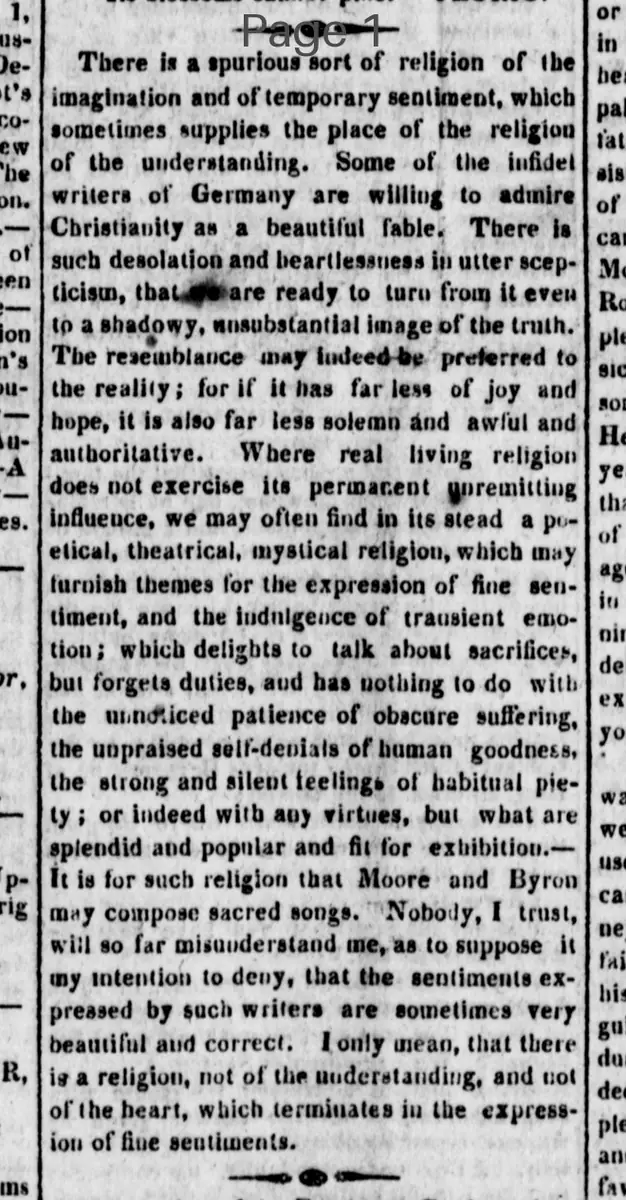
There is a spurious sort of religion of the
imagination and of temporary sentiment, which
sometimes supplies the place of the religion
of the understanding. Some of the infidel
writers of Germany are willing to admire
Christianity as a beautiful fable. There is
such desolation and heartlessness in utter skepticism,
that we are ready to turn from it even
to a shadowy, unsubstantial image of the truth.
The resemblance may indeed be preferred to
the reality; for if it has far less of joy and
hope, it is also far less solemn and awful and
authoritative. Where real living religion
does not exercise its permanent unremitting
influence, we may often find in its stead a poetical,
theatrical, mystical religion, which may
furnish themes for the expression of fine sentiment,
and the indulgence of transient emotion;
which delights to talk about sacrifices,
but forgets duties, and has nothing to do with
the unnoticed patience of obscure suffering.
the unpraised self-denials of human goodness,
the strong and silent feelings of habitual piety;
or indeed with any virtues, but what are
splendid and popular and fit for exhibition.—
It is for such religion that Moore and Byron
may compose sacred songs. "Nobody, I trust,
will so far misunderstand me, as to suppose it
my intention to deny, that the sentiments expressed
by such writers are sometimes very
beautiful and correct. I only mean, that there
is a religion, not of the understanding, and not
of the heart, which terminates in the expression
of fine sentiments."
imagination and of temporary sentiment, which
sometimes supplies the place of the religion
of the understanding. Some of the infidel
writers of Germany are willing to admire
Christianity as a beautiful fable. There is
such desolation and heartlessness in utter skepticism,
that we are ready to turn from it even
to a shadowy, unsubstantial image of the truth.
The resemblance may indeed be preferred to
the reality; for if it has far less of joy and
hope, it is also far less solemn and awful and
authoritative. Where real living religion
does not exercise its permanent unremitting
influence, we may often find in its stead a poetical,
theatrical, mystical religion, which may
furnish themes for the expression of fine sentiment,
and the indulgence of transient emotion;
which delights to talk about sacrifices,
but forgets duties, and has nothing to do with
the unnoticed patience of obscure suffering.
the unpraised self-denials of human goodness,
the strong and silent feelings of habitual piety;
or indeed with any virtues, but what are
splendid and popular and fit for exhibition.—
It is for such religion that Moore and Byron
may compose sacred songs. "Nobody, I trust,
will so far misunderstand me, as to suppose it
my intention to deny, that the sentiments expressed
by such writers are sometimes very
beautiful and correct. I only mean, that there
is a religion, not of the understanding, and not
of the heart, which terminates in the expression
of fine sentiments."
What sub-type of article is it?
Essay
What themes does it cover?
Religious
Moral Virtue
What keywords are associated?
Spurious Religion
True Faith
Imaginative Sentiment
Skepticism
Infidel Writers
Moore Byron
Moral Virtue
Religious Piety
Literary Details
Subject
Contrasting True Religion With Spurious Imaginative Sentiment
Key Lines
There Is A Spurious Sort Of Religion Of The Imagination And Of Temporary Sentiment, Which Sometimes Supplies The Place Of The Religion Of The Understanding.
Some Of The Infidel Writers Of Germany Are Willing To Admire Christianity As A Beautiful Fable.
Where Real Living Religion Does Not Exercise Its Permanent Unremitting Influence, We May Often Find In Its Stead A Poetical, Theatrical, Mystical Religion, Which May Furnish Themes For The Expression Of Fine Sentiment, And The Indulgence Of Transient Emotion; Which Delights To Talk About Sacrifices, But Forgets Duties, And Has Nothing To Do With The Unnoticed Patience Of Obscure Suffering.
It Is For Such Religion That Moore And Byron May Compose Sacred Songs.
I Only Mean, That There Is A Religion, Not Of The Understanding, And Not Of The Heart, Which Terminates In The Expression Of Fine Sentiments.