Thank you for visiting SNEWPapers!
Sign up free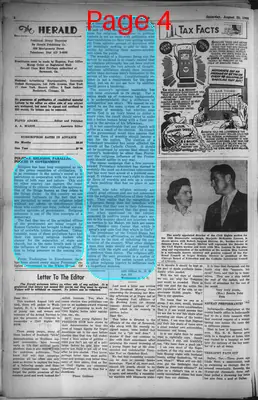
Letter to Editor
August 20, 1960
The Herald
Savannah, Chatham County, Georgia
What is this article about?
This letter argues for religious tolerance in U.S. politics, condemning Protestant ministers' interference in elections against Catholic candidates. It emphasizes separation of church and state, service to country and God, and warns against bigotry influencing the presidency.
Clipping
OCR Quality
95%
Excellent
Full Text
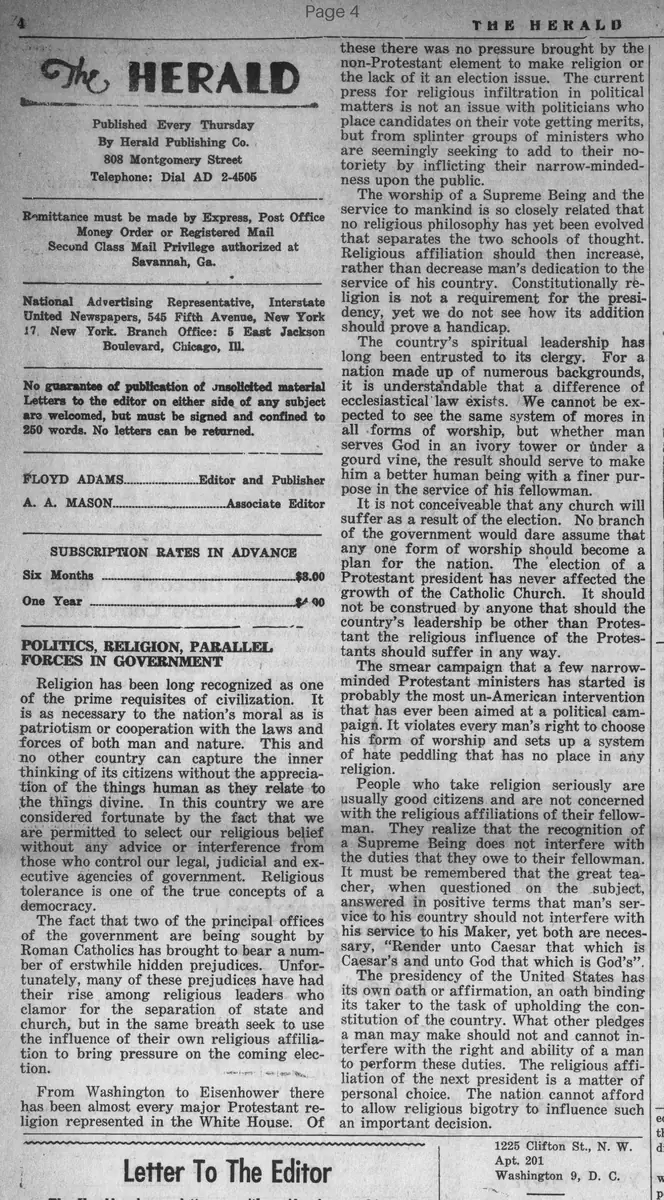
POLITICS, RELIGION, PARALLEL
FORCES IN GOVERNMENT
Religion has been long recognized as one
of the prime requisites of civilization. It
is as necessary to the nation's moral as is
patriotism or cooperation with the laws and
forces of both man and nature. This and
no other country can capture the inner
thinking of its citizens without the apprecia-
tion of the things human as they relate to
the things divine. In this country we are
considered fortunate by the fact that we
are permitted to select our religious belief
without any advice or interference from
those who control our legal, judicial and ex-
ectutive agencies of government. Religious
tolerance is one of the true concepts of a
democracy.
The fact that two of the principal offices
of the government are being sought by
Roman Catholics has brought to bear a num-
ber of erstwhile hidden prejudices. Unfor-
tunately, many of these prejudices have had
their rise among religious leaders who
clamor for the separation of state and
church. but in the same breath seek to use
the influence of their own religious affilia-
tion to bring pressure on the coming elec-
tion.
From Washington to Eisenhower there
has been almost every major Protestant re-
ligion represented in the White House. Of
these there was no pressure brought by the
non-Protestant element to make religion or
the lack of it an election issue. The current
press for religious infiltration in political
matters is not an issue with politicians who
place candidates on their vote getting merits,
but from splinter groups of ministers who
are seemingly seeking to add to their no-
toriety by inflicting their narrow-minded-
ness upon the public.
The worship of a Supreme Being and the
service to mankind is so closely related that
no religious philosophy has yet been evolved
that separates the two schools of thought.
Religious affiliation should then increase,
rather than decrease man's dedication to the
service of his country. Constitutionally re-
ligion is not a requirement for the presi-
dency, yet we do not see how its addition
should prove a handicap.
The country's spiritual leadership has
long been entrusted to its clergy. For a
nation made up of numerous backgrounds,
it is understandable that a difference of
ecclesiastical'law exists. /We cannot be ex-
pected to see the same system of mores in
all .forms of worship, but whether man
serves God in an ivory tower or under a
gourd vine, the result should serve to make
him a better human being with a finer pur-
pose in the service of his fellowman.
It is not conceiveable that any church will
suffer as a result of the election. No branch
of the government would dare assume that
any one form of worship should become a
plan for the nation. The election of a
Protestant president has never affected the
growth of the Catholic Church. It should
not be construed by anyone that should the
country's leadership be other than Protes-
tant the religious influence of the Protes-
tants should suffer in any way.
The smear campaign that a few narrow-
minded Protestant ministers has started is
probably the most un-American interyention
that has ever been aimed at a political cam-
paign. It violates every man's right to choose
his form of worship and sets up a system
of hate peddling that has no place in any
religion.
People who take religion seriously are
usually good citizens.and are not concerned
with the religious affiliations of their fellow-
man. They realize that the recognition of
a Supreme Being does not interfere with
the duties that they owe to their fellowman.
It must be remembered that the great tea-
cher, when questioned on the subject,
answered in positive terms that man's ser-
vice to his country should not interfere with
his service to his Maker, yet both are neces-
sary, "Render unto Caesar that which is
Caesar's and unto God that which is God's".
The presidency of the United States has
its own oath or affirmation, an oath binding
its taker to the task of upholding the con-
stitution of the country. What other pledges
a man may make should not and cannot in-
terfere with the right and ability of a man
to perform these duties. The religious affi-
liation of the next president is a matter of
personal choice. The nation cannot afford
to allow religious bigotry to influence such
an important decision.
1225 Clifton St., N. W.
Apt. 201
Washington 9, D. C.
FORCES IN GOVERNMENT
Religion has been long recognized as one
of the prime requisites of civilization. It
is as necessary to the nation's moral as is
patriotism or cooperation with the laws and
forces of both man and nature. This and
no other country can capture the inner
thinking of its citizens without the apprecia-
tion of the things human as they relate to
the things divine. In this country we are
considered fortunate by the fact that we
are permitted to select our religious belief
without any advice or interference from
those who control our legal, judicial and ex-
ectutive agencies of government. Religious
tolerance is one of the true concepts of a
democracy.
The fact that two of the principal offices
of the government are being sought by
Roman Catholics has brought to bear a num-
ber of erstwhile hidden prejudices. Unfor-
tunately, many of these prejudices have had
their rise among religious leaders who
clamor for the separation of state and
church. but in the same breath seek to use
the influence of their own religious affilia-
tion to bring pressure on the coming elec-
tion.
From Washington to Eisenhower there
has been almost every major Protestant re-
ligion represented in the White House. Of
these there was no pressure brought by the
non-Protestant element to make religion or
the lack of it an election issue. The current
press for religious infiltration in political
matters is not an issue with politicians who
place candidates on their vote getting merits,
but from splinter groups of ministers who
are seemingly seeking to add to their no-
toriety by inflicting their narrow-minded-
ness upon the public.
The worship of a Supreme Being and the
service to mankind is so closely related that
no religious philosophy has yet been evolved
that separates the two schools of thought.
Religious affiliation should then increase,
rather than decrease man's dedication to the
service of his country. Constitutionally re-
ligion is not a requirement for the presi-
dency, yet we do not see how its addition
should prove a handicap.
The country's spiritual leadership has
long been entrusted to its clergy. For a
nation made up of numerous backgrounds,
it is understandable that a difference of
ecclesiastical'law exists. /We cannot be ex-
pected to see the same system of mores in
all .forms of worship, but whether man
serves God in an ivory tower or under a
gourd vine, the result should serve to make
him a better human being with a finer pur-
pose in the service of his fellowman.
It is not conceiveable that any church will
suffer as a result of the election. No branch
of the government would dare assume that
any one form of worship should become a
plan for the nation. The election of a
Protestant president has never affected the
growth of the Catholic Church. It should
not be construed by anyone that should the
country's leadership be other than Protes-
tant the religious influence of the Protes-
tants should suffer in any way.
The smear campaign that a few narrow-
minded Protestant ministers has started is
probably the most un-American interyention
that has ever been aimed at a political cam-
paign. It violates every man's right to choose
his form of worship and sets up a system
of hate peddling that has no place in any
religion.
People who take religion seriously are
usually good citizens.and are not concerned
with the religious affiliations of their fellow-
man. They realize that the recognition of
a Supreme Being does not interfere with
the duties that they owe to their fellowman.
It must be remembered that the great tea-
cher, when questioned on the subject,
answered in positive terms that man's ser-
vice to his country should not interfere with
his service to his Maker, yet both are neces-
sary, "Render unto Caesar that which is
Caesar's and unto God that which is God's".
The presidency of the United States has
its own oath or affirmation, an oath binding
its taker to the task of upholding the con-
stitution of the country. What other pledges
a man may make should not and cannot in-
terfere with the right and ability of a man
to perform these duties. The religious affi-
liation of the next president is a matter of
personal choice. The nation cannot afford
to allow religious bigotry to influence such
an important decision.
1225 Clifton St., N. W.
Apt. 201
Washington 9, D. C.
What sub-type of article is it?
Persuasive
Political
Ethical Moral
What themes does it cover?
Politics
Religion
Constitutional Rights
What keywords are associated?
Religious Tolerance
Catholic Candidates
Presidential Election
Church State Separation
Protestant Ministers
Religious Bigotry
Letter to Editor Details
Main Argument
religious affiliation should not influence presidential elections; the letter criticizes narrow-minded protestant ministers for promoting bigotry against catholic candidates and urges adherence to the separation of church and state.
Notable Details
References Protestant Presidents From Washington To Eisenhower
Quotes Biblical Principle: 'Render Unto Caesar That Which Is Caesar's And Unto God That Which Is God's'
Addresses Religious Tolerance As A Democratic Concept