Thank you for visiting SNEWPapers!
Sign up free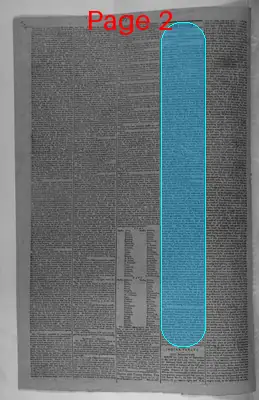
Foreign News
March 22, 1798
Gazette Of The United States, & Philadelphia Daily Advertiser
Philadelphia, Philadelphia County, Pennsylvania
What is this article about?
A letter in the Philadelphia Gazette criticizes the French Directory's proclamations justifying war against Britain, comparing their motives to the Devil's envy in Milton's poem, highlighting economic rivalry and rejection of peaceful competition.
Clipping

OCR Quality
95%
Excellent
Full Text
The Gazette.
PHILADELPHIA
THURSDAY EVENING, MARCH 22
: COMMUNICATIONS:
MR. FENNO,
The reasons offered by the directory in their proclamation of the 17th Nivose, and that in answer to the British manifesto, are extremely curious, and altogether worthy of their authors. They are exactly such as are avowed by the Devil (in Milton's poem) for his seduction of mankind and hostility with heaven. He sickened at the happiness he could not enjoy: So the amiable French are disturbed at the prosperity of the English. They must therefore be reduced to equal misery with themselves. Their commerce is too flourishing, they are too wealthy and happy, and their insular situation has hitherto secured them from the calamities of war. "But it is your duty, Frenchmen," says the philanthropic Barras, "to teach that island that notwithstanding its insular situation, it is by no means inaccessible, and that you may carry back into its bosom, the calamities which it has brought home to your fire-sides." England once disarmed and vanquished, a perpetual peace is from that instant established, and the balance of Europe settled on a permanent basis; for the French republic too strong to be attacked, will feel no motive to attack. Her greatness will set her above the flights of ambition, and she will feel no desire of transgressing her own limits. Very true, citizen! When she has subjugated the world, there will be nothing left to interrupt her repose, unless, like Alexander, she should weep for the deficiency of new objects to conquer.
Who will now say, that Jacobins do not speak truth? They only cant when it is their interest to deceive: But on the present occasion, when the question is the destruction of a formidable rival there being no limits, as they justly observe, to the enthusiasm of Frenchmen they boldly declare themselves. The puny considerations of Justice and humanity are far below their concern; and interest, glory, revenge and dominion, are the only arguments worthy of the terrible and invincible republic. It disdains an appeal, either to heaven or earth, for the justice of its cause, and atheistically relies on its own irresistible prowess.
How much further this course of nations, will be permitted to extend itself, is not for mortals to say, however they may be convinced of its diabolical nature,
If plague, nor earthquake break not Heaven's design,
Why then a Barras, or a Cataline?
But the trade of Britain is highly prosperous, while that of France is nearly annihilated, and republicans it seems, like money as well as their neighbors. The facts cannot be denied, since they are admitted by themselves. But the remedy to be applied for the evil, from a people who have talked so much about peace and philanthropy, and other fine things, would consist (one should suppose)—in an endeavor to supplant their rival by superior industry and ingenuity. And from the advantage of the institutions to be derived from the unrivalled excellence of their government, from their immense population, and acknowledged talents for invention, it cannot be doubted, but that they would soon be an over-match for every competitor. What then remains, but at once to make peace, "turn their swords into plough-shares, their spears into pruning hooks," and to engage in the contest, like friends and brothers, relying for success, on the fair means of industry and exertion.
This at least, on the private scale, and old principles of justice, would be the legitimate course. For what should we say of a bankrupt, who would burn a more successful trader's house, in order to reduce him to the same degree of indigence with himself, that they might then, start even? Yet this is precisely the conduct of the Directory, who ask, "Have you listeneed to the minister of Great Britain, who informs you with the most insulting ostentation, that the English commerce is to that of France as 18 to 2; that the imports and exports do not amount in France to more than 400 millions; and that in England they amount to even millions. Have you a moment to lose in baffling the calculations of English avidity? France has been obliged, (continue they) to make a temporary sacrifice of her credit to the success of the war. But now victory ought to repay its sacrifices, and— at the same time secure to it that portion of metallic wealth, and that rank which the nature and extent of its territory, its population, its coasts and its rivers, challenge and mark out to it among the commercial powers."
And is it thus, O ye citizens of the world! ye orators of the human race! ye professors of universal fraternity! Is it thus, ye cajole your admirers and imitators? Is all your kissing, your hugging and your embracing, for the love of mankind, "shrunk to this little measure"? To a narrow and sordid attachment to metallic wealth, and a desire of promoting the commercial interest of France and filling the pockets of her merchants? And to go to war about it, like a naughty depôt! and to talk about sating the ambition of your Republic, when you have so often told us, there was no ambition but among kings!— Who could have believed it?
PHILADELPHIA
THURSDAY EVENING, MARCH 22
: COMMUNICATIONS:
MR. FENNO,
The reasons offered by the directory in their proclamation of the 17th Nivose, and that in answer to the British manifesto, are extremely curious, and altogether worthy of their authors. They are exactly such as are avowed by the Devil (in Milton's poem) for his seduction of mankind and hostility with heaven. He sickened at the happiness he could not enjoy: So the amiable French are disturbed at the prosperity of the English. They must therefore be reduced to equal misery with themselves. Their commerce is too flourishing, they are too wealthy and happy, and their insular situation has hitherto secured them from the calamities of war. "But it is your duty, Frenchmen," says the philanthropic Barras, "to teach that island that notwithstanding its insular situation, it is by no means inaccessible, and that you may carry back into its bosom, the calamities which it has brought home to your fire-sides." England once disarmed and vanquished, a perpetual peace is from that instant established, and the balance of Europe settled on a permanent basis; for the French republic too strong to be attacked, will feel no motive to attack. Her greatness will set her above the flights of ambition, and she will feel no desire of transgressing her own limits. Very true, citizen! When she has subjugated the world, there will be nothing left to interrupt her repose, unless, like Alexander, she should weep for the deficiency of new objects to conquer.
Who will now say, that Jacobins do not speak truth? They only cant when it is their interest to deceive: But on the present occasion, when the question is the destruction of a formidable rival there being no limits, as they justly observe, to the enthusiasm of Frenchmen they boldly declare themselves. The puny considerations of Justice and humanity are far below their concern; and interest, glory, revenge and dominion, are the only arguments worthy of the terrible and invincible republic. It disdains an appeal, either to heaven or earth, for the justice of its cause, and atheistically relies on its own irresistible prowess.
How much further this course of nations, will be permitted to extend itself, is not for mortals to say, however they may be convinced of its diabolical nature,
If plague, nor earthquake break not Heaven's design,
Why then a Barras, or a Cataline?
But the trade of Britain is highly prosperous, while that of France is nearly annihilated, and republicans it seems, like money as well as their neighbors. The facts cannot be denied, since they are admitted by themselves. But the remedy to be applied for the evil, from a people who have talked so much about peace and philanthropy, and other fine things, would consist (one should suppose)—in an endeavor to supplant their rival by superior industry and ingenuity. And from the advantage of the institutions to be derived from the unrivalled excellence of their government, from their immense population, and acknowledged talents for invention, it cannot be doubted, but that they would soon be an over-match for every competitor. What then remains, but at once to make peace, "turn their swords into plough-shares, their spears into pruning hooks," and to engage in the contest, like friends and brothers, relying for success, on the fair means of industry and exertion.
This at least, on the private scale, and old principles of justice, would be the legitimate course. For what should we say of a bankrupt, who would burn a more successful trader's house, in order to reduce him to the same degree of indigence with himself, that they might then, start even? Yet this is precisely the conduct of the Directory, who ask, "Have you listeneed to the minister of Great Britain, who informs you with the most insulting ostentation, that the English commerce is to that of France as 18 to 2; that the imports and exports do not amount in France to more than 400 millions; and that in England they amount to even millions. Have you a moment to lose in baffling the calculations of English avidity? France has been obliged, (continue they) to make a temporary sacrifice of her credit to the success of the war. But now victory ought to repay its sacrifices, and— at the same time secure to it that portion of metallic wealth, and that rank which the nature and extent of its territory, its population, its coasts and its rivers, challenge and mark out to it among the commercial powers."
And is it thus, O ye citizens of the world! ye orators of the human race! ye professors of universal fraternity! Is it thus, ye cajole your admirers and imitators? Is all your kissing, your hugging and your embracing, for the love of mankind, "shrunk to this little measure"? To a narrow and sordid attachment to metallic wealth, and a desire of promoting the commercial interest of France and filling the pockets of her merchants? And to go to war about it, like a naughty depôt! and to talk about sating the ambition of your Republic, when you have so often told us, there was no ambition but among kings!— Who could have believed it?
What sub-type of article is it?
War Report
Diplomatic
Economic
What keywords are associated?
French Directory
British Manifesto
War Justification
Commercial Rivalry
French Proclamation
What entities or persons were involved?
Barras
Where did it happen?
France
Foreign News Details
Primary Location
France
Event Date
17th Nivose
Key Persons
Barras
Event Details
The French Directory's proclamation of the 17th Nivose and response to the British manifesto justify war against Britain due to envy of English prosperity and commerce, aiming to reduce Britain to equal misery and secure French commercial dominance through invasion, as stated by Barras.