Thank you for visiting SNEWPapers!
Sign up free
Literary
February 18, 1818
Alexandria Gazette & Daily Advertiser
Alexandria, Virginia
What is this article about?
An essay from the Connecticut Courant titled 'THE BRIEF REMARKER' critiques ambition as a competitive scramble and the American obsession with wealth (avarice) over virtue. Using examples from Cardinal de Retz and Sir Walter Raleigh, it shows how friends abandon the fallen. Warns that prioritizing gain leads to fraud, corruption, and loss of liberty, echoing Rome's fall.
Merged-components note: The second component is the direct continuation of the essay on ambition from the first component; relabeling the filler to literary as it fits the narrative style.
Clippings
1 of 2
OCR Quality
95%
Excellent
Full Text
From the Connecticut Courant.
THE BRIEF REMARKER
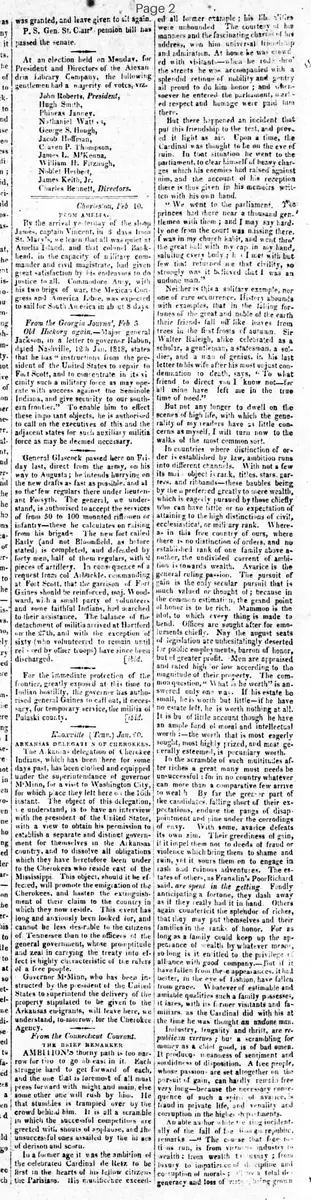
AMBITION's thorny path is too narrow for two to go abreast in it. Each struggle hard to get forward of each, and the one that is foremost of all must press forward with might and main, else some other one will rush by him. He that stumbles is trampled over by the crowd behind him. It is all a scramble in which the successful competitors are greeted with shouts of applause, and the unsuccessful ones assailed by the hisses of derision and scorn.
In a former age it was the ambition of the celebrated Cardinal de Retz, to be first in the hearts of his fellow citizens the Parisians. His munificence exceeded all former example: his liberties were unbounded. The courtesy of his manners and the fascinating charms of his address, won him universal friendship and admiration. At home he was crowded with visitants—when he rode thro' the streets he was accompanied with a splendid retinue of nobility and gentry all proud to do him honor; and whensoever he entered the parliament, marked respect and homage were paid him there.
But there happened an incident that put this friendship to the test, and proved it light as air. Upon a time, the Cardinal was thought to be on the eve of ruin. In that situation he went to the parliament, to clear himself of heavy charges which his enemies had raised against him, and the account of his reception there is thus given in his memoirs written with his own hand.
"We went to the parliament. The princes had there near a thousand gentlemen with them; and I may say hardly one from the court was missing there. I was in my church habit, and went thro' the great hall with my cap in my hand, saluting every body; but I met with but few that returned me that civility, so strongly was it believed that I was an undone man."
Neither is this a solitary example, nor one of rare occurrence. History abounds with examples, that in the failing fortunes of the great and noble of the earth their friends fall off like leaves from trees in the first frosts of autumn. Sir Walter Raleigh, alike celebrated as a scholar, a gentleman, a statesman, a soldier, and a man of genius, in his last letter to his wife after his most unjust condemnation to death, says, "To what friend to direct you I know not—for all mine have left me in the true time of need."
But not any longer to dwell on the scenes of high life, with which the generality of my readers have as little concern as myself. I will turn now to the walks of the most common sort.
In countries where distinction of order is established by law, ambition runs into different channels. With not a few its main object is rank, titles, stars, garters, and ribbands—these baubles being by the by preferred greatly to mere wealth, which is eagerly pursued by those chiefly who can have little or no expectation of attaining to the high distinctions of civil, ecclesiastical, or military rank. Whereas in this free country of ours, where there is no distinction of orders, and no established rank of one family above another, the undivided current of ambition is towards wealth. Avarice is the general ruling passion. The pursuit of gain is the only secular pursuit that is much valued or thought of; because in the common estimation, the grand point of honor is to be rich. Mammon is the idol, to which every thing is made to bend. Offices are sought after for emoluments chiefly. Nay the august seats of legislation are unhesitatingly deserted for public employments, barren of honor, but of greater profit. Men are appraised and rated higher or low according to the magnitude of their property. The common question, "What is he worth" is answered only one way. If his estate be small, he is worth but little—if he have no estate left, he is worth nothing at all. It is of little account though he have an ample fund of moral and intellectual worth:—the worth that is most eagerly sought, most highly prized, and most generally esteemed, is pecuniary worth.
In the scramble of such multitudes after riches a great many must needs be unsuccessful: for in no country whatever can more than a comparative few arrive to wealth. By far the greater part of the candidates, falling short of their expectations, endure the pangs of disappointment and pine under the corroding of envy.
With some, avarice defeats its own aim. Their greediness of gain, it may impel them not to deeds of fraud or violence which bring them to shame and ruin, yet it sours them on to engage in rash and ruinous adventures. The estates of others, as Franklin's Poor Richard said, are spent in the getting. Fondly anticipating a fortune, they dash away as if they really had it in hand. Others again counterfeit the splendor of riches, that they may put themselves and their families in the rank of honor. For as long as a family could keep up the appearance of wealth by whatever means so long is it entitled to the privilege of alliance with good company.—But if it have fallen from the appearances, it had better, in the eye of fashion, have fallen from grace. Whatever of estimable and amiable qualities such a family possesses, it fares, with its former visitants and familiars, as the Cardinal did with his at the time he was thought an undone man.
Industry, frugality and thrift, are republican virtues; but a scrambling for money as a chief good, is of bad omen. It produces meanness of sentiment and sordidness of disposition. A free people, whose passions are set altogether on the pursuit of gain, can hardly remain free very long—because the necessary consequence of such a spirit of avarice, is fraud in private life, and venality and corruption in the higher departments.
An able author while treating incidentally of the fall of the Roman republic, remarks—“The course that free nations run, is from virtue and industry to wealth: from wealth to luxury; from luxury to impatience of discipline and corruption of morals; from total degeneracy and loss of virtue, being ground ripe for destruction, it falls at last a prey to some hardy oppressor, and with the loss of liberty, loses every thing else that is valuable.*
THE BRIEF REMARKER
AMBITION's thorny path is too narrow for two to go abreast in it. Each struggle hard to get forward of each, and the one that is foremost of all must press forward with might and main, else some other one will rush by him. He that stumbles is trampled over by the crowd behind him. It is all a scramble in which the successful competitors are greeted with shouts of applause, and the unsuccessful ones assailed by the hisses of derision and scorn.
In a former age it was the ambition of the celebrated Cardinal de Retz, to be first in the hearts of his fellow citizens the Parisians. His munificence exceeded all former example: his liberties were unbounded. The courtesy of his manners and the fascinating charms of his address, won him universal friendship and admiration. At home he was crowded with visitants—when he rode thro' the streets he was accompanied with a splendid retinue of nobility and gentry all proud to do him honor; and whensoever he entered the parliament, marked respect and homage were paid him there.
But there happened an incident that put this friendship to the test, and proved it light as air. Upon a time, the Cardinal was thought to be on the eve of ruin. In that situation he went to the parliament, to clear himself of heavy charges which his enemies had raised against him, and the account of his reception there is thus given in his memoirs written with his own hand.
"We went to the parliament. The princes had there near a thousand gentlemen with them; and I may say hardly one from the court was missing there. I was in my church habit, and went thro' the great hall with my cap in my hand, saluting every body; but I met with but few that returned me that civility, so strongly was it believed that I was an undone man."
Neither is this a solitary example, nor one of rare occurrence. History abounds with examples, that in the failing fortunes of the great and noble of the earth their friends fall off like leaves from trees in the first frosts of autumn. Sir Walter Raleigh, alike celebrated as a scholar, a gentleman, a statesman, a soldier, and a man of genius, in his last letter to his wife after his most unjust condemnation to death, says, "To what friend to direct you I know not—for all mine have left me in the true time of need."
But not any longer to dwell on the scenes of high life, with which the generality of my readers have as little concern as myself. I will turn now to the walks of the most common sort.
In countries where distinction of order is established by law, ambition runs into different channels. With not a few its main object is rank, titles, stars, garters, and ribbands—these baubles being by the by preferred greatly to mere wealth, which is eagerly pursued by those chiefly who can have little or no expectation of attaining to the high distinctions of civil, ecclesiastical, or military rank. Whereas in this free country of ours, where there is no distinction of orders, and no established rank of one family above another, the undivided current of ambition is towards wealth. Avarice is the general ruling passion. The pursuit of gain is the only secular pursuit that is much valued or thought of; because in the common estimation, the grand point of honor is to be rich. Mammon is the idol, to which every thing is made to bend. Offices are sought after for emoluments chiefly. Nay the august seats of legislation are unhesitatingly deserted for public employments, barren of honor, but of greater profit. Men are appraised and rated higher or low according to the magnitude of their property. The common question, "What is he worth" is answered only one way. If his estate be small, he is worth but little—if he have no estate left, he is worth nothing at all. It is of little account though he have an ample fund of moral and intellectual worth:—the worth that is most eagerly sought, most highly prized, and most generally esteemed, is pecuniary worth.
In the scramble of such multitudes after riches a great many must needs be unsuccessful: for in no country whatever can more than a comparative few arrive to wealth. By far the greater part of the candidates, falling short of their expectations, endure the pangs of disappointment and pine under the corroding of envy.
With some, avarice defeats its own aim. Their greediness of gain, it may impel them not to deeds of fraud or violence which bring them to shame and ruin, yet it sours them on to engage in rash and ruinous adventures. The estates of others, as Franklin's Poor Richard said, are spent in the getting. Fondly anticipating a fortune, they dash away as if they really had it in hand. Others again counterfeit the splendor of riches, that they may put themselves and their families in the rank of honor. For as long as a family could keep up the appearance of wealth by whatever means so long is it entitled to the privilege of alliance with good company.—But if it have fallen from the appearances, it had better, in the eye of fashion, have fallen from grace. Whatever of estimable and amiable qualities such a family possesses, it fares, with its former visitants and familiars, as the Cardinal did with his at the time he was thought an undone man.
Industry, frugality and thrift, are republican virtues; but a scrambling for money as a chief good, is of bad omen. It produces meanness of sentiment and sordidness of disposition. A free people, whose passions are set altogether on the pursuit of gain, can hardly remain free very long—because the necessary consequence of such a spirit of avarice, is fraud in private life, and venality and corruption in the higher departments.
An able author while treating incidentally of the fall of the Roman republic, remarks—“The course that free nations run, is from virtue and industry to wealth: from wealth to luxury; from luxury to impatience of discipline and corruption of morals; from total degeneracy and loss of virtue, being ground ripe for destruction, it falls at last a prey to some hardy oppressor, and with the loss of liberty, loses every thing else that is valuable.*
What sub-type of article is it?
Essay
Satire
What themes does it cover?
Moral Virtue
Political
Liberty Freedom
What keywords are associated?
Ambition
Avarice
Wealth
Society
Corruption
Liberty
Friendship
Republican Virtues
Literary Details
Title
The Brief Remarker
Key Lines
Ambition's Thorny Path Is Too Narrow For Two To Go Abreast In It. Each Struggle Hard To Get Forward Of Each, And The One That Is Foremost Of All Must Press Forward With Might And Main, Else Some Other One Will Rush By Him.
"We Went To The Parliament. The Princes Had There Near A Thousand Gentlemen With Them; And I May Say Hardly One From The Court Was Missing There. I Was In My Church Habit, And Went Thro' The Great Hall With My Cap In My Hand, Saluting Every Body; But I Met With But Few That Returned Me That Civility, So Strongly Was It Believed That I Was An Undone Man."
"To What Friend To Direct You I Know Not—For All Mine Have Left Me In The True Time Of Need."
Avarice Is The General Ruling Passion. The Pursuit Of Gain Is The Only Secular Pursuit That Is Much Valued Or Thought Of; Because In The Common Estimation, The Grand Point Of Honor Is To Be Rich.
A Free People, Whose Passions Are Set Altogether On The Pursuit Of Gain, Can Hardly Remain Free Very Long—Because The Necessary Consequence Of Such A Spirit Of Avarice, Is Fraud In Private Life, And Venality And Corruption In The Higher Departments.