Thank you for visiting SNEWPapers!
Sign up free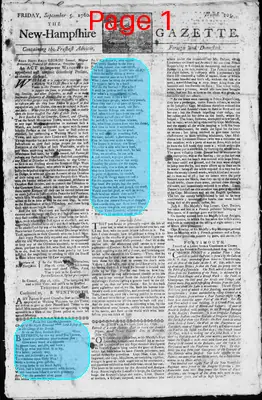
Poem
September 5, 1760
The New Hampshire Gazette
Portsmouth, Rockingham County, New Hampshire
What is this article about?
A satirical poem presented as a bishop's charge to his clergy, urging them to deliver sermons slowly and deliberately for greater impact, critiquing hasty preaching and praising written sermons over spoken ones.
Clipping
OCR Quality
88%
Good
Full Text
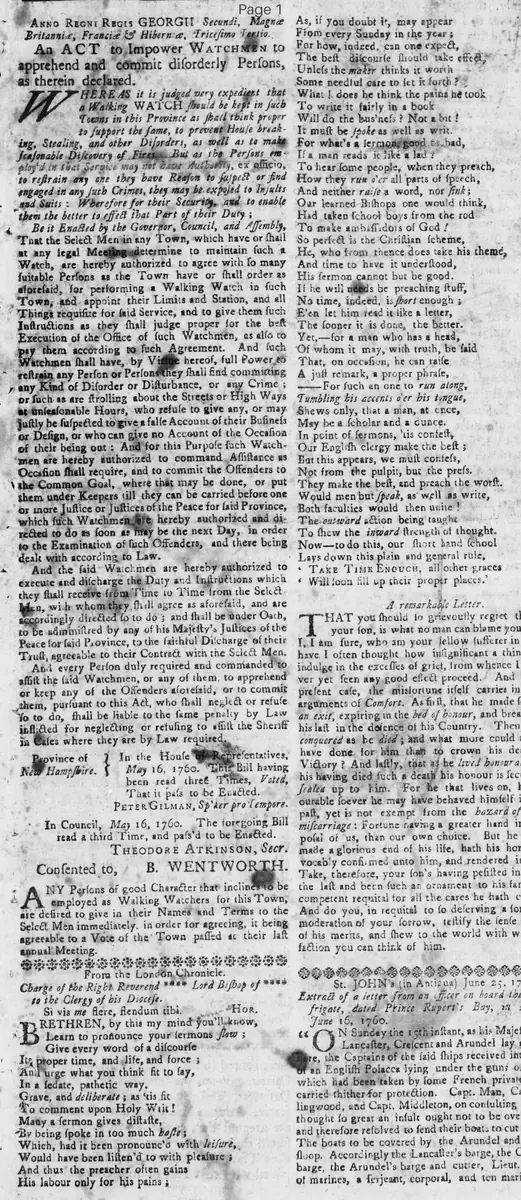
From the London Chronicle.
Charge of the Right Reverend **** Lord Bishop of **** to the Clergy of his Diocese.
Si vis me Aere. flendum dibi.a .
Brethren, by this my mind you'll know
Learn to pronounce your sermons slow;
Give every word of a discourse
Its proper time, and life, and force.
Enlarge what you think fit to say,
In a sedate, pathetic way,
Grave, and deliberate; as it is fit
To comment upon Holy Writ!
Many a sermon gives disgust,
By being spoke in too much haste,
Which, had it been pronounced with leisure
Would have been listened to with pleasure.
And thus the preacher often gains
His labour only for his pains:
As, if you doubt it, may appear
From every Sunday in the year;
For how, indeed, can one expect,
The best discourse should take effect,
Unless the maker thinks it worth
Some needful care to set it forth?
What! does he think the pains he took
To write it fairly in a book
Will do the business? Not a bit!
It must be spoke as well as writ.
For what's a sermon good or bad,
If a man reads it like a lad?
To hear some people, when they preach,
How they run o'er all parts of speech,
And neither raise a word, nor sink;
Our learned Bishops one would think,
Had taken school boys from the rod
To make ambassadors of God!
So perfect is the Christian scheme.
He, who from thence does take his theme,
And takes time to have it understood,
His sermon cannot but be good.
If he will needs be preaching stuff,
No time, indeed, is short enough;
E'en let him read it like a letter,
The sooner it is done, the better.
Yet,--for a man who has a head,
Of whom it may, with truth, be said
That, on occasion, he can raise
A just remark, a proper phrase,
--For such an one to run along,
Tumbling his accents o'er his tongue,
Shews only, that a man, at once,
May be a scholar and a dunce.
In point of sermons, 'tis confest,
Our English clergy make the best;
But this appears, we must confess,
Not from the pulpit, but the press.
They make the best, and preach the worst.
Would men but speak, as well as write,
Both faculties would then unite!
The outward action being taught
To shew the inward strength of thought.
Now-to do this, our short hand school
Lays down this plain and general rule.
Take Time Enough, all other graces
Will soon fill up their proper places.
Charge of the Right Reverend **** Lord Bishop of **** to the Clergy of his Diocese.
Si vis me Aere. flendum dibi.a .
Brethren, by this my mind you'll know
Learn to pronounce your sermons slow;
Give every word of a discourse
Its proper time, and life, and force.
Enlarge what you think fit to say,
In a sedate, pathetic way,
Grave, and deliberate; as it is fit
To comment upon Holy Writ!
Many a sermon gives disgust,
By being spoke in too much haste,
Which, had it been pronounced with leisure
Would have been listened to with pleasure.
And thus the preacher often gains
His labour only for his pains:
As, if you doubt it, may appear
From every Sunday in the year;
For how, indeed, can one expect,
The best discourse should take effect,
Unless the maker thinks it worth
Some needful care to set it forth?
What! does he think the pains he took
To write it fairly in a book
Will do the business? Not a bit!
It must be spoke as well as writ.
For what's a sermon good or bad,
If a man reads it like a lad?
To hear some people, when they preach,
How they run o'er all parts of speech,
And neither raise a word, nor sink;
Our learned Bishops one would think,
Had taken school boys from the rod
To make ambassadors of God!
So perfect is the Christian scheme.
He, who from thence does take his theme,
And takes time to have it understood,
His sermon cannot but be good.
If he will needs be preaching stuff,
No time, indeed, is short enough;
E'en let him read it like a letter,
The sooner it is done, the better.
Yet,--for a man who has a head,
Of whom it may, with truth, be said
That, on occasion, he can raise
A just remark, a proper phrase,
--For such an one to run along,
Tumbling his accents o'er his tongue,
Shews only, that a man, at once,
May be a scholar and a dunce.
In point of sermons, 'tis confest,
Our English clergy make the best;
But this appears, we must confess,
Not from the pulpit, but the press.
They make the best, and preach the worst.
Would men but speak, as well as write,
Both faculties would then unite!
The outward action being taught
To shew the inward strength of thought.
Now-to do this, our short hand school
Lays down this plain and general rule.
Take Time Enough, all other graces
Will soon fill up their proper places.
What sub-type of article is it?
Satire
Verse Letter
What themes does it cover?
Moral Virtue
Religious Faith
Satire Society
What keywords are associated?
Sermon Delivery
Clergy Preaching
Bishop Charge
Slow Pronunciation
English Clergy
What entities or persons were involved?
From The London Chronicle.
Poem Details
Title
Charge Of The Right Reverend **** Lord Bishop Of **** To The Clergy Of His Diocese.
Author
From The London Chronicle.
Subject
Advice To Clergy On Delivering Sermons
Form / Style
Rhymed Couplets
Key Lines
Learn To Pronounce Your Sermons Slow;
It Must Be Spoke As Well As Writ.
They Make The Best, And Preach The Worst.
Take Time Enough, All Other Graces
Will Soon Fill Up Their Proper Places.