Thank you for visiting SNEWPapers!
Sign up free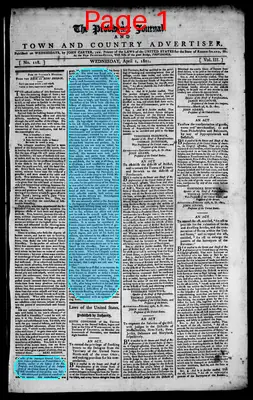
Story
April 1, 1801
The Providence Journal, And Town And Country Advertiser
Providence, Providence County, Rhode Island
What is this article about?
Biographical sketch of American General Charles Lee, detailing his intellectual gifts, sour temperament, military career in Europe and America, personal flaws, virtues like sincerity, and death in Philadelphia on October 2, 1782, from lung disease.
Clipping
OCR Quality
98%
Excellent
Full Text
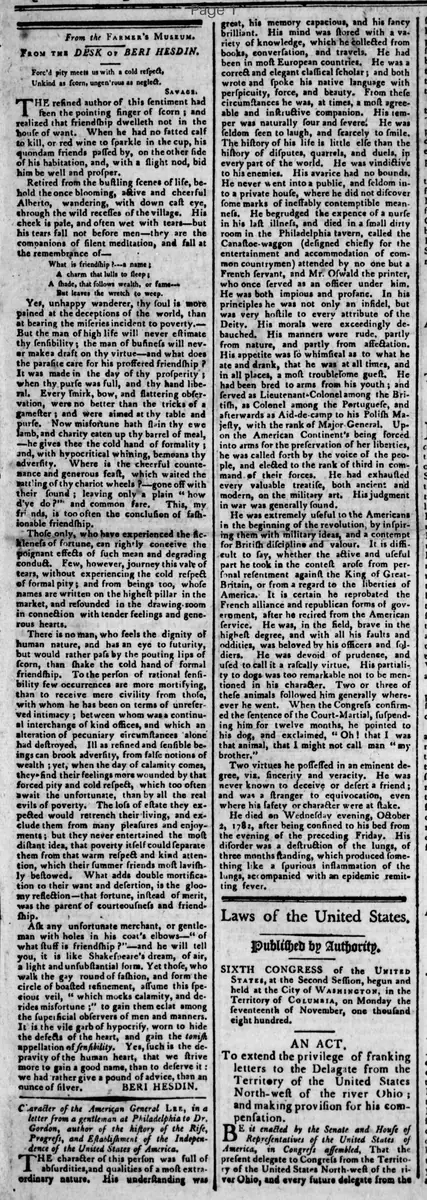
Character of the American General Lee, in a letter from a gentleman at Philadelphia to Dr. Gordon, author of the history of the Rise, Progress, and Establishment of the Independence of the United States of America.
THE character of this person was full of absurdities, and qualities of a most extraordinary nature. His understanding was great, his memory capacious, and his fancy brilliant. His mind was stored with a variety of knowledge, which he collected from books, conversation, and travels. He had been in most European countries. He was a correct and elegant classical scholar; and both wrote and spoke his native language with perspicuity, force, and beauty. From these circumstances he was, at times, a most agreeable and instructive companion. His temper was naturally sour and severe. He was seldom seen to laugh, and scarcely to smile. The history of his life is little else than the history of disputes, quarrels, and duels, in every part of the world. He was vindictive to his enemies. His avarice had no bounds. He never went into a public, and seldom into a private house, where he did not discover some marks of ineffably contemptible meanness. He begrudged the expense of a nurse in his last illness, and died in a small dirty room in the Philadelphia tavern, called the Conestoga-waggon (designed chiefly for the entertainment and accommodation of common countrymen) attended by no one but a French servant, and Mr. Oswald the printer, who once served as an officer under him. He was both impious and profane. In his principles he was not only an infidel, but was very hostile to every attribute of the Deity. His morals were exceedingly debauched. His manners were rude, partly from nature, and partly from affectation. His appetite was so whimsical as to what he ate and drank, that he was at all times, and in all places, a most troublesome guest. He had been bred to arms from his youth; and served as Lieutenant-Colonel among the British, as Colonel among the Portuguese, and afterwards as Aid-de-camp to his Polish Majesty, with the rank of Major-General. Upon the American Continent's being forced into arms for the preservation of her liberties, he was called forth by the voice of the people, and elected to the rank of third in command of their forces. He had exhausted every valuable treatise, both ancient and modern, on the military art. His judgment in war was generally sound.
He was extremely useful to the Americans in the beginning of the revolution, by inspiring them with military ideas, and a contempt for British discipline and valour. It is difficult to say, whether the active and useful part he took in the contest arose from personal resentment against the King of Great-Britain, or from a regard to the liberties of America.—It is certain he reprobated the French alliance and republican forms of government, after he retired from the American service. He was, in the field, brave in the highest degree, and with all his faults and oddities, was beloved by his officers and soldiers. He was devoid of prudence, and used to call it a rascally virtue. His partiality to dogs was too remarkable not to be mentioned in his character. Two or three of these animals followed him generally wherever he went. When the Congress confirmed the sentence of the Court-Martial, suspending him for twelve months, he pointed to his dog, and exclaimed, "Oh! that I was that animal, that I might not call man my brother."
Two virtues he possessed in an eminent degree, viz. sincerity and veracity. He was never known to deceive or desert a friend; and was a stranger to equivocation, even where his safety or character were at stake.
He died on Wednesday evening, October 2, 1782, after being confined to his bed from the evening of the preceding Friday. His disorder was a destruction of the lungs, of three months standing, which produced something like a spurious inflammation of the lungs, accompanied with an epidemic remitting fever.
THE character of this person was full of absurdities, and qualities of a most extraordinary nature. His understanding was great, his memory capacious, and his fancy brilliant. His mind was stored with a variety of knowledge, which he collected from books, conversation, and travels. He had been in most European countries. He was a correct and elegant classical scholar; and both wrote and spoke his native language with perspicuity, force, and beauty. From these circumstances he was, at times, a most agreeable and instructive companion. His temper was naturally sour and severe. He was seldom seen to laugh, and scarcely to smile. The history of his life is little else than the history of disputes, quarrels, and duels, in every part of the world. He was vindictive to his enemies. His avarice had no bounds. He never went into a public, and seldom into a private house, where he did not discover some marks of ineffably contemptible meanness. He begrudged the expense of a nurse in his last illness, and died in a small dirty room in the Philadelphia tavern, called the Conestoga-waggon (designed chiefly for the entertainment and accommodation of common countrymen) attended by no one but a French servant, and Mr. Oswald the printer, who once served as an officer under him. He was both impious and profane. In his principles he was not only an infidel, but was very hostile to every attribute of the Deity. His morals were exceedingly debauched. His manners were rude, partly from nature, and partly from affectation. His appetite was so whimsical as to what he ate and drank, that he was at all times, and in all places, a most troublesome guest. He had been bred to arms from his youth; and served as Lieutenant-Colonel among the British, as Colonel among the Portuguese, and afterwards as Aid-de-camp to his Polish Majesty, with the rank of Major-General. Upon the American Continent's being forced into arms for the preservation of her liberties, he was called forth by the voice of the people, and elected to the rank of third in command of their forces. He had exhausted every valuable treatise, both ancient and modern, on the military art. His judgment in war was generally sound.
He was extremely useful to the Americans in the beginning of the revolution, by inspiring them with military ideas, and a contempt for British discipline and valour. It is difficult to say, whether the active and useful part he took in the contest arose from personal resentment against the King of Great-Britain, or from a regard to the liberties of America.—It is certain he reprobated the French alliance and republican forms of government, after he retired from the American service. He was, in the field, brave in the highest degree, and with all his faults and oddities, was beloved by his officers and soldiers. He was devoid of prudence, and used to call it a rascally virtue. His partiality to dogs was too remarkable not to be mentioned in his character. Two or three of these animals followed him generally wherever he went. When the Congress confirmed the sentence of the Court-Martial, suspending him for twelve months, he pointed to his dog, and exclaimed, "Oh! that I was that animal, that I might not call man my brother."
Two virtues he possessed in an eminent degree, viz. sincerity and veracity. He was never known to deceive or desert a friend; and was a stranger to equivocation, even where his safety or character were at stake.
He died on Wednesday evening, October 2, 1782, after being confined to his bed from the evening of the preceding Friday. His disorder was a destruction of the lungs, of three months standing, which produced something like a spurious inflammation of the lungs, accompanied with an epidemic remitting fever.
What sub-type of article is it?
Biography
Historical Event
Military Action
What themes does it cover?
Bravery Heroism
Misfortune
Moral Virtue
What keywords are associated?
General Lee
American Revolution
Military Career
Character Sketch
Biography
Philly Tavern
Lung Disease
Sincerity Veracity
What entities or persons were involved?
American General Lee
Dr. Gordon
Mr. Oswald
French Servant
Where did it happen?
Philadelphia
Story Details
Key Persons
American General Lee
Dr. Gordon
Mr. Oswald
French Servant
Location
Philadelphia
Event Date
October 2, 1782
Story Details
Detailed character sketch of General Lee, highlighting his intellectual brilliance, military expertise and bravery in the American Revolution, personal flaws like avarice and rudeness, love of dogs, virtues of sincerity, and lonely death from lung disease.