Thank you for visiting SNEWPapers!
Sign up free
Story
September 9, 1937
The Western News
Libby, Lincoln County, Montana
What is this article about?
In May 1932, lineman Don Ward suffers a 2300-volt electrocution while stringing wires in Stony Brook, Long Island. Unconscious and seemingly dead, colleagues attempt artificial respiration. Kelly stubbornly continues despite others' discouragement, reviving Ward and saving his life.
Clipping
OCR Quality
98%
Excellent
Full Text
THE WESTERN NEWS. LIBBY. MONTANA
Floyd Gibbons
ADVENTURERS' CLUB
HEADLINES FROM
THE LIVES
OF PEOPLE
LIKE YOURSELF
"Breath of Life"
By FLOYD GIBBONS
Famous Headline Hunter
HELLO EVERYBODY:
I'll bet you'd have felt pretty tough, too, if this had happened to you. If you were lying at the door of death—depending for your very life on the efforts of two or three of your pals who were trying to save you—and you heard one of them say, "Aw, heck, fellows, we're not getting anywhere with this. Let's give it up for a bad job," well in a case like that I wouldn't blame any man for getting discouraged. And so was Don Ward discouraged, on that day back in May, 1932, when that identical thing happened to him.
Don has a job now at the Pilgrim State hospital at Brentwood, N. Y. He doesn't go out any more to shoot trouble among the electric wires and cables of Long Island, but in 1932 he was a lineman employed by a firm of electrical engineers in Northport, L. I., and worked with a gang of six men, stringing wires all over the surrounding country.
Chris Anderson was the boss of that crew, and there's another lad in that outfit whom we might as well mention now as at any other time, because he played a big part in this story of Don's. His name is Kelly, and he had a couple of sore feet and a stubborn disposition, and if he hadn't had both of those things it's a different yarn we'd be telling today.
Kelly's Sore Feet Started It All.
The crew was running a new street light circuit in Stony Brook, L. I. Don and Kelly were working together. They had strung seven or eight sections of wire when Kelly began to complain about his feet. He had on a new pair of shoes that day, and climbing up and down the poles made them sore. So Don told Kelly to stay on the ground. He'd take over the part of the work that called for climbing.
Don went up the next pole. There were a lot of other wires strung on it—old ones from which the insulation had worn off until they were practically bare. Don admits he should have been more careful in tackling that mess. There were safety devices in their truck that he could have used. But the fellow who works on even the most dangerous job gets careless once in a while, and this was Don's day to do it.
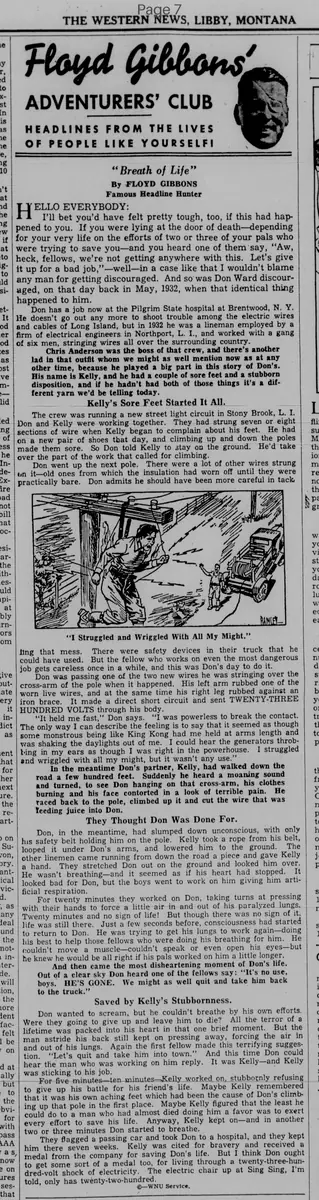
Don was passing one of the two new wires he was stringing over the cross-arm of the pole when it happened. His left arm rubbed one of the worn live wires, and at the same time his right leg rubbed against an iron brace. It made a direct short circuit and sent TWENTY-THREE HUNDRED VOLTS through his body.
"It held me fast," Don says. "I was powerless to break the contact. The only way I can describe the feeling is to say that it seemed as though some monstrous being like King Kong had me held at arms length and was shaking the daylights out of me. I could hear the generators throbbing in my ears as though I was right in the powerhouse. I struggled and wriggled with all my might, but it wasn't any use."
In the meantime Don's partner, Kelly, had walked down the road a few hundred feet. Suddenly he heard a moaning sound and turned, to see Don hanging on that cross-arm, his clothes burning and his face contorted in a look of terrible pain. He raced back to the pole, climbed up it and cut the wire that was feeding juice into Don.
They Thought Don Was Done For.
Don, in the meantime, had slumped down unconscious, with only his safety belt holding him on the pole. Kelly took a rope from his belt, looped it under Don's arms, and lowered him to the ground. The other linemen came running from down the road a piece and gave Kelly a hand. They stretched Don out on the ground and looked him over.
He wasn't breathing—and it seemed as if his heart had stopped. It looked bad for Don, but the boys went to work on him giving him artificial respiration.
For twenty minutes they worked on Don, taking turns at pressing with their hands to force a little air in and out of his paralyzed lungs. Twenty minutes and no sign of life! But though there was no sign of it, life was still there. Just a few seconds before, consciousness had started to return to Don. He was trying to get his lungs to work again—doing his best to help those fellows who were doing his breathing for him. He couldn't move a muscle—couldn't speak or even open his eyes—but he knew he would be all right if his pals worked on him a little longer.
And then came the most disheartening moment of Don's life.
Out of a clear sky Don heard one of the fellows say: "It's no use, boys. HE'S GONE. We might as well quit and take him back to the truck."
Saved by Kelly's Stubbornness.
Don wanted to scream, but he couldn't breathe by his own efforts. Were they going to give up and leave him to die? All the terror of a lifetime was packed into his heart in that one brief moment. But the man astride his back still kept on pressing away, forcing the air in and out of his lungs. Again the first fellow made this terrifying suggestion. "Let's quit and take him into town." And this time Don could hear the man who was working on him reply. It was Kelly—and Kelly was sticking to his job.
For five minutes—ten minutes—Kelly worked on, stubbornly refusing to give up his battle for his friend's life. Maybe Kelly remembered that it was his own aching feet which had been the cause of Don's climbing up that pole in the first place. Maybe Kelly figured that the least he could do to a man who had almost died doing him a favor was to exert every effort to save his life. Anyway, Kelly kept on—and in another two or three minutes Don started to breathe.
They flagged a passing car and took Don to a hospital, and they kept him there seven weeks. Kelly was cited for bravery and received a medal from the company for saving Don's life. But I think Don ought to get some sort of a medal too, for living through a twenty-three-hundred-volt shock of electricity. The electric chair up at Sing Sing, I'm told, only has twenty-two-hundred.
Floyd Gibbons
ADVENTURERS' CLUB
HEADLINES FROM
THE LIVES
OF PEOPLE
LIKE YOURSELF
"Breath of Life"
By FLOYD GIBBONS
Famous Headline Hunter
HELLO EVERYBODY:
I'll bet you'd have felt pretty tough, too, if this had happened to you. If you were lying at the door of death—depending for your very life on the efforts of two or three of your pals who were trying to save you—and you heard one of them say, "Aw, heck, fellows, we're not getting anywhere with this. Let's give it up for a bad job," well in a case like that I wouldn't blame any man for getting discouraged. And so was Don Ward discouraged, on that day back in May, 1932, when that identical thing happened to him.
Don has a job now at the Pilgrim State hospital at Brentwood, N. Y. He doesn't go out any more to shoot trouble among the electric wires and cables of Long Island, but in 1932 he was a lineman employed by a firm of electrical engineers in Northport, L. I., and worked with a gang of six men, stringing wires all over the surrounding country.
Chris Anderson was the boss of that crew, and there's another lad in that outfit whom we might as well mention now as at any other time, because he played a big part in this story of Don's. His name is Kelly, and he had a couple of sore feet and a stubborn disposition, and if he hadn't had both of those things it's a different yarn we'd be telling today.
Kelly's Sore Feet Started It All.
The crew was running a new street light circuit in Stony Brook, L. I. Don and Kelly were working together. They had strung seven or eight sections of wire when Kelly began to complain about his feet. He had on a new pair of shoes that day, and climbing up and down the poles made them sore. So Don told Kelly to stay on the ground. He'd take over the part of the work that called for climbing.
Don went up the next pole. There were a lot of other wires strung on it—old ones from which the insulation had worn off until they were practically bare. Don admits he should have been more careful in tackling that mess. There were safety devices in their truck that he could have used. But the fellow who works on even the most dangerous job gets careless once in a while, and this was Don's day to do it.
Don was passing one of the two new wires he was stringing over the cross-arm of the pole when it happened. His left arm rubbed one of the worn live wires, and at the same time his right leg rubbed against an iron brace. It made a direct short circuit and sent TWENTY-THREE HUNDRED VOLTS through his body.
"It held me fast," Don says. "I was powerless to break the contact. The only way I can describe the feeling is to say that it seemed as though some monstrous being like King Kong had me held at arms length and was shaking the daylights out of me. I could hear the generators throbbing in my ears as though I was right in the powerhouse. I struggled and wriggled with all my might, but it wasn't any use."
In the meantime Don's partner, Kelly, had walked down the road a few hundred feet. Suddenly he heard a moaning sound and turned, to see Don hanging on that cross-arm, his clothes burning and his face contorted in a look of terrible pain. He raced back to the pole, climbed up it and cut the wire that was feeding juice into Don.
They Thought Don Was Done For.
Don, in the meantime, had slumped down unconscious, with only his safety belt holding him on the pole. Kelly took a rope from his belt, looped it under Don's arms, and lowered him to the ground. The other linemen came running from down the road a piece and gave Kelly a hand. They stretched Don out on the ground and looked him over.
He wasn't breathing—and it seemed as if his heart had stopped. It looked bad for Don, but the boys went to work on him giving him artificial respiration.
For twenty minutes they worked on Don, taking turns at pressing with their hands to force a little air in and out of his paralyzed lungs. Twenty minutes and no sign of life! But though there was no sign of it, life was still there. Just a few seconds before, consciousness had started to return to Don. He was trying to get his lungs to work again—doing his best to help those fellows who were doing his breathing for him. He couldn't move a muscle—couldn't speak or even open his eyes—but he knew he would be all right if his pals worked on him a little longer.
And then came the most disheartening moment of Don's life.
Out of a clear sky Don heard one of the fellows say: "It's no use, boys. HE'S GONE. We might as well quit and take him back to the truck."
Saved by Kelly's Stubbornness.
Don wanted to scream, but he couldn't breathe by his own efforts. Were they going to give up and leave him to die? All the terror of a lifetime was packed into his heart in that one brief moment. But the man astride his back still kept on pressing away, forcing the air in and out of his lungs. Again the first fellow made this terrifying suggestion. "Let's quit and take him into town." And this time Don could hear the man who was working on him reply. It was Kelly—and Kelly was sticking to his job.
For five minutes—ten minutes—Kelly worked on, stubbornly refusing to give up his battle for his friend's life. Maybe Kelly remembered that it was his own aching feet which had been the cause of Don's climbing up that pole in the first place. Maybe Kelly figured that the least he could do to a man who had almost died doing him a favor was to exert every effort to save his life. Anyway, Kelly kept on—and in another two or three minutes Don started to breathe.
They flagged a passing car and took Don to a hospital, and they kept him there seven weeks. Kelly was cited for bravery and received a medal from the company for saving Don's life. But I think Don ought to get some sort of a medal too, for living through a twenty-three-hundred-volt shock of electricity. The electric chair up at Sing Sing, I'm told, only has twenty-two-hundred.
What sub-type of article is it?
Survival
Heroic Act
Personal Triumph
What themes does it cover?
Bravery Heroism
Survival
Triumph
What keywords are associated?
Electrocution
Lineman Accident
Artificial Respiration
Heroic Rescue
Survival Story
Stubborn Persistence
What entities or persons were involved?
Don Ward
Kelly
Chris Anderson
Where did it happen?
Stony Brook, L. I.
Story Details
Key Persons
Don Ward
Kelly
Chris Anderson
Location
Stony Brook, L. I.
Event Date
May, 1932
Story Details
Lineman Don Ward is electrocuted by 2300 volts while climbing a pole due to Kelly's sore feet. Kelly cuts the power, lowers him, and persists with artificial respiration for over 25 minutes despite colleagues wanting to quit, reviving Don who was conscious but unable to move.