Thank you for visiting SNEWPapers!
Sign up free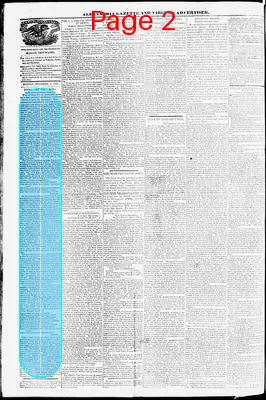
Literary
November 1, 1841
Alexandria Gazette
Alexandria, Alexandria County, District Of Columbia
What is this article about?
An 1841 excerpt from Shaw's 'Nature Displayed' explores microscopic wonders, revealing intricate structures in sand, cheese mites, mold, butterfly scales, skin pores, and tiny animals, evoking awe at God's wisdom and creation, with embedded poems by Browne.
Clipping

OCR Quality
95%
Excellent
Full Text
MONDAY, NOVEMBER 1, 1841
MICROSCOPIC PHENOMENA.
FROM SHAW'S NATURE DISPLAYED.
What we have already considered makes
but a small portion of the wonders which are
unfolded to us by the microscope. This instrument has introduced to us a new world of
vegetables and animals, and demonstrated
that there are equal order and harmony in the
mite's construction, as in that of the whale or
the elephant. The only difference is, our weakness of sight prevents our penetrating into
the nature and organization of small bodies,
which often escape our eyes, and can't be perceived only by the assistance of glasses, which
teach us that the smallest objects wholly unknown to our forefathers, have extension,
parts, and a well-organized form. The mention of some examples will lead us to acknowledge the power, wisdom, and goodness of that
Deity who affords unto all existence and happiness.
Grains of sand appear of the same form to
the naked eye, but seen through a microscope
exhibit different shapes and sizes, globular,
square, conical, and mostly irregular: and
what is more surprising, in their cavities have
been found by the microscope, insects of various kinds. In decayed cheese are multitudes
of little worms called mites, which, to the naked eye, appear like shapeless and confused
moving particles, but the microscope proves
them of a very singular and curious figure.
They have eyes, mouth, feet, and a transparent
body, furnished with long hair in the
form of prickles.
The mouldy substance on damp bodies exhibits a region of minute plants. Sometimes
it appears a forest of trees, whose branches,
leaves, flowers, and fruits, are clearly distinguished. Some of the flowers have long, white,
transparent stalks, and the buds, before they
open, are little green balls which become
white. The particles of dust on the wings of
the butterfly, prove, by the microscope, to be
beautiful and well arranged little feathers.
In down of every variegated dye,
Shines, fluttering soft, the gaudy butterfly.
That powder which thy spoiling hands dis-
tains,
The form of quills and painted plumes contains.
Not courts do more magnificence express,
In all their blaze of gems and pomp of dress.
BROWNR.
By the same instrument the surface of our
skin has scales resembling those of a fish; but
so minute, that a single grain would cover 250,
and a single scale covers 500 pores, whence
issues the insensible perspiration necessary to
health; consequently, a single grain of sand
can cover 125,000 pores of the human body.
The microscope displays, with each object, a
thousand others which escaped recognition, in
each of which others remain unseen, which
even the microscope can never bring to view.
What wonders should we see, could we continually improve those glasses invented to assist our sight! Imagination may, in some measure, supply the defect of our eyes, and serve
as a mental microscope, to represent, in each
atom, thousands of new and invisible worlds.
In contemplating the works of God, the effects of his wisdom and goodness are as evidently displayed in the spider's web, as in
those laws which connect the sun and his circling planets. The microscope discovers, in miniature, new worlds, which ought to
excite man's wonder, and urge him to
religious reverence. Persons deprived of an
opportunity to examine the curious objects
displayed by the microscope, will be glad to
know what has been seen by others; and
what themselves may contemplate with delight.
The mosses and grass with which the earth
is covered, as with a carpet, are composed of
many threads and small particles, into which
they are divisible. The particles of water are
so small, that millions of animalcules may be
suspended on the point of a needle; how many
then, must there be in the rivers and seas!
From a lighted candle there issues, in one minute, more particles of light than there are
grains of sand in the whole earth; how vast,
then, the number that flow in a day, or a
year, or a century, from that immense body,
the sun! How indefinitely small must those
particles of odoriferous bodies be, which affect
large spaces for days and even weeks, without any sensible loss of their weight!
Let us pass to the animated creation. In a
summer's evening the air swarms with living
creatures. Each drop of stagnant water contains a little world of animated beings. Each
leaf of a tree is a colony for insects; every
plant, every flower, affords food for millions
of creatures. Who but must have seen the
innumerable swarms of flies, gnats, and other
insects collected in the compass of a few
yards! What prodigious shoals must be over
the whole earth—in the immense expanse of
the atmosphere! How many millions of
smaller insects and worms crawl on the ground,
or live beneath its surface!
The artificial convex will reveal,
The forms diminutive that each conceal:
Some so minute, that to the other extreme,
The mite a vast leviathan would seem;
That yet of organs, functions, sense partake.
Equal with animals of larger make—
In curious limbs and clothing they surpass
By far the comeliest of the bulky mass,
A world of beauties! that, through all their
frame,
Creation's grandest miracles proclaim.
BROWNE.
Did not experiments and observations by the
microscope prove the fact, it would be incredible that there are animals a million times
smaller than a grain of sand; yet endowed
with organs of nutrition, motion, &c. There
are shell fish so small that even through a microscope, they appear scarcely larger than a
grain of wheat, and these are living animals,
enclosed in hard houses. How inconceivably
fine are the spider's threads! as thousands
would scarcely be as thick as common sewing
silk. How small is the mite! and yet this almost imperceptible atom, seen through a microscope, is a hairy animal perfect in its limbs,
active in its motions, of a regular form, full of
life and sensibility, and provided with all requisite organs. Though scarcely visible to
us, it is made up of parts infinitely smaller
than the whole. How minute then, must be
the particles of those fluids which circulate
through the veins of such animalcules!
MICROSCOPIC PHENOMENA.
FROM SHAW'S NATURE DISPLAYED.
What we have already considered makes
but a small portion of the wonders which are
unfolded to us by the microscope. This instrument has introduced to us a new world of
vegetables and animals, and demonstrated
that there are equal order and harmony in the
mite's construction, as in that of the whale or
the elephant. The only difference is, our weakness of sight prevents our penetrating into
the nature and organization of small bodies,
which often escape our eyes, and can't be perceived only by the assistance of glasses, which
teach us that the smallest objects wholly unknown to our forefathers, have extension,
parts, and a well-organized form. The mention of some examples will lead us to acknowledge the power, wisdom, and goodness of that
Deity who affords unto all existence and happiness.
Grains of sand appear of the same form to
the naked eye, but seen through a microscope
exhibit different shapes and sizes, globular,
square, conical, and mostly irregular: and
what is more surprising, in their cavities have
been found by the microscope, insects of various kinds. In decayed cheese are multitudes
of little worms called mites, which, to the naked eye, appear like shapeless and confused
moving particles, but the microscope proves
them of a very singular and curious figure.
They have eyes, mouth, feet, and a transparent
body, furnished with long hair in the
form of prickles.
The mouldy substance on damp bodies exhibits a region of minute plants. Sometimes
it appears a forest of trees, whose branches,
leaves, flowers, and fruits, are clearly distinguished. Some of the flowers have long, white,
transparent stalks, and the buds, before they
open, are little green balls which become
white. The particles of dust on the wings of
the butterfly, prove, by the microscope, to be
beautiful and well arranged little feathers.
In down of every variegated dye,
Shines, fluttering soft, the gaudy butterfly.
That powder which thy spoiling hands dis-
tains,
The form of quills and painted plumes contains.
Not courts do more magnificence express,
In all their blaze of gems and pomp of dress.
BROWNR.
By the same instrument the surface of our
skin has scales resembling those of a fish; but
so minute, that a single grain would cover 250,
and a single scale covers 500 pores, whence
issues the insensible perspiration necessary to
health; consequently, a single grain of sand
can cover 125,000 pores of the human body.
The microscope displays, with each object, a
thousand others which escaped recognition, in
each of which others remain unseen, which
even the microscope can never bring to view.
What wonders should we see, could we continually improve those glasses invented to assist our sight! Imagination may, in some measure, supply the defect of our eyes, and serve
as a mental microscope, to represent, in each
atom, thousands of new and invisible worlds.
In contemplating the works of God, the effects of his wisdom and goodness are as evidently displayed in the spider's web, as in
those laws which connect the sun and his circling planets. The microscope discovers, in miniature, new worlds, which ought to
excite man's wonder, and urge him to
religious reverence. Persons deprived of an
opportunity to examine the curious objects
displayed by the microscope, will be glad to
know what has been seen by others; and
what themselves may contemplate with delight.
The mosses and grass with which the earth
is covered, as with a carpet, are composed of
many threads and small particles, into which
they are divisible. The particles of water are
so small, that millions of animalcules may be
suspended on the point of a needle; how many
then, must there be in the rivers and seas!
From a lighted candle there issues, in one minute, more particles of light than there are
grains of sand in the whole earth; how vast,
then, the number that flow in a day, or a
year, or a century, from that immense body,
the sun! How indefinitely small must those
particles of odoriferous bodies be, which affect
large spaces for days and even weeks, without any sensible loss of their weight!
Let us pass to the animated creation. In a
summer's evening the air swarms with living
creatures. Each drop of stagnant water contains a little world of animated beings. Each
leaf of a tree is a colony for insects; every
plant, every flower, affords food for millions
of creatures. Who but must have seen the
innumerable swarms of flies, gnats, and other
insects collected in the compass of a few
yards! What prodigious shoals must be over
the whole earth—in the immense expanse of
the atmosphere! How many millions of
smaller insects and worms crawl on the ground,
or live beneath its surface!
The artificial convex will reveal,
The forms diminutive that each conceal:
Some so minute, that to the other extreme,
The mite a vast leviathan would seem;
That yet of organs, functions, sense partake.
Equal with animals of larger make—
In curious limbs and clothing they surpass
By far the comeliest of the bulky mass,
A world of beauties! that, through all their
frame,
Creation's grandest miracles proclaim.
BROWNE.
Did not experiments and observations by the
microscope prove the fact, it would be incredible that there are animals a million times
smaller than a grain of sand; yet endowed
with organs of nutrition, motion, &c. There
are shell fish so small that even through a microscope, they appear scarcely larger than a
grain of wheat, and these are living animals,
enclosed in hard houses. How inconceivably
fine are the spider's threads! as thousands
would scarcely be as thick as common sewing
silk. How small is the mite! and yet this almost imperceptible atom, seen through a microscope, is a hairy animal perfect in its limbs,
active in its motions, of a regular form, full of
life and sensibility, and provided with all requisite organs. Though scarcely visible to
us, it is made up of parts infinitely smaller
than the whole. How minute then, must be
the particles of those fluids which circulate
through the veins of such animalcules!
What sub-type of article is it?
Essay
Poem
What themes does it cover?
Nature
Religious
What keywords are associated?
Microscope
Microscopic Wonders
Mites
Insects
Gods Creation
Nature Observation
Religious Awe
What entities or persons were involved?
From Shaw's Nature Displayed
Literary Details
Title
Microscopic Phenomena
Author
From Shaw's Nature Displayed
Subject
Wonders Of The Microscope Revealing God's Creation
Key Lines
In Down Of Every Variegated Dye,
Shines, Fluttering Soft, The Gaudy Butterfly.
That Powder Which Thy Spoiling Hands Dis
Tains,
The Form Of Quills And Painted Plumes Contains.
Not Courts Do More Magnificence Express,
In All Their Blaze Of Gems And Pomp Of Dress.
Brownr.
The Artificial Convex Will Reveal,
The Forms Diminutive That Each Conceal:
Some So Minute, That To The Other Extreme,
The Mite A Vast Leviathan Would Seem;
That Yet Of Organs, Functions, Sense Partake.
Equal With Animals Of Larger Make—
In Curious Limbs And Clothing They Surpass
By Far The Comeliest Of The Bulky Mass,
A World Of Beauties! That, Through All Their
Frame,
Creation's Grandest Miracles Proclaim.
Browne.