Thank you for visiting SNEWPapers!
Sign up free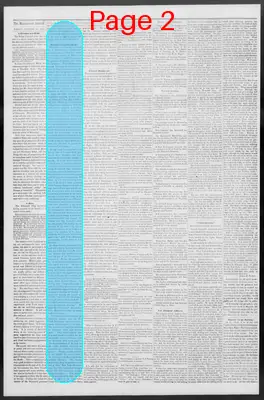
Story
December 1, 1863
The Manchester Journal
Manchester, Bennington, Bennington County, Vermont
What is this article about?
Political commentary on Governor Bramlette's election in Kentucky and Democratic shifts in labeling him, contrasted with Seymour's New York campaign. Bramlette's firm pro-Union letter exposes Copperhead hypocrisy, explaining why Democrats avoided his stumping.
Clipping

OCR Quality
98%
Excellent
Full Text
Bramlette and Seymour.
Previous to the election of Governor in Kentucky, the Democratic sheets throughout the Northern States favored the election of Powell, the "Conservative" candidate, and called his opponent, Bramlette, the "Abolition" nominee. When Bramlette was elected Governor by sixty thousand majority, those journals suddenly discovered that he was the true Democratic candidate, and that his election was a great Conservative triumph.
Before the election in New York it was one day announced with a great flourish of trumpets on the part of the Seymour Democracy that Gov. Bramlette of Kentucky was expected to stump the State in favor of the Democratic nominee. After an ominous silence of a few days a bulletin was sent forth from the Democratic headquarters, announcing that the rebel raid in progress in his State rendered the duties of Gov. Bramlette so pressing that it would be impossible for him to assist in firing the Democratic heart for the coming election. It being very evident to every one that this was a poor excuse seized upon to relieve them from some unexpected dilemma, it was generally believed that the managers of the approaching canvass had discovered that the doctrines likely to be advanced by the Kentucky Governor would not be eminently calculated to promote the interests of their cause.
If any doubt has remained to the present time with regard to the position of Gov. Bramlette, that doubt may now be considered as entirely removed. It seems that a self-styled "Union man" of Kentucky has written the Governor a letter with a volubility of "ifs" and "buts" sufficient to move the envy of Seymour himself. The whole document is in the choicest style of Copperhead composition. He closes up with the accustomed assertion of all the New York politicians of the Seymour stamp: "I have always been a Union man, and am still, but I cannot and never will, endorse the present programme of the war at present, which I think leads to the utter demolishment of the old Union."
Whether this man expected an answer from Gov. Bramlette or not, he has got one, and one which he will probably remember for some time to come. The Governor tells him that he is one of those patriots whose political horizon is bounded by "my nigger." He informs him that he knows "where the shoe pinches" his loyalty—he has lost some of his slaves "by the unlawful interference of the Federal officers" "in violation of the laws of Kentucky and Congress" and in disregard of the "spirit of the President's proclamation and the order of Gen. Burnside."
He thinks that the destruction of slavery will probably be the result of the war, but denies that this is its object, and declares that he will never imperil the life of his Government to preserve it. He lays the responsibility of its destruction with the rebels who "made this war." He tells his correspondent that he who would destroy the Union to preserve slavery, is as bad as he who would destroy the Union to destroy that institution, thus showing him his political similitude to those whom he most detests. Believing that a disagreement with regard to its policy gives no one a right to withhold his support from the Government in the crisis of rebellion, the Governor declares for himself that he will "stand by his Government" "though fortunes be wrecked, life be sacrificed, and institutions be destroyed in the sweep of rebellion."
We hope the "Union man" who wrote to Gov. Bramlette considers his answer sufficiently explicit.
This answer of Gov. Bramlette satisfactorily explains why the New York Democracy were so anxious to break their engagement with him. The sentiments of that letter delivered in Tammany would upset the very walls. They would doubtless place in a most woeful uncertainty the simple-minded "aliens" who have "voted for Fernandy dese seven years." The more intelligent of the rank and file would doubtless denounce the Governor as a "minion of arbitrary power." Imagine a great gathering of the faithful who were to listen to the Governor from Kentucky for their political edification. The meeting would very likely be presided over by one of those New York editors who says that "this Government has manacles for white men and shoulder-straps for niggers."
Gov. Seymour would undoubtedly be upon the platform to listen to his Conservative friend from one of the Border States which is likely to become a victim of the "Abolition policy" of the present Administration. We have no doubt that the "immense applause" with which the Governor would be greeted would soon give way to ghastly smiles. If Gov. Seymour should survive such a shock his friends might rest assured that he has a good constitution. It is very lucky for the New York Democracy that they discovered the sentiments of Gov. Bramlette in season to keep him out of the canvass. His appearance on the stump would have subjected them to one of the richest "sells" known in the history of politics.
Previous to the election of Governor in Kentucky, the Democratic sheets throughout the Northern States favored the election of Powell, the "Conservative" candidate, and called his opponent, Bramlette, the "Abolition" nominee. When Bramlette was elected Governor by sixty thousand majority, those journals suddenly discovered that he was the true Democratic candidate, and that his election was a great Conservative triumph.
Before the election in New York it was one day announced with a great flourish of trumpets on the part of the Seymour Democracy that Gov. Bramlette of Kentucky was expected to stump the State in favor of the Democratic nominee. After an ominous silence of a few days a bulletin was sent forth from the Democratic headquarters, announcing that the rebel raid in progress in his State rendered the duties of Gov. Bramlette so pressing that it would be impossible for him to assist in firing the Democratic heart for the coming election. It being very evident to every one that this was a poor excuse seized upon to relieve them from some unexpected dilemma, it was generally believed that the managers of the approaching canvass had discovered that the doctrines likely to be advanced by the Kentucky Governor would not be eminently calculated to promote the interests of their cause.
If any doubt has remained to the present time with regard to the position of Gov. Bramlette, that doubt may now be considered as entirely removed. It seems that a self-styled "Union man" of Kentucky has written the Governor a letter with a volubility of "ifs" and "buts" sufficient to move the envy of Seymour himself. The whole document is in the choicest style of Copperhead composition. He closes up with the accustomed assertion of all the New York politicians of the Seymour stamp: "I have always been a Union man, and am still, but I cannot and never will, endorse the present programme of the war at present, which I think leads to the utter demolishment of the old Union."
Whether this man expected an answer from Gov. Bramlette or not, he has got one, and one which he will probably remember for some time to come. The Governor tells him that he is one of those patriots whose political horizon is bounded by "my nigger." He informs him that he knows "where the shoe pinches" his loyalty—he has lost some of his slaves "by the unlawful interference of the Federal officers" "in violation of the laws of Kentucky and Congress" and in disregard of the "spirit of the President's proclamation and the order of Gen. Burnside."
He thinks that the destruction of slavery will probably be the result of the war, but denies that this is its object, and declares that he will never imperil the life of his Government to preserve it. He lays the responsibility of its destruction with the rebels who "made this war." He tells his correspondent that he who would destroy the Union to preserve slavery, is as bad as he who would destroy the Union to destroy that institution, thus showing him his political similitude to those whom he most detests. Believing that a disagreement with regard to its policy gives no one a right to withhold his support from the Government in the crisis of rebellion, the Governor declares for himself that he will "stand by his Government" "though fortunes be wrecked, life be sacrificed, and institutions be destroyed in the sweep of rebellion."
We hope the "Union man" who wrote to Gov. Bramlette considers his answer sufficiently explicit.
This answer of Gov. Bramlette satisfactorily explains why the New York Democracy were so anxious to break their engagement with him. The sentiments of that letter delivered in Tammany would upset the very walls. They would doubtless place in a most woeful uncertainty the simple-minded "aliens" who have "voted for Fernandy dese seven years." The more intelligent of the rank and file would doubtless denounce the Governor as a "minion of arbitrary power." Imagine a great gathering of the faithful who were to listen to the Governor from Kentucky for their political edification. The meeting would very likely be presided over by one of those New York editors who says that "this Government has manacles for white men and shoulder-straps for niggers."
Gov. Seymour would undoubtedly be upon the platform to listen to his Conservative friend from one of the Border States which is likely to become a victim of the "Abolition policy" of the present Administration. We have no doubt that the "immense applause" with which the Governor would be greeted would soon give way to ghastly smiles. If Gov. Seymour should survive such a shock his friends might rest assured that he has a good constitution. It is very lucky for the New York Democracy that they discovered the sentiments of Gov. Bramlette in season to keep him out of the canvass. His appearance on the stump would have subjected them to one of the richest "sells" known in the history of politics.
What sub-type of article is it?
Historical Event
Deception Fraud
What themes does it cover?
Deception
Moral Virtue
Justice
What keywords are associated?
Political Hypocrisy
Civil War Politics
Governor Bramlette
Democratic Party
Union Loyalty
Slavery Debate
Copperhead Letter
What entities or persons were involved?
Bramlette
Seymour
Powell
Where did it happen?
Kentucky, New York
Story Details
Key Persons
Bramlette
Seymour
Powell
Location
Kentucky, New York
Event Date
Previous To The Election Of Governor In Kentucky
Story Details
Democratic press shifts stance on Bramlette after his election; New York Democrats cancel his stumping due to his pro-Union views; Bramlette's letter rebukes a Copperhead 'Union man' prioritizing slavery over Union.