Thank you for visiting SNEWPapers!
Sign up free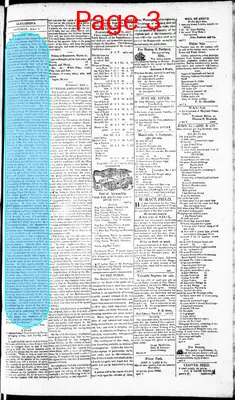
Foreign News
April 5, 1817
Alexandria Gazette, Commercial And Political
Alexandria, Virginia
What is this article about?
Skeptical analysis of a rumor from a British packet reporting a revolution in France against the Bourbon dynasty, suggesting it would secure rather than endanger Bourbon rule and invite foreign intervention.
Clipping

OCR Quality
88%
Good
Full Text
European Rumors.
With regard to the rumor brought by the Hippomenes, that letters were arrived at Curacoa from St. Bartholomews, stating that a British packet had touched there in 26 days from Falmouth, bound to Barbadoes, with information that there was a revolution in France, and that the equipage of twenty four sail of the line, it comes, as Hamlet says, in a questionable shape. If an insurrection of this character had taken place, the question is cui bono? If it be a plan, it must be for some definite object; and the argument, that this object is the extermination of the Bourbons, and that all the armies are to be extirpated also, or is it to recall those enormities which they were stationed there to prevent! An insurrection at the present moment, so far from putting the Bourbon dynasty in jeopardy, would only serve to render it more secure; it would furnish a pretext for any severity which the conquerors of France might think proper to inflict, even to its dismemberment and division amongst them. We can hardly therefore believe that these insurgents in their zeal to render themselves independent of a Bourbon dynasty, would count nations. This was attempted under far more auspicious circumstances than the present at the battle, bringing our minds to believe that the French have lost all the traces of that battle, no reliance we think can be placed on the truth of the report above mentioned. The cases are similar at all points; when the congress of France were convened at Vienna, and engaged in the important business of securing the future tranquility of Europe, before the disbanding of their armies, an attempt was made for the expulsion of the Bourbons from the throne. The result of the battle of Waterloo, convinced the French themselves how perilous again, a renewal of such for they will not grow wiser by such dear bought lessons of experience, then may they be prepared to anticipate threatened to inflict, the dismemberment of France. Infuriated men as of this character; but to suppose a whole nation composed of such individuals, almost amounts to a libel on human nature. Did the allies wish the further degradation and humiliation of France, they would covertly lend their countenance to such insurrections, because it would afford them a pretext for taking possession of Paris in the name of the combined monarchs. In fact, partial risings of turbulent and discontented individuals have been so often magnified by the time that they cross the Atlantic, in their size, character and consequences, that we are not at all surprised by reports of this kind. Insurrections which where they have happened, have been forgotten by the time the intelligence reached us, are swelled into matters of the utmost importance by those on this side of the Atlantic, who think so favorable of revolutions. The question is not with such men, how their country is to be benefitted by the whirl of the revolutionary wheel: their only pleasure seems to be in witnessing the rapidity of its circles.
Heads (says Swift) under the dominion of the moon, are for perpetual changes and perpetual revolutions.
Fed. Rep.
With regard to the rumor brought by the Hippomenes, that letters were arrived at Curacoa from St. Bartholomews, stating that a British packet had touched there in 26 days from Falmouth, bound to Barbadoes, with information that there was a revolution in France, and that the equipage of twenty four sail of the line, it comes, as Hamlet says, in a questionable shape. If an insurrection of this character had taken place, the question is cui bono? If it be a plan, it must be for some definite object; and the argument, that this object is the extermination of the Bourbons, and that all the armies are to be extirpated also, or is it to recall those enormities which they were stationed there to prevent! An insurrection at the present moment, so far from putting the Bourbon dynasty in jeopardy, would only serve to render it more secure; it would furnish a pretext for any severity which the conquerors of France might think proper to inflict, even to its dismemberment and division amongst them. We can hardly therefore believe that these insurgents in their zeal to render themselves independent of a Bourbon dynasty, would count nations. This was attempted under far more auspicious circumstances than the present at the battle, bringing our minds to believe that the French have lost all the traces of that battle, no reliance we think can be placed on the truth of the report above mentioned. The cases are similar at all points; when the congress of France were convened at Vienna, and engaged in the important business of securing the future tranquility of Europe, before the disbanding of their armies, an attempt was made for the expulsion of the Bourbons from the throne. The result of the battle of Waterloo, convinced the French themselves how perilous again, a renewal of such for they will not grow wiser by such dear bought lessons of experience, then may they be prepared to anticipate threatened to inflict, the dismemberment of France. Infuriated men as of this character; but to suppose a whole nation composed of such individuals, almost amounts to a libel on human nature. Did the allies wish the further degradation and humiliation of France, they would covertly lend their countenance to such insurrections, because it would afford them a pretext for taking possession of Paris in the name of the combined monarchs. In fact, partial risings of turbulent and discontented individuals have been so often magnified by the time that they cross the Atlantic, in their size, character and consequences, that we are not at all surprised by reports of this kind. Insurrections which where they have happened, have been forgotten by the time the intelligence reached us, are swelled into matters of the utmost importance by those on this side of the Atlantic, who think so favorable of revolutions. The question is not with such men, how their country is to be benefitted by the whirl of the revolutionary wheel: their only pleasure seems to be in witnessing the rapidity of its circles.
Heads (says Swift) under the dominion of the moon, are for perpetual changes and perpetual revolutions.
Fed. Rep.
What sub-type of article is it?
Political
What keywords are associated?
France Revolution
Bourbon Dynasty
European Rumors
Insurrection
Waterloo Aftermath
Where did it happen?
France
Foreign News Details
Primary Location
France
Event Details
Rumor brought by the Hippomenes of letters from St. Bartholomews via a British packet from Falmouth reporting a revolution in France against the Bourbon dynasty, involving an equipage of twenty-four sail of the line; the report is questioned and deemed unlikely given post-Waterloo circumstances, as it would strengthen Bourbon security and invite allied intervention.