Thank you for visiting SNEWPapers!
Sign up free
Literary
March 17, 1856
Alexandria Gazette
Alexandria, Alexandria County, District Of Columbia
What is this article about?
Poem by Eliza Cook depicting the simple, unmarked burial of a poor man, mourned solely by his loyal mongrel dog, which refuses to leave the grave and starves beside it, contrasting with the ornate tombs of the wealthy.
Clipping
OCR Quality
98%
Excellent
Full Text
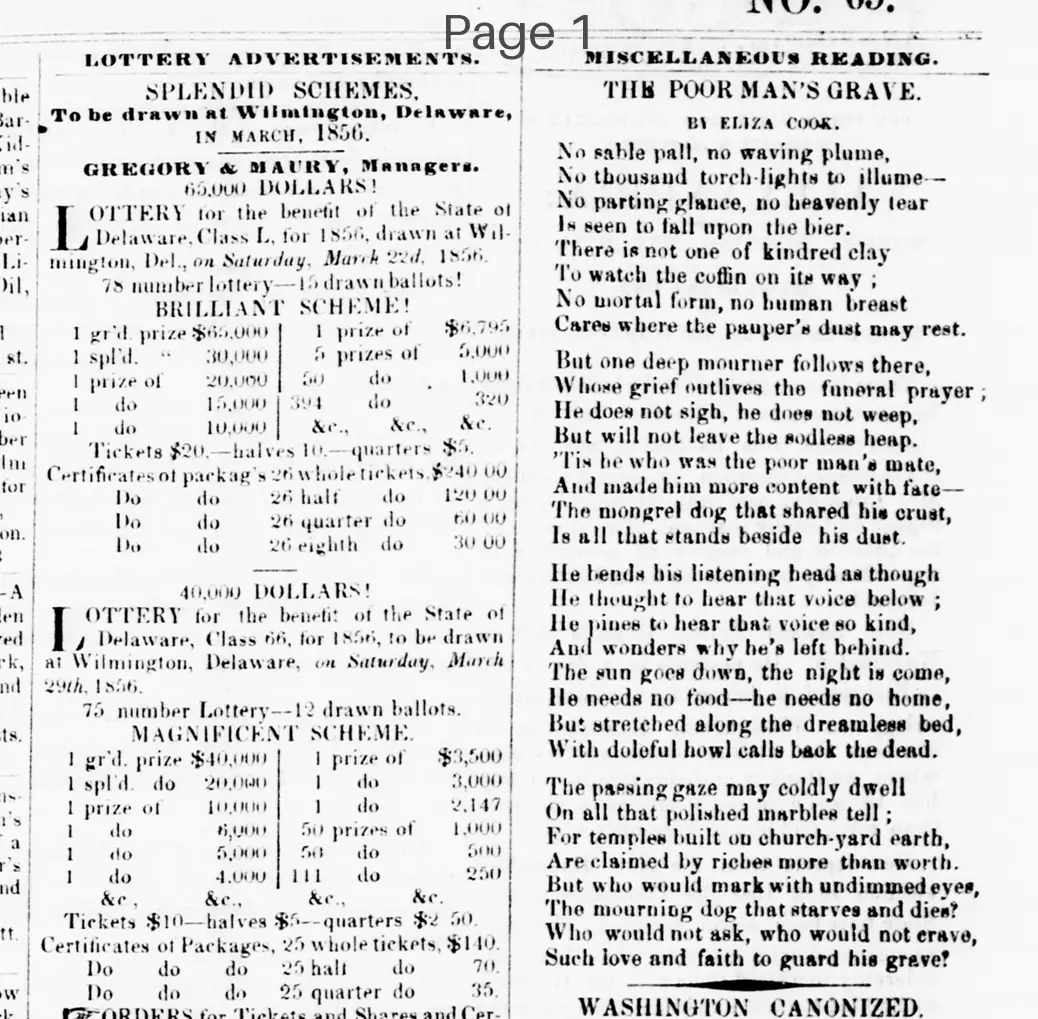
MISCELLANEOUS READING.
THE POOR MAN'S GRAVE.
BY ELIZA COOK.
No sable pall, no waving plume
No thousand torch-lights to illume—
No parting glance, no heavenly tear
Is seen to fall upon the bier.
There is not one of kindred clay
To watch the coffin on its way
No mortal form. no human breast
Cares where the pauper's dust may rest.
But one deep mourner follows there,
Whose grief outlives the funeral prayer;
He does not sigh, he does not weep.
But will not leave the sodless heap.
Tis he who was the poor man's mate,
And made him more content with fate
The mongrel dog that shared his crust
Is all that stands beside his dust.
He bends his listening head as though
He thought to hear that voice below;
He pines to hear that voice so kind,
And wonders why he's left behind.
The sun goes down, the night is come,
He needs no food—he needs no home
But stretched along the dreamless bed.
With doleful howl calls back the dead.
The passing gaze may coldly dwell
On all that polished marbles tell
For temples built on church-yard earth,
Are claimed by riches more than worth.
But who would mark with undimmed eyes
The mourning dog that starves and dies?
Who would not ask, who would not crave,
Such love and faith to guard his grave!
THE POOR MAN'S GRAVE.
BY ELIZA COOK.
No sable pall, no waving plume
No thousand torch-lights to illume—
No parting glance, no heavenly tear
Is seen to fall upon the bier.
There is not one of kindred clay
To watch the coffin on its way
No mortal form. no human breast
Cares where the pauper's dust may rest.
But one deep mourner follows there,
Whose grief outlives the funeral prayer;
He does not sigh, he does not weep.
But will not leave the sodless heap.
Tis he who was the poor man's mate,
And made him more content with fate
The mongrel dog that shared his crust
Is all that stands beside his dust.
He bends his listening head as though
He thought to hear that voice below;
He pines to hear that voice so kind,
And wonders why he's left behind.
The sun goes down, the night is come,
He needs no food—he needs no home
But stretched along the dreamless bed.
With doleful howl calls back the dead.
The passing gaze may coldly dwell
On all that polished marbles tell
For temples built on church-yard earth,
Are claimed by riches more than worth.
But who would mark with undimmed eyes
The mourning dog that starves and dies?
Who would not ask, who would not crave,
Such love and faith to guard his grave!
What sub-type of article is it?
Poem
Elegy
What themes does it cover?
Death Mortality
Moral Virtue
Friendship
What keywords are associated?
Poor Man Grave
Loyal Dog
Pauper Burial
Mourning
Poverty Contrast
Animal Loyalty
What entities or persons were involved?
By Eliza Cook.
Literary Details
Title
The Poor Man's Grave.
Author
By Eliza Cook.
Key Lines
But One Deep Mourner Follows There,
Whose Grief Outlives The Funeral Prayer;
He Does Not Sigh, He Does Not Weep.
But Will Not Leave The Sodless Heap.
The Mongrel Dog That Shared His Crust
Is All That Stands Beside His Dust.
Who Would Not Ask, Who Would Not Crave,
Such Love And Faith To Guard His Grave!