Thank you for visiting SNEWPapers!
Sign up free
The National Intelligencer And Washington Advertiser
Washington, District Of Columbia
What is this article about?
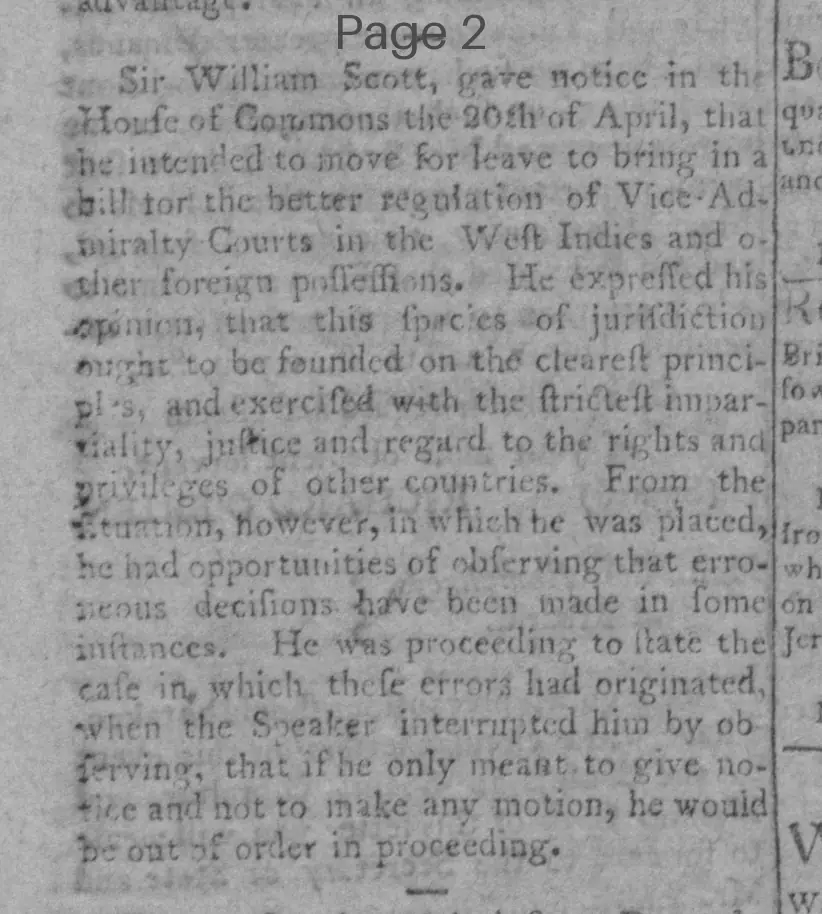
On April 20, Sir William Scott announced in the House of Commons his intention to introduce a bill for better regulation of Vice-Admiralty Courts in the West Indies and other foreign possessions, stressing clear principles, impartiality, and respect for other countries' rights. He began citing erroneous decisions but was interrupted by the Speaker for merely giving notice.
Clipping
OCR Quality
Full Text
What sub-type of article is it?
What keywords are associated?
What entities or persons were involved?
Where did it happen?
Foreign News Details
Primary Location
West Indies
Event Date
20th Of April
Key Persons
Event Details
Sir William Scott gave notice in the House of Commons of his intent to bring in a bill for better regulation of Vice-Admiralty Courts in the West Indies and other foreign possessions. He opined that such jurisdiction should be based on clear principles and exercised with strict impartiality, justice, and regard for other countries' rights. He noted observing erroneous decisions in some instances and began to detail a case but was interrupted by the Speaker for only giving notice without making a motion.