Thank you for visiting SNEWPapers!
Sign up free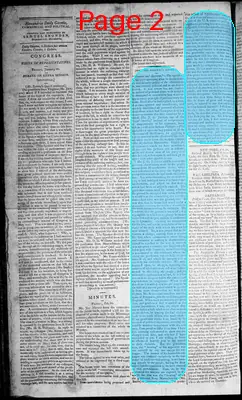
Editorial
February 13, 1809
Alexandria Daily Gazette, Commercial & Political
Alexandria, Virginia
What is this article about?
Editorial from Freeman's Journal defends Mr. Quincy's political speech criticizing the administration's embargo motives as non-personal and condemns Mr. J.G. Jackson's furious, abusive reply in Congress, quoting Jackson's retort accusing Quincy of libel and deception.
Clipping
OCR Quality
75%
Good
Full Text
FROM THE FREEMAN'S JOURNAL.
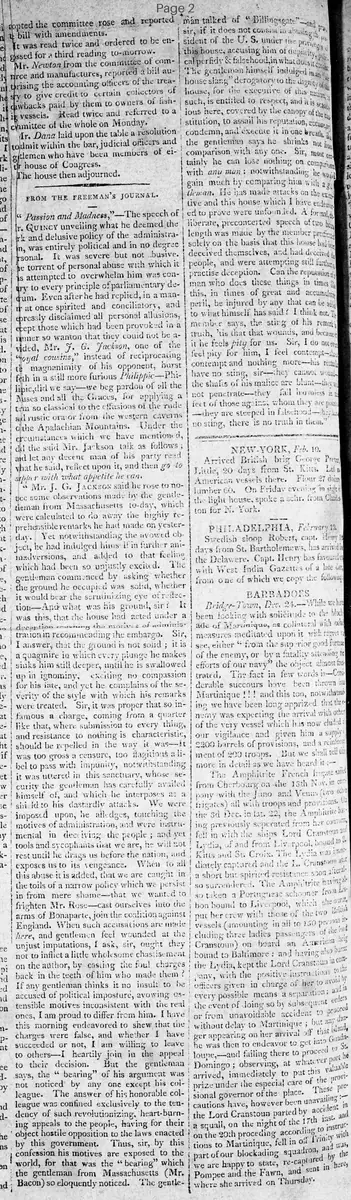
"Passion and Madness,"--The speech of Mr. Quincy unveiling what he deemed the dark and delusive policy of the administration, was entirely political and in no degree personal. It was severe but not abusive. The torrent of personal abuse with which it is attempted to overwhelm him was contrary to every principle of parliamentary decorum. Even after he had replied, in a manner at once spirited and conciliatory, and expressly disclaimed all personal allusions, except those which had been provoked in a manner so wanton that they could not be avoided, Mr. J. G. Jackson, one of the "royal cousins," instead of reciprocating the magnanimity of his opponent, burst forth in a still more furious Philippic--Philippic, did we say--we beg pardon of all the Muses and all the Graces, for applying a term so classical to the effusions of the rude and rustic orator from the western caverns of the Appalachian Mountains. Under the circumstances which we have mentioned, did the said Mr. Jackson talk as follows; and let any decent man of his party read what he said, reflect upon it, and then go to supper with what appetite he can.
"Mr. J. G. Jackson said he rose to notice some observations made by the gentleman from Massachusetts to-day, which were calculated to do away the highly reprehensible remarks he had made on yesterday. Yet notwithstanding the avowed object, he had indulged himself in further animadversions, and added to that feeling which had been so unjustly excited. The gentleman commenced by asking whether the ground he occupied was solid, whether it would bear the scrutinizing eye of reflection--And what was his ground, sir? It was this, that the house had acted under a deception touching the motives of administration in recommending the embargo. Sir. I answer, that the ground is not solid; it is a quagmire in which every plunge he makes sinks him still deeper, until he is swallowed up in ignominy, exciting no compassion for his fate, and yet he complains of the severity of the style with which his remarks were treated. Sir, it was proper that so infamous a charge, coming from a quarter like that, where submission to every thing, and resistance to nothing is characteristic. should be repelled in the way it was--it was too gross a censure, too flagitious a libel to pass with impunity, notwithstanding it was uttered in this sanctuary, whose security the gentleman has carefully availed himself of, and which he interposes as a shield to his dastardly attacks. We were imposed upon, he alleges, touching the motives of administration, and were instrumental in deceiving the people; and yet tools and sycophants that we are, he will not rest until he drags us before the nation, and exposes us to its vengeance. When to all this abuse it is added, that we are caught in the toils of a narrow policy which we persist in from mere shame--that we wanted to frighten Mr. Rose--cast ourselves into the arms of Bonaparte, join the coalition against England. When such accusations are made here, and gentlemen feel wounded at the unjust imputations, I ask, sir, ought they not to inflict a little wholesome chastisement on the author, by casting the foul charges back in the teeth of him who made them? If any gentleman thinks it no insult to be accused of political imposture, avowing ostensible motives inconsistent with the real ones, I am proud to differ from him. I have this morning endeavored to shew that the charges were false, and whether I have succeeded or not, I am willing to leave to others--I heartily join in the appeal to their decision. But the gentleman says, the "bearing" of his argument was not noticed by any one except his colleague. The answer of his honorable colleague was confined exclusively to the tendency of such revolutionizing, heart-burning appeals to the people, having for their object hostile opposition to the laws enacted by this government. Thus, sir, by this confession his motives are exposed to the world, for that was the "bearing" which the gentleman from Massachusetts (Mr. Bacon) so eloquently noticed. The gentleman talked of "Billingsgate"-and sir, if it does not consist in abusing the President of the U.S. under the cap of hypocrisy and falsehood in that. The gentleman himself [indulges in] house slang derogatory to the dignity of the house, for the executive of this nation, such, is entitled to respect, and it is scandalous here, covered by the canopy of the constitution, to assail his reputation, accuse, try, condemn, and execute it in one breath. the gentleman says he shrinks not from comparison with any one. Sir, most certainly he can lose nothing on comparison with any man : notwithstanding he would gain much by comparing him with a gentleman. He has made attacks on the executive and this house which I have endeavored to prove were unfounded. A formal, deliberate, preconcerted speech of two hours length was made by the member predicated solely on the basis that this house had been deceived themselves, and had deceived people, and were attempting still further to practise deception. Can the reputation of a man who does these things in times like this, in times of great and accumulating peril, be injured by any that can be added to what himself has said ? I think not. The member says, the sting of his remarks [is] truth, 'tis that that wounds, and because of it he feels pity for us. Sir, I do not feel pity for him, I feel contempt--sheer contempt and nothing more--his remarks have no sting, sir--they cannot wound-- the shafts of his malice are blunt--they cannot penetrate--they fall harmless at the feet of those against whom they are pointed. --they are steeped in falsehood--they have no sting, there is no truth in them."
"Passion and Madness,"--The speech of Mr. Quincy unveiling what he deemed the dark and delusive policy of the administration, was entirely political and in no degree personal. It was severe but not abusive. The torrent of personal abuse with which it is attempted to overwhelm him was contrary to every principle of parliamentary decorum. Even after he had replied, in a manner at once spirited and conciliatory, and expressly disclaimed all personal allusions, except those which had been provoked in a manner so wanton that they could not be avoided, Mr. J. G. Jackson, one of the "royal cousins," instead of reciprocating the magnanimity of his opponent, burst forth in a still more furious Philippic--Philippic, did we say--we beg pardon of all the Muses and all the Graces, for applying a term so classical to the effusions of the rude and rustic orator from the western caverns of the Appalachian Mountains. Under the circumstances which we have mentioned, did the said Mr. Jackson talk as follows; and let any decent man of his party read what he said, reflect upon it, and then go to supper with what appetite he can.
"Mr. J. G. Jackson said he rose to notice some observations made by the gentleman from Massachusetts to-day, which were calculated to do away the highly reprehensible remarks he had made on yesterday. Yet notwithstanding the avowed object, he had indulged himself in further animadversions, and added to that feeling which had been so unjustly excited. The gentleman commenced by asking whether the ground he occupied was solid, whether it would bear the scrutinizing eye of reflection--And what was his ground, sir? It was this, that the house had acted under a deception touching the motives of administration in recommending the embargo. Sir. I answer, that the ground is not solid; it is a quagmire in which every plunge he makes sinks him still deeper, until he is swallowed up in ignominy, exciting no compassion for his fate, and yet he complains of the severity of the style with which his remarks were treated. Sir, it was proper that so infamous a charge, coming from a quarter like that, where submission to every thing, and resistance to nothing is characteristic. should be repelled in the way it was--it was too gross a censure, too flagitious a libel to pass with impunity, notwithstanding it was uttered in this sanctuary, whose security the gentleman has carefully availed himself of, and which he interposes as a shield to his dastardly attacks. We were imposed upon, he alleges, touching the motives of administration, and were instrumental in deceiving the people; and yet tools and sycophants that we are, he will not rest until he drags us before the nation, and exposes us to its vengeance. When to all this abuse it is added, that we are caught in the toils of a narrow policy which we persist in from mere shame--that we wanted to frighten Mr. Rose--cast ourselves into the arms of Bonaparte, join the coalition against England. When such accusations are made here, and gentlemen feel wounded at the unjust imputations, I ask, sir, ought they not to inflict a little wholesome chastisement on the author, by casting the foul charges back in the teeth of him who made them? If any gentleman thinks it no insult to be accused of political imposture, avowing ostensible motives inconsistent with the real ones, I am proud to differ from him. I have this morning endeavored to shew that the charges were false, and whether I have succeeded or not, I am willing to leave to others--I heartily join in the appeal to their decision. But the gentleman says, the "bearing" of his argument was not noticed by any one except his colleague. The answer of his honorable colleague was confined exclusively to the tendency of such revolutionizing, heart-burning appeals to the people, having for their object hostile opposition to the laws enacted by this government. Thus, sir, by this confession his motives are exposed to the world, for that was the "bearing" which the gentleman from Massachusetts (Mr. Bacon) so eloquently noticed. The gentleman talked of "Billingsgate"-and sir, if it does not consist in abusing the President of the U.S. under the cap of hypocrisy and falsehood in that. The gentleman himself [indulges in] house slang derogatory to the dignity of the house, for the executive of this nation, such, is entitled to respect, and it is scandalous here, covered by the canopy of the constitution, to assail his reputation, accuse, try, condemn, and execute it in one breath. the gentleman says he shrinks not from comparison with any one. Sir, most certainly he can lose nothing on comparison with any man : notwithstanding he would gain much by comparing him with a gentleman. He has made attacks on the executive and this house which I have endeavored to prove were unfounded. A formal, deliberate, preconcerted speech of two hours length was made by the member predicated solely on the basis that this house had been deceived themselves, and had deceived people, and were attempting still further to practise deception. Can the reputation of a man who does these things in times like this, in times of great and accumulating peril, be injured by any that can be added to what himself has said ? I think not. The member says, the sting of his remarks [is] truth, 'tis that that wounds, and because of it he feels pity for us. Sir, I do not feel pity for him, I feel contempt--sheer contempt and nothing more--his remarks have no sting, sir--they cannot wound-- the shafts of his malice are blunt--they cannot penetrate--they fall harmless at the feet of those against whom they are pointed. --they are steeped in falsehood--they have no sting, there is no truth in them."
What sub-type of article is it?
Partisan Politics
Economic Policy
Foreign Affairs
What keywords are associated?
Embargo Policy
Congressional Debate
Political Abuse
Administration Deception
Parliamentary Decorum
Personal Attacks
What entities or persons were involved?
Mr. Quincy
Mr. J. G. Jackson
Administration
President Of The U.S.
Mr. Bacon
Mr. Rose
Bonaparte
England
Editorial Details
Primary Topic
Defense Of Mr. Quincy's Critique Of Administration's Embargo Policy Against Mr. Jackson's Abuse
Stance / Tone
Supportive Of Quincy, Critical Of Jackson And Administration
Key Figures
Mr. Quincy
Mr. J. G. Jackson
Administration
President Of The U.S.
Mr. Bacon
Mr. Rose
Bonaparte
England
Key Arguments
Quincy's Speech Was Political, Not Personal, And Severe But Not Abusive
Jackson's Response Violated Parliamentary Decorum With Personal Abuse
Quincy Accused House Of Deception On Embargo Motives
Jackson Called Quincy's Charges A Libel And Quagmire
Attacks On Executive Deserve Chastisement
Quincy's Motives Exposed As Revolutionary Opposition
Abusing President Under Hypocrisy Is Scandalous
Quincy's Remarks Lack Truth And Sting, Steeped In Falsehood