Thank you for visiting SNEWPapers!
Sign up free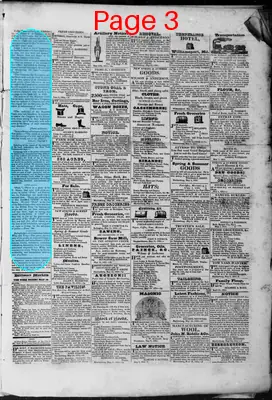
Editorial
June 5, 1834
Martinsburg Gazette
Martinsburg, Berkeley County, West Virginia
What is this article about?
This editorial compiles historical quotes from English monarchs, President Jackson, and others to critique centralized power, defend separation of powers, attack the Bank of the United States and its supporters, and distinguish political factions like 'Feds,' Whigs, and Tories in the context of 1830s US politics.
Clipping

OCR Quality
98%
Excellent
Full Text
Collar Cattle.—Cecil, Lord Salisbury, told James I. of England, on his coming to the Crown, that he "would find his English subjects like asses on whom he might lay any burden, and they should need neither bit nor bridle, but their asses' ears."
James I. said, in one of his speeches to the Parliament—“I have piped much to you, but you have not danced."
Our Senate does not dance as the Kitchen Cabinet could wish.
"Charles took occasion to assert that he owed an account of his actions to God alone; and ended by claiming for himself through his judges, the sole right of interpreting the laws."—Aiken's Charles I.
"The Congress, the Executive, and the Court must each for itself be guided by its own opinion of the Constitution. Each public officer who takes an oath to support the Constitution, swears that he will support it, as he understands it, and not as it is understood by others." President Jackson's own words in his message on the Bank bill, in 1832.
The opinion of the Supreme Court has no more authority over Congress, than the opinion of Congress has over the judges: and on that point, the President is independent of both. [Same authority.]
"The authority of the Supreme Court must not therefore, be permitted to control the Congress or the Executive, when acting in their legislative capacities, but to have only such influence as the force of their reasoning may deserve." [Same authority.]
"In an address to Parliament, Charles thus spoke: 'The wrath of a king is like the roaring of a lion, and all laws, with his wrath, are to no effect.'" Aiken's Charles I.
Speaking of the report of the majority of the bank committee, the New York Commercial says:
Language fails in its power adequately to describe the meanness and deep malignity of the authors and abetters of this crusade against the bank of the U. States: and under the circumstances of the case, we should be perfectly justifiable in refusing at all to publish the majority report, thus clandestinely and dishonestly sent into the world. But this course we have no disposition to take. The directors of the bank are men of high character and unblemished integrity, and we have no fears as to the ultimate result, either in regard to themselves or the institution which they have so ably, faithfully and fearlessly administered.
"Feds." There is a party in the U. States, that may with great propriety be called "Feds;" not Federalists, for Federalists are much less interested men. There are about forty or fifty thousand "FEDS" in the U. States. We had "Feds" in the time of the Revolution—they were sent here by the British King "to harass our people and eat out their substance;" and they were, right or wrong, supported by the tories. A "Fed" is a man who is fed by the government, and some of the "Feds" of the present day, are well fed; all of whom, as in the time of the revolution, are supported, right or wrong, by the advocates of power.—Penn. Int.
Bolingbroke's discrimination between Whig and Tory.—The power and majesty of the people, an original Contract, the authority and independence of Parliament, liberty, resistance, exclusion, abdication, deposition; these were ideas associated originally to a Whig, and supposed by every Whig to be incommunicable, and inconsistent with the idea of a Tory.
"Lineal succession, passive obedience, prerogative, non-resistance, slavery, were associated to the idea of a Tory and deemed incommunicable, and inconsistent, in the same manner, with the idea of a Whig."
James I. said, in one of his speeches to the Parliament—“I have piped much to you, but you have not danced."
Our Senate does not dance as the Kitchen Cabinet could wish.
"Charles took occasion to assert that he owed an account of his actions to God alone; and ended by claiming for himself through his judges, the sole right of interpreting the laws."—Aiken's Charles I.
"The Congress, the Executive, and the Court must each for itself be guided by its own opinion of the Constitution. Each public officer who takes an oath to support the Constitution, swears that he will support it, as he understands it, and not as it is understood by others." President Jackson's own words in his message on the Bank bill, in 1832.
The opinion of the Supreme Court has no more authority over Congress, than the opinion of Congress has over the judges: and on that point, the President is independent of both. [Same authority.]
"The authority of the Supreme Court must not therefore, be permitted to control the Congress or the Executive, when acting in their legislative capacities, but to have only such influence as the force of their reasoning may deserve." [Same authority.]
"In an address to Parliament, Charles thus spoke: 'The wrath of a king is like the roaring of a lion, and all laws, with his wrath, are to no effect.'" Aiken's Charles I.
Speaking of the report of the majority of the bank committee, the New York Commercial says:
Language fails in its power adequately to describe the meanness and deep malignity of the authors and abetters of this crusade against the bank of the U. States: and under the circumstances of the case, we should be perfectly justifiable in refusing at all to publish the majority report, thus clandestinely and dishonestly sent into the world. But this course we have no disposition to take. The directors of the bank are men of high character and unblemished integrity, and we have no fears as to the ultimate result, either in regard to themselves or the institution which they have so ably, faithfully and fearlessly administered.
"Feds." There is a party in the U. States, that may with great propriety be called "Feds;" not Federalists, for Federalists are much less interested men. There are about forty or fifty thousand "FEDS" in the U. States. We had "Feds" in the time of the Revolution—they were sent here by the British King "to harass our people and eat out their substance;" and they were, right or wrong, supported by the tories. A "Fed" is a man who is fed by the government, and some of the "Feds" of the present day, are well fed; all of whom, as in the time of the revolution, are supported, right or wrong, by the advocates of power.—Penn. Int.
Bolingbroke's discrimination between Whig and Tory.—The power and majesty of the people, an original Contract, the authority and independence of Parliament, liberty, resistance, exclusion, abdication, deposition; these were ideas associated originally to a Whig, and supposed by every Whig to be incommunicable, and inconsistent with the idea of a Tory.
"Lineal succession, passive obedience, prerogative, non-resistance, slavery, were associated to the idea of a Tory and deemed incommunicable, and inconsistent, in the same manner, with the idea of a Whig."
What sub-type of article is it?
Partisan Politics
Economic Policy
Constitutional
What keywords are associated?
Separation Of Powers
Bank War
Federalists
Whig Tory
Constitutional Authority
Jackson Veto
Political Factions
What entities or persons were involved?
James I
Charles I
President Jackson
Supreme Court
Congress
Bank Of The United States
Feds
Whigs
Tories
New York Commercial
Editorial Details
Primary Topic
Critique Of Bank Interests And Defense Of Separation Of Powers
Stance / Tone
Anti Bank, Pro Jacksonian Separation Of Powers, Critical Of Federal Authority
Key Figures
James I
Charles I
President Jackson
Supreme Court
Congress
Bank Of The United States
Feds
Whigs
Tories
New York Commercial
Key Arguments
English Subjects Are Like Asses Bearing Burdens Without Resistance
Senate Resists Executive Wishes Like Parliament Resisted James I
Charles I Claimed Sole Right To Interpret Laws
Each Branch Guided By Own Constitutional Interpretation Per Jackson
Supreme Court Opinion Does Not Bind Congress Or Executive
Bank Committee Report Shows Meanness Against The Bank
"Feds" Are Government Fed Supporters Of Power Like Revolution Era Tories
Whigs Associated With Liberty And Resistance, Tories With Prerogative And Obedience