Thank you for visiting SNEWPapers!
Sign up free
Story
July 31, 1812
The Rhode Island American, And General Advertiser
Providence, Providence County, Rhode Island
What is this article about?
British naval practice of burning captured enemy prizes is defended as lawful under war declarations and longstanding orders, unlike French burning of neutrals; first prize by British fleet was burnt.
Clipping
OCR Quality
95%
Excellent
Full Text
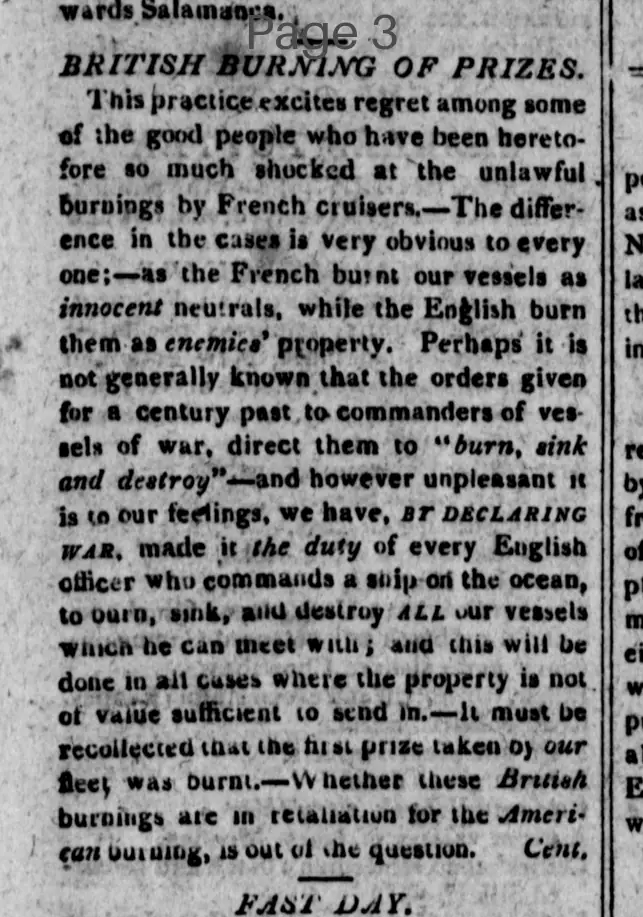
BRITISH BURNING OF PRIZES.
This practice excites regret among some of the good people who have been heretofore so much shocked at the unlawful Burnings by French cruisers. The difference in the cases is very obvious to everyone; as the French burnt our vessels as innocent neutrals, while the English burn them as enemies' property. Perhaps it is not generally known that the orders given for a century past, to commanders of vessels of war, direct them to "burn, sink and destroy"+and however unpleasant it is to our feelings, we have, by DECLARING WAR, made it the duty of every English officer who commands a ship on the ocean, to burn, sink, and destroy our vessels which he can meet with; and this will be done in all cases where the property is not of value sufficient to send in.--it must be recollected that the first prize taken by our fleet was burnt. Whether these British burnings are in retaliation for the American burning, is out of the question.
Cent
This practice excites regret among some of the good people who have been heretofore so much shocked at the unlawful Burnings by French cruisers. The difference in the cases is very obvious to everyone; as the French burnt our vessels as innocent neutrals, while the English burn them as enemies' property. Perhaps it is not generally known that the orders given for a century past, to commanders of vessels of war, direct them to "burn, sink and destroy"+and however unpleasant it is to our feelings, we have, by DECLARING WAR, made it the duty of every English officer who commands a ship on the ocean, to burn, sink, and destroy our vessels which he can meet with; and this will be done in all cases where the property is not of value sufficient to send in.--it must be recollected that the first prize taken by our fleet was burnt. Whether these British burnings are in retaliation for the American burning, is out of the question.
Cent
What sub-type of article is it?
Historical Event
Naval Engagement
What themes does it cover?
Justice
Moral Virtue
What keywords are associated?
Burning Prizes
Naval Orders
Declaring War
English Officers
Where did it happen?
On The Ocean
Story Details
Location
On The Ocean
Story Details
Commentary on British burning of captured enemy vessels as lawful duty in war, contrasting with French burning of neutrals; naval orders for a century direct commanders to burn, sink, and destroy enemy property not worth sending in.