Thank you for visiting SNEWPapers!
Sign up free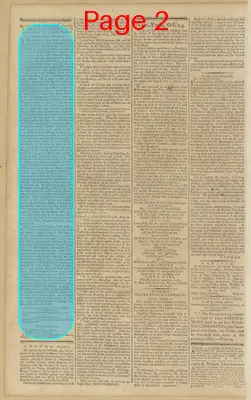
Literary
October 24, 1787
The Daily Advertiser
New York, New York County, New York
What is this article about?
An essay by a Foreign Spectator on promoting federal sentiments in the US through a patriotic military spirit in the militia, contrasting it with the glory-seeking of standing armies, and invoking classical examples like Fabius, Caesar, and Virgil's Hector to inspire republican virtue.
Clipping

OCR Quality
95%
Excellent
Full Text
AN ESSAY on the Means of promoting FEDERAL SENTIMENTS in the United States. By a Foreign Spectator.
Continued from No. 31.
Well-ordered militia is the noble bulwark of every free Country—It has often conquered veteran troops: and when a war makes a temporary army necessary, it will always be formed by those, who are not the dregs of a nation, nor soldiers of fortune; who have something more than mere military honor; who fight for liberty, property, families, for their native land, the idea of which involves all that is dear and sacred to the human heart. It is absolutely necessary to keep up an high military spirit in the American militia, and to render this military spirit federal. They must, in case of an invasion, often march to the defence of each other: and in times of civil tumults quell antifederal insurrections, not only at home, but in neighbouring states. A military spirit may in part be prompted by mechanical habits, and an high admiration of mere courage; but it is then very dangerous—it will always drink blood; and if it cannot vent its fury on a foreign foe, will create war at home.—Bull dogs, that have for a long time wanted their prey, become mad; and as the sublime poet relates, he that to make his horses fierce, fed them with slain enemies, was at last devoured by them. That military honor which so generally animates the officers of standing armies, whether they fight for their own country or for allies, is indeed very dazzling—this evening to dance at a ball together, and to-morrow to meet with drawn swords, as happens when parties encamp near each other; or to compliment who shall give the first fire, when at least one must be killed or wounded by it, as was the case of the French and English at the battle of Dettingen—this is undoubtedly a mark of high civilized valor. Yet this honor is not sufficient for republics, because it regards war rather as a theatre of glory, than a trial of patriotic virtue, and values a Caesar much more than a Fabius; though this great man by his prudent conduct tamed the impetuosity of Hannibal; and the other to astonish the world by his talents, became its conqueror, and the master of his own country. Marshal Saxe, who gained the battle of Fontenoy, though he was idolized by all France, yet languished for want of war, and died against his will on a bed.—Such a man will not be a suitable commander in Republics. Here the military spirit should be formed on the most sublime and pathetic sentiments of religion, honor, humanity and patriotism. Genuine heroism, doing and suffering every thing in the cause of a distressed country, has such inexpressible grandeur and tenderness, as to animate every heart that can feel, and elevate noble minds to an enthusiasm, that almost wishes for an awful trial.
A modern political writer of the first order, to whose only fault is being too lofty and martial, regards a war in this light, as only an honorable way of going out of the world. I cannot in this agree with him; but I believe that a noble military spirit as it brings a just war to a speedy and happy issue, will also greatly compensate for its inevitable calamities, by the great sentimental happiness it produces. To patriotic and solemn minds heroic tragedies are the finest entertainments, and extremely useful in republics, with history, epic poetry, and odes of the same spirit. Three thousand years have elapsed since the fatal ruin of Troy, still Andromache draws tears from crowded audiences: and her distress, her fidelity to the ashes of Hector, and maternal love of Astyanax, does yet inform heroes and heroines— While the world remains, brave patriots will sigh over Hector, dragged at the wheels of a cruel foe, mangled and steeped in blood, round the walls he had so long defended with a valiant arm; and will hear the sweetest music in these words of Virgil, that represent his ghost weeping over the conflagration of Troy:
In somnis ecce ante oculos maestissimus Hector.
—Largus effundere fletus,
Raptatus bigis, ut quondam, aterque cruento
Pulvere
—concretos sanguine crines.
Vulnera qua circum plurima muros
Accepit patrios—
(To be continued.)
Ut enim tesceret virtus—Florus.
Ferguson on civil society.
Æneid 2. v. 270. See also Dryden's translation, though it is unequal to the original.
Continued from No. 31.
Well-ordered militia is the noble bulwark of every free Country—It has often conquered veteran troops: and when a war makes a temporary army necessary, it will always be formed by those, who are not the dregs of a nation, nor soldiers of fortune; who have something more than mere military honor; who fight for liberty, property, families, for their native land, the idea of which involves all that is dear and sacred to the human heart. It is absolutely necessary to keep up an high military spirit in the American militia, and to render this military spirit federal. They must, in case of an invasion, often march to the defence of each other: and in times of civil tumults quell antifederal insurrections, not only at home, but in neighbouring states. A military spirit may in part be prompted by mechanical habits, and an high admiration of mere courage; but it is then very dangerous—it will always drink blood; and if it cannot vent its fury on a foreign foe, will create war at home.—Bull dogs, that have for a long time wanted their prey, become mad; and as the sublime poet relates, he that to make his horses fierce, fed them with slain enemies, was at last devoured by them. That military honor which so generally animates the officers of standing armies, whether they fight for their own country or for allies, is indeed very dazzling—this evening to dance at a ball together, and to-morrow to meet with drawn swords, as happens when parties encamp near each other; or to compliment who shall give the first fire, when at least one must be killed or wounded by it, as was the case of the French and English at the battle of Dettingen—this is undoubtedly a mark of high civilized valor. Yet this honor is not sufficient for republics, because it regards war rather as a theatre of glory, than a trial of patriotic virtue, and values a Caesar much more than a Fabius; though this great man by his prudent conduct tamed the impetuosity of Hannibal; and the other to astonish the world by his talents, became its conqueror, and the master of his own country. Marshal Saxe, who gained the battle of Fontenoy, though he was idolized by all France, yet languished for want of war, and died against his will on a bed.—Such a man will not be a suitable commander in Republics. Here the military spirit should be formed on the most sublime and pathetic sentiments of religion, honor, humanity and patriotism. Genuine heroism, doing and suffering every thing in the cause of a distressed country, has such inexpressible grandeur and tenderness, as to animate every heart that can feel, and elevate noble minds to an enthusiasm, that almost wishes for an awful trial.
A modern political writer of the first order, to whose only fault is being too lofty and martial, regards a war in this light, as only an honorable way of going out of the world. I cannot in this agree with him; but I believe that a noble military spirit as it brings a just war to a speedy and happy issue, will also greatly compensate for its inevitable calamities, by the great sentimental happiness it produces. To patriotic and solemn minds heroic tragedies are the finest entertainments, and extremely useful in republics, with history, epic poetry, and odes of the same spirit. Three thousand years have elapsed since the fatal ruin of Troy, still Andromache draws tears from crowded audiences: and her distress, her fidelity to the ashes of Hector, and maternal love of Astyanax, does yet inform heroes and heroines— While the world remains, brave patriots will sigh over Hector, dragged at the wheels of a cruel foe, mangled and steeped in blood, round the walls he had so long defended with a valiant arm; and will hear the sweetest music in these words of Virgil, that represent his ghost weeping over the conflagration of Troy:
In somnis ecce ante oculos maestissimus Hector.
—Largus effundere fletus,
Raptatus bigis, ut quondam, aterque cruento
Pulvere
—concretos sanguine crines.
Vulnera qua circum plurima muros
Accepit patrios—
(To be continued.)
Ut enim tesceret virtus—Florus.
Ferguson on civil society.
Æneid 2. v. 270. See also Dryden's translation, though it is unequal to the original.
What sub-type of article is it?
Essay
What themes does it cover?
Political
Liberty Freedom
Patriotism
What keywords are associated?
Federal Sentiments
American Militia
Military Spirit
Patriotism
Republican Virtue
Classical Examples
What entities or persons were involved?
By A Foreign Spectator.
Literary Details
Title
An Essay On The Means Of Promoting Federal Sentiments In The United States.
Author
By A Foreign Spectator.
Subject
Promoting Federal Sentiments Through Military Spirit In Militia
Key Lines
Well Ordered Militia Is The Noble Bulwark Of Every Free Country—It Has Often Conquered Veteran Troops
Genuine Heroism, Doing And Suffering Every Thing In The Cause Of A Distressed Country, Has Such Inexpressible Grandeur And Tenderness
In Somnis Ecce Ante Oculos Maestissimus Hector.
—Largus Effundere Fletus,
Raptatus Bigis, Ut Quondam, Aterque Cruento
Pulvere
—Concretos Sanguine Crines.
Vulnera Qua Circum Plurima Muros
Accepit Patrios—