Thank you for visiting SNEWPapers!
Sign up free
Phenix Gazette
Alexandria, Virginia
What is this article about?
The New York Commercial criticizes the Post for prematurely condemning the jury in the Wickliffe trial as having violated their oaths and acquitted a murderer due to Mr. Clay's influence and party politics, assuming too much about the evidence and jury deliberations.
Clipping
OCR Quality
Full Text
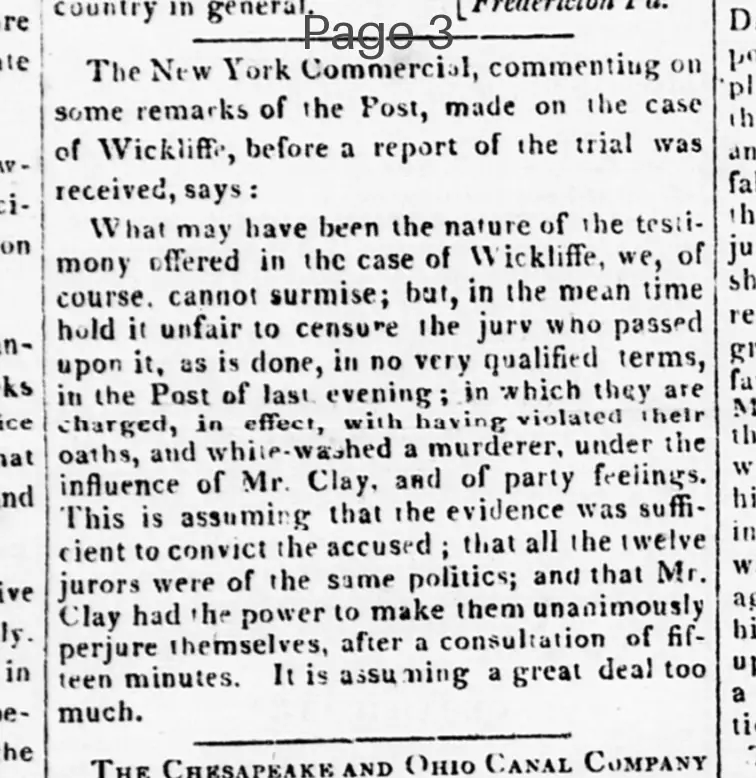
What may have been the nature of the testimony offered in the case of Wickliffe, we, of course, cannot surmise; but, in the mean time hold it unfair to censure the jury who passed upon it, as is done, in no very qualified terms, in the Post of last evening; in which they are charged, in effect, with having violated their oaths, and white-washed a murderer, under the influence of Mr. Clay, and of party feelings.
This is assuming that the evidence was sufficient to convict the accused; that all the twelve jurors were of the same politics; and that Mr. Clay had the power to make them unanimously perjure themselves, after a consultation of fifteen minutes. It is assuming a great deal too much.
What sub-type of article is it?
What keywords are associated?
What entities or persons were involved?
Domestic News Details
Key Persons
Outcome
jury acquitted the accused after fifteen minutes of consultation, accused of white-washing a murderer under political influence.
Event Details
The New York Commercial defends the jury's decision in the Wickliffe case against the Post's criticism for violating oaths and being influenced by Mr. Clay and party feelings, noting premature judgment before trial report and assumptions about evidence and jury politics.