Thank you for visiting SNEWPapers!
Sign up free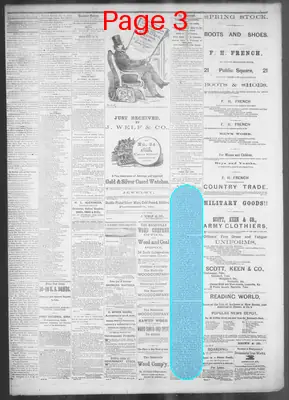
Story
May 1, 1864
The Nashville Daily Union
Nashville, Davidson County, Tennessee
What is this article about?
Union commentary on Confederate Secretary of War Seddon's 1863 report, highlighting army supply shortages, blockade-running efforts, and logistical challenges, confirming rebel difficulties.
Clipping

OCR Quality
95%
Excellent
Full Text
The Rebel War Report.
So much of the Report of the Rebel Secretary of War as that officer thinks it advisable to publish, has been supplied to a journal in this city, and appeared in its columns on Friday. What the omitted portions may be we cannot say, but the report in its present shape is not a document of very great interest. After a brief reference to the campaign of 1863—concerning which Mr. Seddon seems to have thought the less said the better—he considers the condition and strength of the rebel army, and the reforms in its organization which are necessary, touches on the question of exchange of prisoners, gives a history of the supply during the year of arms, munitions, quartermaster's and commissary's stores, to the army, treats at length upon railways and the transportation necessities of the rebellion, describes the ventures of his Department in running the blockade, passes to the Trans Mississippi country, gives a paragraph to the Indians, and concludes his essay with the customary remarks on the sacredness and sure success of rebellion.
On these subjects, Mr. Seddon states little that is new. The value of his testimony is mostly in its confirmation of previous accounts. He admits, for instance, that "the Quartermaster and Commissary-Generals, in the administration of their respective departments, have had, during the past year, extraordinary difficulties and embarrassments to encounter," that "for some essential articles, such as shoes, blankets and woolen cloths, partial dependence on importation could not be avoided," and that "nothing has given so much trouble as the purchase and transportation of sufficient forage and subsistence for the army." The most he claims is that the armies have been kept "moderately supplied;" and he is obliged to say, "How long their exertions will avail to assure such results, is now a matter of grave anxiety. The consumption of all animal life in the war has been very great, and in addition, during the past few months, destructive and wide-spread disease has prevailed among the swine, which constitutes the most serviceable as well as the largest resource for meat. Bacon and beef, in view of the needs of both the army and the people, must be scarce during the coming year."
Copperhead journals at the North who have thought it worth while to deny the reiterated accounts of scant supplies at the South, may possibly accept a statement from this source as conclusive.
Mr. Seddon's account of the blockade-running business is entertaining if not important. He describes the events which led the rebel authorities finally to undertake on their own account the evasion of that blockade which they so long declared to exist only on paper. The rebel Government was obliged to pay for the freight alone of a steam run of 300 tons to the West Indies the sum of $2,000,000 in its own currency. Although it had a monopoly of the manufacture of this currency, this price seems to have been considered—probably in view of the cost of paper—too large; and the War Department therefore bought four steamers, and set up business for itself. For a while, matters went on very well. A successful trip paid the whole expense of a steamer, and Mr. Seddon reckons his gains at upward of $20,000,000 in currency. An improvement upon the original plan was also effected by requiring private vessels to surrender a portion of their loads to the War and Navy authorities. But the blockade presently grew more stringent; and within the last two months (October and November, 1863) a considerable number of steamers, among them those belonging to the Department, have been captured, or destroyed to prevent their falling into the hands of the enemy." But it appears that at no time were the rebel authorities able to export a sufficient quantity of cotton to provide for their expenses abroad. In Mr. Seddon's language: "The quantity of cotton which could be carried out by the steamers, owned or held in part by the Department, by no means supplied the sterling which was required abroad for the wants of the Government."
—N. Y. Tribune.
So much of the Report of the Rebel Secretary of War as that officer thinks it advisable to publish, has been supplied to a journal in this city, and appeared in its columns on Friday. What the omitted portions may be we cannot say, but the report in its present shape is not a document of very great interest. After a brief reference to the campaign of 1863—concerning which Mr. Seddon seems to have thought the less said the better—he considers the condition and strength of the rebel army, and the reforms in its organization which are necessary, touches on the question of exchange of prisoners, gives a history of the supply during the year of arms, munitions, quartermaster's and commissary's stores, to the army, treats at length upon railways and the transportation necessities of the rebellion, describes the ventures of his Department in running the blockade, passes to the Trans Mississippi country, gives a paragraph to the Indians, and concludes his essay with the customary remarks on the sacredness and sure success of rebellion.
On these subjects, Mr. Seddon states little that is new. The value of his testimony is mostly in its confirmation of previous accounts. He admits, for instance, that "the Quartermaster and Commissary-Generals, in the administration of their respective departments, have had, during the past year, extraordinary difficulties and embarrassments to encounter," that "for some essential articles, such as shoes, blankets and woolen cloths, partial dependence on importation could not be avoided," and that "nothing has given so much trouble as the purchase and transportation of sufficient forage and subsistence for the army." The most he claims is that the armies have been kept "moderately supplied;" and he is obliged to say, "How long their exertions will avail to assure such results, is now a matter of grave anxiety. The consumption of all animal life in the war has been very great, and in addition, during the past few months, destructive and wide-spread disease has prevailed among the swine, which constitutes the most serviceable as well as the largest resource for meat. Bacon and beef, in view of the needs of both the army and the people, must be scarce during the coming year."
Copperhead journals at the North who have thought it worth while to deny the reiterated accounts of scant supplies at the South, may possibly accept a statement from this source as conclusive.
Mr. Seddon's account of the blockade-running business is entertaining if not important. He describes the events which led the rebel authorities finally to undertake on their own account the evasion of that blockade which they so long declared to exist only on paper. The rebel Government was obliged to pay for the freight alone of a steam run of 300 tons to the West Indies the sum of $2,000,000 in its own currency. Although it had a monopoly of the manufacture of this currency, this price seems to have been considered—probably in view of the cost of paper—too large; and the War Department therefore bought four steamers, and set up business for itself. For a while, matters went on very well. A successful trip paid the whole expense of a steamer, and Mr. Seddon reckons his gains at upward of $20,000,000 in currency. An improvement upon the original plan was also effected by requiring private vessels to surrender a portion of their loads to the War and Navy authorities. But the blockade presently grew more stringent; and within the last two months (October and November, 1863) a considerable number of steamers, among them those belonging to the Department, have been captured, or destroyed to prevent their falling into the hands of the enemy." But it appears that at no time were the rebel authorities able to export a sufficient quantity of cotton to provide for their expenses abroad. In Mr. Seddon's language: "The quantity of cotton which could be carried out by the steamers, owned or held in part by the Department, by no means supplied the sterling which was required abroad for the wants of the Government."
—N. Y. Tribune.
What sub-type of article is it?
Historical Event
What themes does it cover?
Misfortune
What keywords are associated?
Rebel War Report
Seddon Report
Blockade Running
Army Supplies
Civil War Logistics
Confederate Shortages
What entities or persons were involved?
Mr. Seddon
Quartermaster General
Commissary General
Where did it happen?
South, Trans Mississippi
Story Details
Key Persons
Mr. Seddon
Quartermaster General
Commissary General
Location
South, Trans Mississippi
Event Date
1863
Story Details
Confederate Secretary of War Seddon's report details army conditions, supply shortages, blockade-running ventures, and logistical challenges, confirming rebel difficulties in sustaining the war effort.