Thank you for visiting SNEWPapers!
Sign up free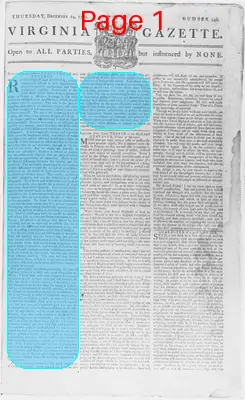
Literary
December 24, 1772
The Virginia Gazette
Williamsburg, Virginia
What is this article about?
This essay distinguishes resentment as a noble, immediate indignation at affronts from revenge as a deliberate, ignoble act. It argues for honorable defense of reputation without violence, critiques English laws for failing to protect honor beyond financial harm, and proposes legal reforms to punish defamation and promote virtue.
Clipping
OCR Quality
98%
Excellent
Full Text
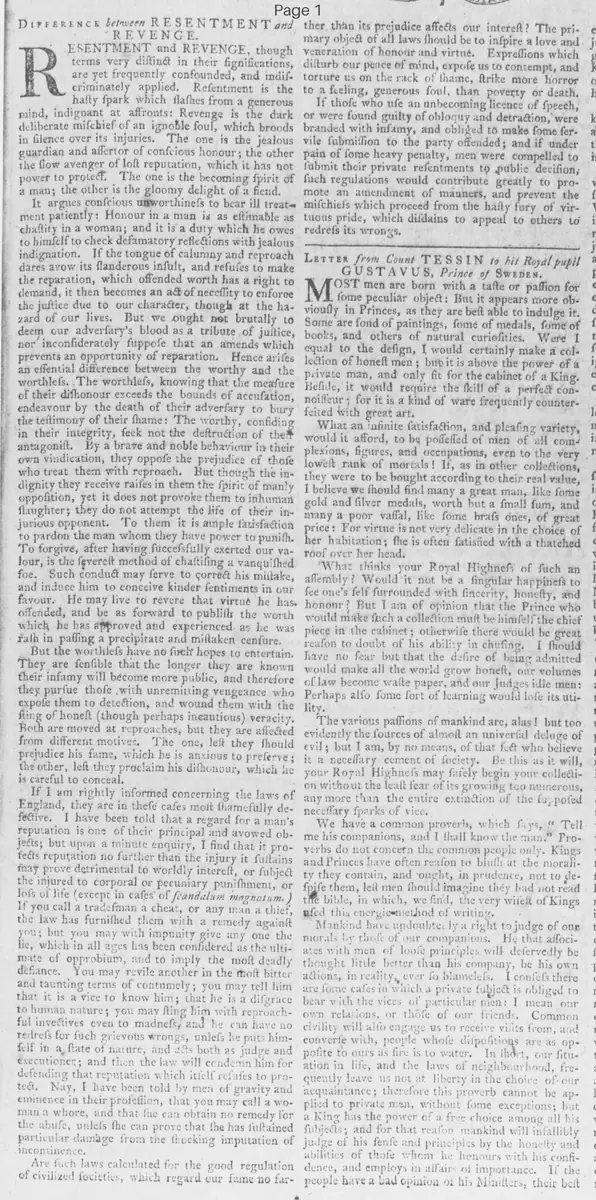
DIFFERENCE between RESENTMENT and REVENGE.
RESENTMENT and REVENGE, though terms very distinct in their significations, are yet frequently confounded, and indiscriminately applied. Resentment is the flash which flashes from a generous mind, indignant at affronts: Revenge is the dark deliberate mischief of an ignoble soul, which broods in silence over its injuries. The one is the jealous guardian and asserter of conscious honour; the other the slow avenger of lost reputation, which it has not power to protect. The one is the becoming spirit of a man; the other is the gloomy delight of a fiend.
It argues conscious unworthiness to bear ill treatment patiently: Honour in a man is as estimable as chastity in a woman; and it is a duty which he owes to himself to check defamatory reflections with jealous indignation. If the tongue of calumny and reproach dares avow its slanderous insult, and refuses to make the reparation, which offended worth has a right to demand, it then becomes an act of necessity to enforce the justice due to our character, though at the hazard of our lives. But we ought not brutally to deem our adversary's blood as a tribute of justice, nor inconsiderately suppose that an amends which prevents an opportunity of reparation. Hence arises an essential difference between the worthy and the worthless. The worthless, knowing that the measure of their dishonour exceeds the bounds of accusation, endeavour by the death of their adversary to bury the testimony of their shame: The worthy, confiding in their integrity, seek not the destruction of their antagonist. By a brave and noble behaviour in their own vindication, they oppose the prejudice of those who treat them with reproach. But though the indignity they receive raises in them the spirit of manly opposition, yet it does not provoke them to inhuman slaughter; they do not attempt the life of their injurious opponent. To them it is ample satisfaction to pardon the man whom they have power to punish.
To forgive, after having successfully exerted our valour, is the severest method of chastising a vanquished foe. Such conduct may serve to correct his mistake, and induce him to conceive kinder sentiments in our favour. He may live to revere that virtue he has offended, and be as forward to publish the worth which he has approved and experienced as he was rash in passing a precipitate and mistaken censure.
But the worthless have no such hopes to entertain. They are sensible that the longer they are known their infamy will become more public, and therefore they pursue those with unremitting vengeance who expose them to detection, and wound them with the sting of honest (though perhaps incautious) veracity.
Both are moved at reproaches, but they are affected from different motives. The one, lest they should prejudice his fame, which he is anxious to preserve; the other, lest they proclaim his dishonour, which he is careful to conceal.
If I am rightly informed concerning the laws of England, they are in these cases most shamefully defective. I have been told that a regard for a man's reputation is one of their principal and avowed objects; but upon a minute enquiry, I find that it protects reputation no further than the injury it sustains may prove detrimental to worldly interest, or subject the injured to corporal or pecuniary punishment, or loss of life (except in cases of scandalum magnatum). If you call a tradesman a cheat, or any man a thief, the law has furnished them with a remedy against you; but you may with impunity give any one the lie, which in all ages has been considered as the ultimate of opprobrium, and to imply the most deadly defiance. You may revile another in the most bitter and taunting terms of contumely; you may tell him that it is a vice to know him; that he is a disgrace to human nature; you may sting him with reproachful invectives even to madness, and he can have no redress for such grievous wrongs, unless he puts himself in a state of nature, and acts both as judge and executioner: and then the law will condemn him for defending that reputation which itself refuses to protect. Nay, I have been told by men of gravity and eminence in their profession, that you may call a woman a whore, and that she can obtain no remedy for the abuse, unless she can prove that she has sustained particular damage from the shocking imputation of incontinence.
Are such laws calculated for the good regulation of civilized societies, which regard our fame no further than its prejudice affects our interest? The primary object of all laws should be to inspire a love and veneration of honour and virtue. Expressions which disturb our peace of mind, expose us to contempt, and torture us on the rack of shame, strike more horror to a feeling, generous soul, than poverty or death.
If those who use an unbecoming licence of speech, or were found guilty of obloquy and detraction, were branded with infamy, and obliged to make some servile submission to the party offended; and if under pain of some heavy penalty, men were compelled to submit their private resentments to public decision, such regulations would contribute greatly to promote an amendment of manners, and prevent the mischiefs which proceed from the hasty fury of virtuous pride, which disdains to appeal to others to redress its wrongs.
RESENTMENT and REVENGE, though terms very distinct in their significations, are yet frequently confounded, and indiscriminately applied. Resentment is the flash which flashes from a generous mind, indignant at affronts: Revenge is the dark deliberate mischief of an ignoble soul, which broods in silence over its injuries. The one is the jealous guardian and asserter of conscious honour; the other the slow avenger of lost reputation, which it has not power to protect. The one is the becoming spirit of a man; the other is the gloomy delight of a fiend.
It argues conscious unworthiness to bear ill treatment patiently: Honour in a man is as estimable as chastity in a woman; and it is a duty which he owes to himself to check defamatory reflections with jealous indignation. If the tongue of calumny and reproach dares avow its slanderous insult, and refuses to make the reparation, which offended worth has a right to demand, it then becomes an act of necessity to enforce the justice due to our character, though at the hazard of our lives. But we ought not brutally to deem our adversary's blood as a tribute of justice, nor inconsiderately suppose that an amends which prevents an opportunity of reparation. Hence arises an essential difference between the worthy and the worthless. The worthless, knowing that the measure of their dishonour exceeds the bounds of accusation, endeavour by the death of their adversary to bury the testimony of their shame: The worthy, confiding in their integrity, seek not the destruction of their antagonist. By a brave and noble behaviour in their own vindication, they oppose the prejudice of those who treat them with reproach. But though the indignity they receive raises in them the spirit of manly opposition, yet it does not provoke them to inhuman slaughter; they do not attempt the life of their injurious opponent. To them it is ample satisfaction to pardon the man whom they have power to punish.
To forgive, after having successfully exerted our valour, is the severest method of chastising a vanquished foe. Such conduct may serve to correct his mistake, and induce him to conceive kinder sentiments in our favour. He may live to revere that virtue he has offended, and be as forward to publish the worth which he has approved and experienced as he was rash in passing a precipitate and mistaken censure.
But the worthless have no such hopes to entertain. They are sensible that the longer they are known their infamy will become more public, and therefore they pursue those with unremitting vengeance who expose them to detection, and wound them with the sting of honest (though perhaps incautious) veracity.
Both are moved at reproaches, but they are affected from different motives. The one, lest they should prejudice his fame, which he is anxious to preserve; the other, lest they proclaim his dishonour, which he is careful to conceal.
If I am rightly informed concerning the laws of England, they are in these cases most shamefully defective. I have been told that a regard for a man's reputation is one of their principal and avowed objects; but upon a minute enquiry, I find that it protects reputation no further than the injury it sustains may prove detrimental to worldly interest, or subject the injured to corporal or pecuniary punishment, or loss of life (except in cases of scandalum magnatum). If you call a tradesman a cheat, or any man a thief, the law has furnished them with a remedy against you; but you may with impunity give any one the lie, which in all ages has been considered as the ultimate of opprobrium, and to imply the most deadly defiance. You may revile another in the most bitter and taunting terms of contumely; you may tell him that it is a vice to know him; that he is a disgrace to human nature; you may sting him with reproachful invectives even to madness, and he can have no redress for such grievous wrongs, unless he puts himself in a state of nature, and acts both as judge and executioner: and then the law will condemn him for defending that reputation which itself refuses to protect. Nay, I have been told by men of gravity and eminence in their profession, that you may call a woman a whore, and that she can obtain no remedy for the abuse, unless she can prove that she has sustained particular damage from the shocking imputation of incontinence.
Are such laws calculated for the good regulation of civilized societies, which regard our fame no further than its prejudice affects our interest? The primary object of all laws should be to inspire a love and veneration of honour and virtue. Expressions which disturb our peace of mind, expose us to contempt, and torture us on the rack of shame, strike more horror to a feeling, generous soul, than poverty or death.
If those who use an unbecoming licence of speech, or were found guilty of obloquy and detraction, were branded with infamy, and obliged to make some servile submission to the party offended; and if under pain of some heavy penalty, men were compelled to submit their private resentments to public decision, such regulations would contribute greatly to promote an amendment of manners, and prevent the mischiefs which proceed from the hasty fury of virtuous pride, which disdains to appeal to others to redress its wrongs.
What sub-type of article is it?
Essay
What themes does it cover?
Moral Virtue
Political
Social Manners
What keywords are associated?
Resentment
Revenge
Honour
Reputation
English Law
Defamation
Moral Virtue
Social Reform
Literary Details
Title
Difference Between Resentment And Revenge.
Key Lines
Resentment Is The Flash Which Flashes From A Generous Mind, Indignant At Affronts: Revenge Is The Dark Deliberate Mischief Of An Ignoble Soul, Which Broods In Silence Over Its Injuries.
Honour In A Man Is As Estimable As Chastity In A Woman; And It Is A Duty Which He Owes To Himself To Check Defamatory Reflections With Jealous Indignation.
To Forgive, After Having Successfully Exerted Our Valour, Is The Severest Method Of Chastising A Vanquished Foe.
If I Am Rightly Informed Concerning The Laws Of England, They Are In These Cases Most Shamefully Defective.
The Primary Object Of All Laws Should Be To Inspire A Love And Veneration Of Honour And Virtue.