Thank you for visiting SNEWPapers!
Sign up free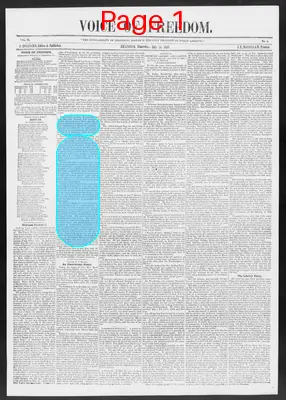
Literary
July 15, 1847
The Voice Of Freedom
Montpelier, Brandon, Washington County, Rutland County, Vermont
What is this article about?
An essay on curiosities of art, describing miniature creations like Jerome Faba's box-wood passion scene in a walnut shell, a tiny coach presented to kings, a jeweled miniature tomb of Confucius, ring watches for Charles V and George III, and Raccavala's Gothic box-wood model of Raphael's tomb, emphasizing inventive amusement over practical benefit.
Clipping
OCR Quality
98%
Excellent
Full Text
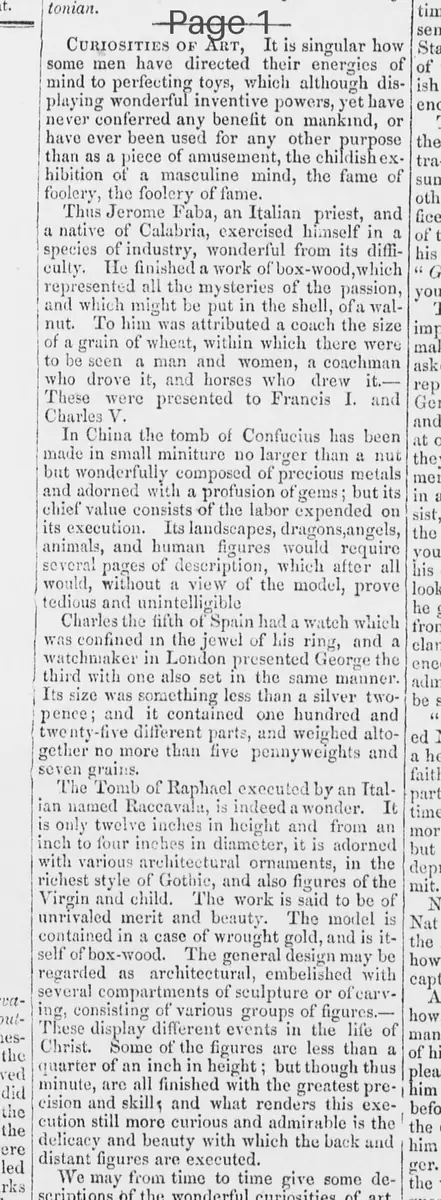
Curiosities Of Art, It is singular how some men have directed their energies of mind to perfecting toys, which although displaying wonderful inventive powers, yet have never conferred any benefit on mankind, or have ever been used for any other purpose than as a piece of amusement, the childish exhibition of a masculine mind, the fame of foolery, the foolery of fame. Thus Jerome Faba, an Italian priest, and a native of Calabria, exercised himself in a species of industry, wonderful from its difficulty. He finished a work of box-wood, which represented all the mysteries of the passion, and which might be put in the shell of a walnut. To him was attributed a coach the size of a grain of wheat, within which there were to be seen a man and woman, a coachman who drove it, and horses who drew it.— These were presented to Francis I. and Charles V. In China the tomb of Confucius has been made in small miniature no larger than a nut but wonderfully composed of precious metals and adorned with a profusion of gems; but its chief value consists of the labor expended on its execution. Its landscapes, dragons, angels, animals, and human figures would require several pages of description, which after all would, without a view of the model, prove tedious and unintelligible Charles the fifth of Spain had a watch which was confined in the jewel of his ring, and a watchmaker in London presented George the third with one also set in the same manner. Its size was something less than a silver two-pence; and it contained one hundred and twenty-five different parts, and weighed altogether no more than five pennyweights and seven grains. The Tomb of Raphael executed by an Italian named Raccavala, is indeed a wonder. It is only twelve inches in height and from an inch to four inches in diameter, it is adorned with various architectural ornaments, in the richest style of Gothic, and also figures of the Virgin and child. The work is said to be of unrivaled merit and beauty. The model is contained in a case of wrought gold, and is itself of box-wood. The general design may be regarded as architectural, embellished with several compartments of sculpture or carving, consisting of various groups of figures.— These display different events in the life of Christ. Some of the figures are less than a quarter of an inch in height; but though thus minute, are all finished with the greatest precision and skill and what renders this execution still more curious and admirable is the delicacy and beauty with which the back and distant figures are executed. We may from time to time give some descriptions of the wonderful curiosities of art, to show that like the ancient Greek, some men have been engaged in pitching peas through the eye of a needle.—Scientific American.
What sub-type of article is it?
Essay
What keywords are associated?
Miniature Art
Box Wood Carving
Jerome Faba
Confucius Tomb
Raphael Tomb
Ring Watch
Artistic Curiosities
What entities or persons were involved?
Scientific American
Literary Details
Title
Curiosities Of Art
Author
Scientific American
Form / Style
Prose Reflection On Artistic Curiosities
Key Lines
It Is Singular How Some Men Have Directed Their Energies Of Mind To Perfecting Toys, Which Although Displaying Wonderful Inventive Powers, Yet Have Never Conferred Any Benefit On Mankind
He Finished A Work Of Box Wood, Which Represented All The Mysteries Of The Passion, And Which Might Be Put In The Shell Of A Walnut.
The Tomb Of Raphael Executed By An Italian Named Raccavala, Is Indeed A Wonder.
We May From Time To Time Give Some Descriptions Of The Wonderful Curiosities Of Art, To Show That Like The Ancient Greek, Some Men Have Been Engaged In Pitching Peas Through The Eye Of A Needle.