Thank you for visiting SNEWPapers!
Sign up free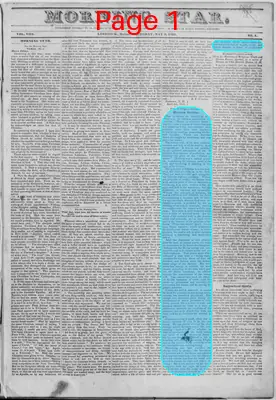
Literary
May 2, 1833
Morning Star
Limerick, York County, Maine
What is this article about?
Theological essay arguing that humans possess an immortal, intellectual soul created pure but tainted by sin, leading to spiritual death. Restoration requires divine energy and human will concurrence during life's probation, determining eternal destiny of bliss or damnation.
Clipping
OCR Quality
98%
Excellent
Full Text
From the Religious Intelligencer.
Human Destiny.
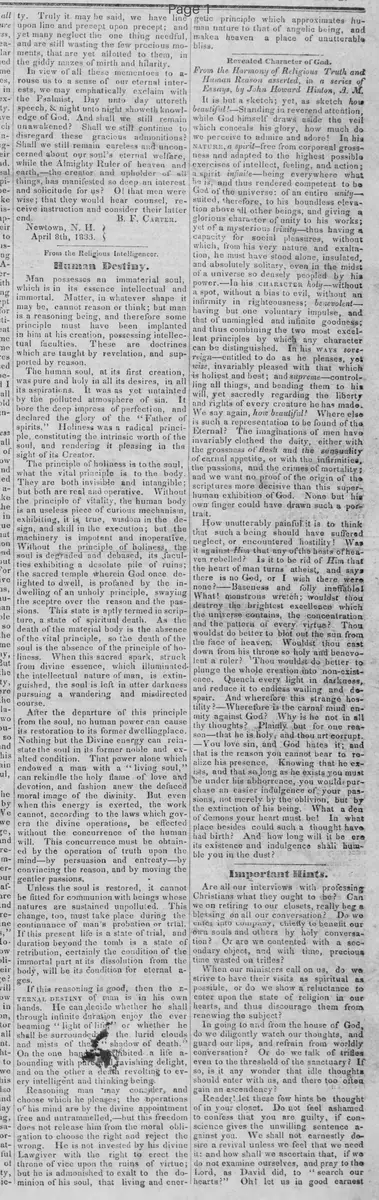
Man possesses an immaterial soul, which is in its essence intellectual and immortal. Matter, in whatever shape it may be, cannot reason or think; but man is a reasoning being, and therefore some principle must have been implanted in him at his creation, possessing intellectual faculties. These are doctrines which are taught by revelation, and supported by reason.
The human soul, at its first creation, was pure and holy in all its desires, in all its aspirations. It was as yet untainted by the polluted atmosphere of sin. It bore the deep impress of perfection, and declared the glory of the "Father of spirits." Holiness was a radical principle, constituting the intrinsic worth of the soul, and rendering it pleasing in the sight of its Creator.
The principle of holiness is to the soul, what the vital principle is to the body. They are both invisible and intangible; but both are real and operative. Without the principle of vitality, the human body is a useless piece of curious mechanism, exhibiting, it is true, wisdom in the design, and skill in the execution; but the machinery is impotent and inoperative. Without the principle of holiness, the soul is degraded and debased, its faculties exhibiting a desolate pile of ruins; the sacred temple wherein God once delighted to dwell, is profaned by the indwelling of an unholy principle, swaying the sceptre over the reason and the passions. This state is aptly termed in scripture, a state of spiritual death. As the death of the material body is the absence of the vital principle, so the death of the soul is the absence of the principle of holiness. When this sacred spark, struck from divine essence, which illuminated the intellectual nature of man, is extinguished, the soul is left in utter darkness pursuing a wandering and misdirected course.
After the departure of this principle from the soul, no human power can cause its restoration to its former dwelling place. Nothing but the Divine energy can reinstate the soul in its former noble and exalted condition. That power alone which endowed a man with a "living soul," can rekindle the holy flame of love and devotion, and fashion anew the defaced moral image of the divinity. But even when this energy is exerted, the work cannot, according to the laws which govern the divine operations, be effected without the concurrence of the human will. This concurrence must be obtained by the operation of truth upon the mind--by persuasion and entreaty--by convincing the reason, and by moving the gentler passions.
Unless the soul is restored, it cannot be fitted for communion with beings whose natures are sustained unpolluted. This change, too, must take place during the continuance of man's probation or trial. If this present life is a state of trial, and duration beyond the tomb is a state of retribution, certainly the condition of the immortal part at its dissolution from the body, will be its condition for eternal ages.
If this reasoning is good, then the ETERNAL DESTINY of man is in his own hands. He can decide whether he shall through infinite duration enjoy the ever beaming "light of life" or whether he shall be surrounded the lurid clouds and mists of the "shadow of death."
On the one hand exhibited a life abounding with pure and ravishing delight, and on the other a death revolting to every intelligent and thinking being.
Reasoning man may consider, and choose which he pleases; the operations of his mind are by the divine appointment free and untrammelled,--but this freedom does not release him from the moral obligation to choose the right and reject the wrong. He is not invested by his divine Lawgiver with the right to erect the throne of vice upon the ruins of virtue; but he is admonished to exalt to the dominion of his soul, that living and energetic principle which approximates human nature to that of angelic being, and makes heaven a place of unutterable bliss.
Human Destiny.
Man possesses an immaterial soul, which is in its essence intellectual and immortal. Matter, in whatever shape it may be, cannot reason or think; but man is a reasoning being, and therefore some principle must have been implanted in him at his creation, possessing intellectual faculties. These are doctrines which are taught by revelation, and supported by reason.
The human soul, at its first creation, was pure and holy in all its desires, in all its aspirations. It was as yet untainted by the polluted atmosphere of sin. It bore the deep impress of perfection, and declared the glory of the "Father of spirits." Holiness was a radical principle, constituting the intrinsic worth of the soul, and rendering it pleasing in the sight of its Creator.
The principle of holiness is to the soul, what the vital principle is to the body. They are both invisible and intangible; but both are real and operative. Without the principle of vitality, the human body is a useless piece of curious mechanism, exhibiting, it is true, wisdom in the design, and skill in the execution; but the machinery is impotent and inoperative. Without the principle of holiness, the soul is degraded and debased, its faculties exhibiting a desolate pile of ruins; the sacred temple wherein God once delighted to dwell, is profaned by the indwelling of an unholy principle, swaying the sceptre over the reason and the passions. This state is aptly termed in scripture, a state of spiritual death. As the death of the material body is the absence of the vital principle, so the death of the soul is the absence of the principle of holiness. When this sacred spark, struck from divine essence, which illuminated the intellectual nature of man, is extinguished, the soul is left in utter darkness pursuing a wandering and misdirected course.
After the departure of this principle from the soul, no human power can cause its restoration to its former dwelling place. Nothing but the Divine energy can reinstate the soul in its former noble and exalted condition. That power alone which endowed a man with a "living soul," can rekindle the holy flame of love and devotion, and fashion anew the defaced moral image of the divinity. But even when this energy is exerted, the work cannot, according to the laws which govern the divine operations, be effected without the concurrence of the human will. This concurrence must be obtained by the operation of truth upon the mind--by persuasion and entreaty--by convincing the reason, and by moving the gentler passions.
Unless the soul is restored, it cannot be fitted for communion with beings whose natures are sustained unpolluted. This change, too, must take place during the continuance of man's probation or trial. If this present life is a state of trial, and duration beyond the tomb is a state of retribution, certainly the condition of the immortal part at its dissolution from the body, will be its condition for eternal ages.
If this reasoning is good, then the ETERNAL DESTINY of man is in his own hands. He can decide whether he shall through infinite duration enjoy the ever beaming "light of life" or whether he shall be surrounded the lurid clouds and mists of the "shadow of death."
On the one hand exhibited a life abounding with pure and ravishing delight, and on the other a death revolting to every intelligent and thinking being.
Reasoning man may consider, and choose which he pleases; the operations of his mind are by the divine appointment free and untrammelled,--but this freedom does not release him from the moral obligation to choose the right and reject the wrong. He is not invested by his divine Lawgiver with the right to erect the throne of vice upon the ruins of virtue; but he is admonished to exalt to the dominion of his soul, that living and energetic principle which approximates human nature to that of angelic being, and makes heaven a place of unutterable bliss.
What sub-type of article is it?
Essay
What themes does it cover?
Religious
Moral Virtue
Death Mortality
What keywords are associated?
Immortal Soul
Holiness
Spiritual Death
Divine Energy
Eternal Destiny
Moral Choice
Probation
Retribution
What entities or persons were involved?
From The Religious Intelligencer
Literary Details
Title
Human Destiny
Author
From The Religious Intelligencer
Key Lines
Man Possesses An Immaterial Soul, Which Is In Its Essence Intellectual And Immortal.
The Principle Of Holiness Is To The Soul, What The Vital Principle Is To The Body.
If This Reasoning Is Good, Then The Eternal Destiny Of Man Is In His Own Hands.
He Can Decide Whether He Shall Through Infinite Duration Enjoy The Ever Beaming "Light Of Life" Or Whether He Shall Be Surrounded The Lurid Clouds And Mists Of The "Shadow Of Death."