Thank you for visiting SNEWPapers!
Sign up free
Bisbee Daily Review
Bisbee, Cochise County, Arizona
What is this article about?
Indian troops from Punjab, Bengal, and frontier regions have excelled in WWI battles in Flanders, enduring artillery, showing initiative, and adapting to trenches, astonishing allies and enemies alike. Reported from Boulogne on Dec. 26.
Clipping
OCR Quality
Full Text
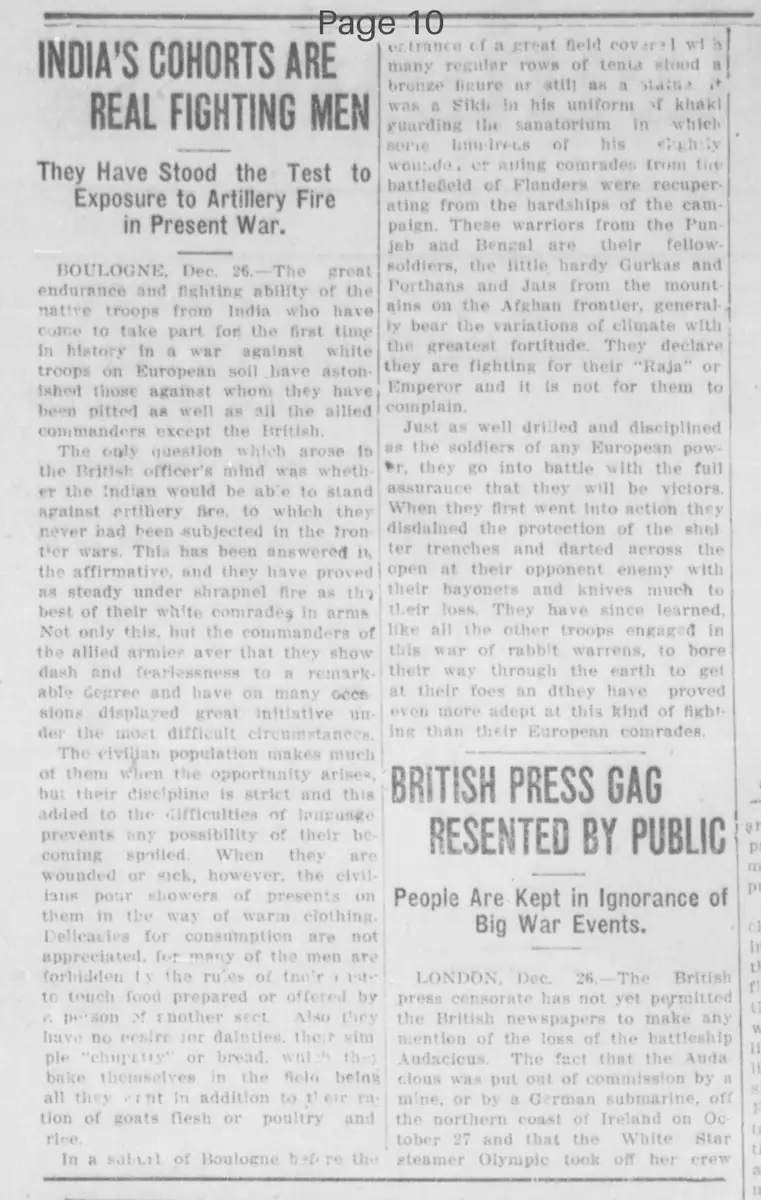
They Have Stood the Test to Exposure to Artillery Fire in Present War.
BOULOGNE, Dec. 26—The great endurance and fighting ability of the native troops from India who have come to take part for the first time in history in a war against white troops on European soil have astonished those against whom they have been pitted as well as all the allied commanders except the British.
The only question which arose in the British officer's mind was whether the Indian would be able to stand against artillery fire, to which they never had been subjected in the frontier wars. This has been answered in the affirmative, and they have proved as steady under shrapnel fire as the best of their white comrades in arms.
Not only this, but the commanders of the allied armies aver that they show dash and fearlessness to a remarkable degree and have on many occasions displayed great initiative under the most difficult circumstances.
The civilian population makes much of them when the opportunity arises, but their discipline is strict and this added to the difficulties of language prevents any possibility of their becoming spoiled. When they are wounded or sick, however, the civilian population showers presents on them in the way of warm clothing. Dainties for consumption are not appreciated, for many of the men are forbidden by the rules of their faith to touch food prepared or offered by persons of another sect. Also they have no desire for dainties; they seem satisfied with simple chapatties or bread, which they bake themselves in the field, being all they eat in addition to their ration of goats' flesh or poultry and rice.
In a salt tract of Boulogne before the truce of a great field hospital with many regular rows of tents stood a bronze figure as still as a statue. It was a Sikh, in his uniform of khaki, guarding the sanatorium in which serious cases of his wounded comrades from the battlefield of Flanders were recuperating from the hardships of the campaign. These warriors from the Punjab and Bengal are their fellow soldiers, the little hardy Gurkhas and Pathans and Jats from the mountains on the Afghan frontier, generally bear the variations of climate with the greatest fortitude. They declare they are fighting for their Rajah or Emperor and it is not for them to complain.
Just as well drilled and disciplined as the soldiers of any European power, they go into battle with the full assurance that they will be victors. When they first went into action they disdained the protection of the shelter trenches and darted across the open at their opponent enemy with their bayonets and knives much to their loss. They have since learned like all the other troops engaged in this war of rabbit warrens, to bore their way through the earth to get at their foes and they have proved even more adept at this kind of fighting than their European comrades.
What sub-type of article is it?
What keywords are associated?
Where did it happen?
Foreign News Details
Primary Location
Flanders
Event Date
Dec. 26
Outcome
indian troops proved steady under artillery fire, displayed dash and initiative, adapted to trench warfare effectively
Event Details
Native troops from India, including Sikhs, Gurkhas, Pathans, and Jats, have demonstrated great endurance and fighting ability in the war on European soil. They withstood artillery fire, showed fearlessness, and adapted to trench fighting. They maintain strict discipline and are satisfied with simple rations.