Thank you for visiting SNEWPapers!
Sign up free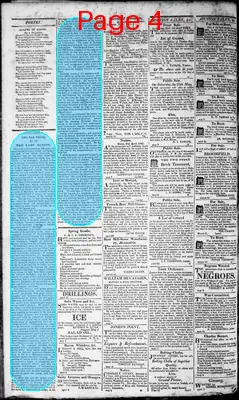
Literary
May 16, 1822
The Alexandria Gazette
Alexandria, Virginia
What is this article about?
In the Alps, Rodolph, a former noble and war hero, leads a band of robbers after betrayal at court. Enamored with Elvinrosa, daughter of ambitious minister Arnold, he is banished by the king who covets her. Osmond, a false friend, aids the intrigue. Solitary on a precipice, Rodolph reflects bitterly on his lost honors and love, cursing the world as his gang returns.
Clipping
OCR Quality
95%
Excellent
Full Text
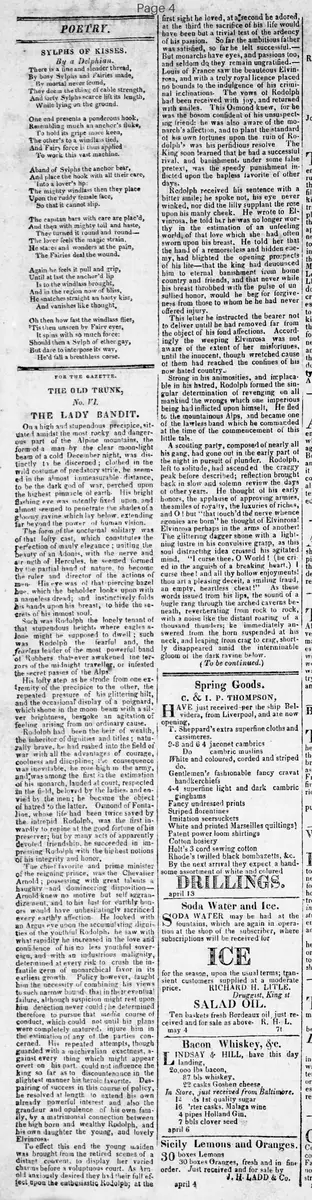
FOR THE GAZETTE.
THE OLD TRUNK,
No. VI.
THE LADY BANDIT.
On a high and stupendous precipice, situated amidst the most rocky and dangerous part of the Alpine mountains, the form of a man by the clear moon-light beam of a cold December night. was distinctly to be discerned; clothed in the wild costume of predatory strife, he seemed in the almost immeasurable distance, to be the dark god of war, perched upon the highest pinnacle of earth. His bright flashing eye was intently fixed upon, and almost seemed to penetrate the shades of a gloomy ravine which lay below, extending far beyond the power of human vision.
The form of the nocturnal solitary was of that lofty cast, which constitutes the perfection of manly elegance; uniting the beauty of an Adonis, with the nerve and strength of Hercules. He seemed formed by the partial hand of nature, to become the ruler and director of the actions of men. His eye was of that piercing hazel hue, which the beholder looks upon with a nameless dread; and instinctively folds his hands upon his breast, to hide the secrets of his inmost soul.
Such was Rodolph the lonely tenant of that stupendous height, where eagles alone might be supposed to dwell; such was Rodolph the fearful and, the fearless leader of the most powerful band of Robbers that ever awakened the terrors of the midnight traveller, or infested the secret passes of the Alps.
His lofty step as he strode from one extremity of the precipice to the other, the repeated pressure of his glittering hilt, and the occasional display of a poignard, which shone in the moon beam with a silver brightness, bespoke an agitation of feeling arising from no ordinary cause.
Rodolph had been the heir of wealth. the inheritor of dignities and titles: naturally brave, he had rushed into the field of war with all the advantages of courage, coolness and discipline; the consequence was inevitable, he rose high in the army, and was among the first in the estimation of his monarch, lauded at court, respected in the field, beloved by the ladies, and envied by the men; he became the object of hatred of the latter. Osmond of Fontaline, whose life had been twice saved by the intrepid Rodolph, was the first inwardly to repine at the good fortune of his preserver; but by many acts of apparently devoted friendship, he succeeded in impressing Rodolph with the highest notions of his integrity and honor.
The chief favorite and prime minister of the reigning prince, was the Chevalier Arnold; possessing with great talents a haughty and domineering disposition-- Arnold knew no motive but self aggrandizement, and to his lust for earthly honors would have unhesitatingly sacrificed every earthly affection. He looked with an Argus eye upon the accumulating dignities of the youthful Rodolph, he saw with what rapidity he increased in the love and confidence of his no less youthful sovereign, and with an industrious malignity, determined at every risk to crush the infantile germ of monarchical favor in its earliest growth. Policy however, taught him the necessity of combining his views to such narrow bounds that in their eventual failure, although suspicion might rest upon him, detection never could; he determined therefore to pursue that media course of conduct, which could not until his plans were completely matured, injure him in the estimation of any of the parties concerned. His repeated attempts, though guarded with a Machiavellian exactness, against every thing which might appear overt on his part, could not influence the king so far as to discountenance in the slightest manner his heroic favorite. Despairing of success in this course of policy, he resolved at length to extend his own already powerful interest and also the grandeur and opulence of his own family, by a matrimonial connection between the highborn and wealthy Rodolph, and his own daughter the young, and lovely Elvinrosa
To effect this end the young maiden was brought from the retired scenes of a distant convent, to display her varied charms before a voluptuous court. As Arnold anxiously desired they had their full effect upon the enthusiastic Rodolph; at the first sight he loved. at a second he adored. at the third the sacrifice of his life would have been but a trivial test of the ardency of his passion. So far the ambitious father was satisfied, so far he felt successful.-- But monarchs have eyes, and passions too, and seldom do they remain ungratified.-- Louis of France saw the beauteous Elvinrosa, and with a truly royal licence placed no bounds to the indulgence of his criminal inclinations. The vows of Rodolph had been received with joy, and returned with smiles. This Osmond knew, for he was the bosom confidant of his unsuspicious friend: he was also aware of the monarch's affection, and to plant the standard of his own fortunes upon the ruin of Rodolph's was his perfidious resolve. The King soon learned that he had a successful rival, and banishment, under some false pretext, was the speedy punishment inflicted upon the hapless favorite of other days.
Rodolph received his sentence with a bitter smile; he spoke not, his eye never winked, nor did the lily supplant the rose upon his manly cheek. He wrote to Elvinrosa, he told her he was no longer worthy in the estimation of an unfeeling world, of that love which she had often sworn upon his breast, He told her that the hand of a remorseless and hidden enemy, had blighted the opening prospects of his life--that the king had denounced him to eternal banishment from home country and friends, and that never while his breast throbbed with the pulse of unsullied honor, would he beg for forgiveness from those to whom he had never offered injury.
This letter he instructed the bearer not to deliver until he had removed far from the object of his fond affections. Accordingly the weeping Elvinrosa was not aware of the extent of her misfortunes, until the innocent, though wretched cause of them had reached the confines of his now hated country.
Strong in his animosities. and implacable in his hatred, Rodolph formed the singular determination of revenging on all mankind the wrongs which one imperious being had inflicted upon himself. He fled to the mountainous Alps, and became one of the lawless band which he commanded at the time of the commencement of this little tale.
A scouting party, composed of nearly all his gang, had gone out in the early part of the night in pursuit of plunder. Rodolph, left to solitude, had ascended the craggy peak before described; reflection brought back in slow and solemn review the days of other years. He thought of his early honors, the applause of approving armies, the smiles of royalty, the luxuries of riches, and O! but "that touch'd the nerve whence agonies are born" he thought of Elvinrosa! Elvinrosa perhaps in the arms of another! The glittering dagger shone with a lightning lustre in his convulsive grasp, as this soul distracting idea crossed his agitated mind, "I curse thee, O World! (he cried in the anguish of a breaking heart,) I curse thee! and all thy hollow enjoyments! thou art a pleasing deceit, a smiling fraud, an empty heartless cheat!"
As these words issued from his lips. the sound of a bugle rang through the arched caverns beneath, reverberating from rock to rock, with a noise like the distant roaring of a thousand thunders; he immediately answered from the horn suspended at his neck, and leaping from crag to crag, shortly disappeared amid the interminable gloom of the dark ravine below.
(To be continued.)
THE OLD TRUNK,
No. VI.
THE LADY BANDIT.
On a high and stupendous precipice, situated amidst the most rocky and dangerous part of the Alpine mountains, the form of a man by the clear moon-light beam of a cold December night. was distinctly to be discerned; clothed in the wild costume of predatory strife, he seemed in the almost immeasurable distance, to be the dark god of war, perched upon the highest pinnacle of earth. His bright flashing eye was intently fixed upon, and almost seemed to penetrate the shades of a gloomy ravine which lay below, extending far beyond the power of human vision.
The form of the nocturnal solitary was of that lofty cast, which constitutes the perfection of manly elegance; uniting the beauty of an Adonis, with the nerve and strength of Hercules. He seemed formed by the partial hand of nature, to become the ruler and director of the actions of men. His eye was of that piercing hazel hue, which the beholder looks upon with a nameless dread; and instinctively folds his hands upon his breast, to hide the secrets of his inmost soul.
Such was Rodolph the lonely tenant of that stupendous height, where eagles alone might be supposed to dwell; such was Rodolph the fearful and, the fearless leader of the most powerful band of Robbers that ever awakened the terrors of the midnight traveller, or infested the secret passes of the Alps.
His lofty step as he strode from one extremity of the precipice to the other, the repeated pressure of his glittering hilt, and the occasional display of a poignard, which shone in the moon beam with a silver brightness, bespoke an agitation of feeling arising from no ordinary cause.
Rodolph had been the heir of wealth. the inheritor of dignities and titles: naturally brave, he had rushed into the field of war with all the advantages of courage, coolness and discipline; the consequence was inevitable, he rose high in the army, and was among the first in the estimation of his monarch, lauded at court, respected in the field, beloved by the ladies, and envied by the men; he became the object of hatred of the latter. Osmond of Fontaline, whose life had been twice saved by the intrepid Rodolph, was the first inwardly to repine at the good fortune of his preserver; but by many acts of apparently devoted friendship, he succeeded in impressing Rodolph with the highest notions of his integrity and honor.
The chief favorite and prime minister of the reigning prince, was the Chevalier Arnold; possessing with great talents a haughty and domineering disposition-- Arnold knew no motive but self aggrandizement, and to his lust for earthly honors would have unhesitatingly sacrificed every earthly affection. He looked with an Argus eye upon the accumulating dignities of the youthful Rodolph, he saw with what rapidity he increased in the love and confidence of his no less youthful sovereign, and with an industrious malignity, determined at every risk to crush the infantile germ of monarchical favor in its earliest growth. Policy however, taught him the necessity of combining his views to such narrow bounds that in their eventual failure, although suspicion might rest upon him, detection never could; he determined therefore to pursue that media course of conduct, which could not until his plans were completely matured, injure him in the estimation of any of the parties concerned. His repeated attempts, though guarded with a Machiavellian exactness, against every thing which might appear overt on his part, could not influence the king so far as to discountenance in the slightest manner his heroic favorite. Despairing of success in this course of policy, he resolved at length to extend his own already powerful interest and also the grandeur and opulence of his own family, by a matrimonial connection between the highborn and wealthy Rodolph, and his own daughter the young, and lovely Elvinrosa
To effect this end the young maiden was brought from the retired scenes of a distant convent, to display her varied charms before a voluptuous court. As Arnold anxiously desired they had their full effect upon the enthusiastic Rodolph; at the first sight he loved. at a second he adored. at the third the sacrifice of his life would have been but a trivial test of the ardency of his passion. So far the ambitious father was satisfied, so far he felt successful.-- But monarchs have eyes, and passions too, and seldom do they remain ungratified.-- Louis of France saw the beauteous Elvinrosa, and with a truly royal licence placed no bounds to the indulgence of his criminal inclinations. The vows of Rodolph had been received with joy, and returned with smiles. This Osmond knew, for he was the bosom confidant of his unsuspicious friend: he was also aware of the monarch's affection, and to plant the standard of his own fortunes upon the ruin of Rodolph's was his perfidious resolve. The King soon learned that he had a successful rival, and banishment, under some false pretext, was the speedy punishment inflicted upon the hapless favorite of other days.
Rodolph received his sentence with a bitter smile; he spoke not, his eye never winked, nor did the lily supplant the rose upon his manly cheek. He wrote to Elvinrosa, he told her he was no longer worthy in the estimation of an unfeeling world, of that love which she had often sworn upon his breast, He told her that the hand of a remorseless and hidden enemy, had blighted the opening prospects of his life--that the king had denounced him to eternal banishment from home country and friends, and that never while his breast throbbed with the pulse of unsullied honor, would he beg for forgiveness from those to whom he had never offered injury.
This letter he instructed the bearer not to deliver until he had removed far from the object of his fond affections. Accordingly the weeping Elvinrosa was not aware of the extent of her misfortunes, until the innocent, though wretched cause of them had reached the confines of his now hated country.
Strong in his animosities. and implacable in his hatred, Rodolph formed the singular determination of revenging on all mankind the wrongs which one imperious being had inflicted upon himself. He fled to the mountainous Alps, and became one of the lawless band which he commanded at the time of the commencement of this little tale.
A scouting party, composed of nearly all his gang, had gone out in the early part of the night in pursuit of plunder. Rodolph, left to solitude, had ascended the craggy peak before described; reflection brought back in slow and solemn review the days of other years. He thought of his early honors, the applause of approving armies, the smiles of royalty, the luxuries of riches, and O! but "that touch'd the nerve whence agonies are born" he thought of Elvinrosa! Elvinrosa perhaps in the arms of another! The glittering dagger shone with a lightning lustre in his convulsive grasp, as this soul distracting idea crossed his agitated mind, "I curse thee, O World! (he cried in the anguish of a breaking heart,) I curse thee! and all thy hollow enjoyments! thou art a pleasing deceit, a smiling fraud, an empty heartless cheat!"
As these words issued from his lips. the sound of a bugle rang through the arched caverns beneath, reverberating from rock to rock, with a noise like the distant roaring of a thousand thunders; he immediately answered from the horn suspended at his neck, and leaping from crag to crag, shortly disappeared amid the interminable gloom of the dark ravine below.
(To be continued.)
What sub-type of article is it?
Prose Fiction
What themes does it cover?
Love Romance
Political
Moral Virtue
What keywords are associated?
Robber Leader
Court Intrigue
Betrayal
Lost Love
Alpine Bandits
Revenge
Monarchical Favor
Literary Details
Title
The Old Trunk, No. Vi. The Lady Bandit.
Key Lines
"I Curse Thee, O World! (He Cried In The Anguish Of A Breaking Heart,) I Curse Thee! And All Thy Hollow Enjoyments! Thou Art A Pleasing Deceit, A Smiling Fraud, An Empty Heartless Cheat!"
He Thought Of His Early Honors, The Applause Of Approving Armies, The Smiles Of Royalty, The Luxuries Of Riches, And O! But "That Touch'd The Nerve Whence Agonies Are Born" He Thought Of Elvinrosa!