Thank you for visiting SNEWPapers!
Sign up free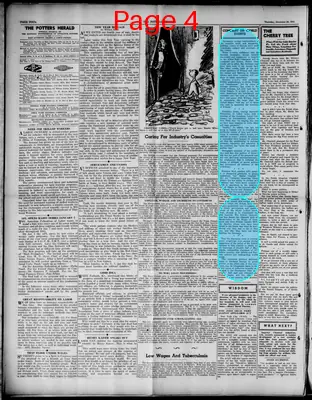
Editorial
December 28, 1944
The Potters Herald
East Liverpool, Columbiana County, Ohio
What is this article about?
Editorial discusses American anxiety over Germany's western front offensive and European political crises, including Poland's proposed partition by Russia and Britain, unrest in Greece and Belgium, AFL leaders' opposition to territorial divisions and Communist activities, and Senator Ball's warnings on threats to post-war security.
Clipping

OCR Quality
98%
Excellent
Full Text
COMMENT ON WORLD EVENTS
Germany's savage counterattack on the western front and disquieting political events in Europe have made Americans uneasy and uncertain of the future.
There is every confidence that the German onslaught, though initially successful and apparently a surprise to the Allied High Command, will be contained and beaten. Before these words are in print, the Germans may have been held, if not turned back.
But other events, such as the proposed partition of Poland and internal unrest and fighting in Belgium, Greece and other countries will continue to cause uneasiness.
Russian plans, with seemingly British acquiescence, to divide Poland and "recompense" her by slices of German territory, has come in for harsh criticism, not only here but in Great Britain. It is safe to say that most Americans are bewildered and resentful over the turn of Polish affairs and agree with William Green in expressing the hope that the United States "will say 'no' to those who seek to apportion the territory of Poland."
President Green, voicing American Federation of Labor views, told a meeting of the American Labor Conference on International Affairs in New York that "in waging this war we have been inspired by noble ideas and high purposes."
“Surely," he added, "we are not going to engage now in invading the territorial rights of men and women living in countries which fought and suffered so much." Asking Americans to remember their history, he pointed out that the partitioning of national territory, whenever and wherever it has occurred, has "sown the seeds of another war."
Newspaper accounts of the conference said that this portion of Green's talk was not part of his prepared text and was delivered extemporaneously, but emphasized that it reflected the feeling of distrust of power politics that permeated all sessions of the conference.
Matthew Woll, another AFL speaker in discussing obstacles to peace, condemned "our liberal realists" who are "violently attacking Great Britain for her policy in Greece and Belgium," but "have never uttered a word in opposition to the intervention of Russia in the internal affairs of Poland, Russia and Bulgaria." He also assailed Communist disruption in liberated Europe as injurious to the war effort.
The "Communist disruption" has been most violent and conspicuous in Greece, where the British have been waging sanguinary war in support of the Greek government and against forces of the ELAS Leftist movement, alleged to be Communist led and inspired. The British intervention has drawn the sharpest kind of denunciation in the House of Commons and from British leaders. British families whose sons have been killed in the Greek war must be wondering why they had to die in that way and why they have not been fighting the Germans.
That the European mess is causing grave misgivings even among strong supporters of the policy of the United Nations in this country is shown by the warnings of Senator Ball of Minnesota, outstanding champion of collective security, that British and Russian policies are endangering world peace.
"The unilateral political decisions made in liberated Europe by great powers on the allied side, if they continue, may do irreparable harm to the whole cause of collective security envisaged in the Dumbarton Oaks proposals," Ball said and criticized the United States and the other big powers for not making their position clear.
Germany's savage counterattack on the western front and disquieting political events in Europe have made Americans uneasy and uncertain of the future.
There is every confidence that the German onslaught, though initially successful and apparently a surprise to the Allied High Command, will be contained and beaten. Before these words are in print, the Germans may have been held, if not turned back.
But other events, such as the proposed partition of Poland and internal unrest and fighting in Belgium, Greece and other countries will continue to cause uneasiness.
Russian plans, with seemingly British acquiescence, to divide Poland and "recompense" her by slices of German territory, has come in for harsh criticism, not only here but in Great Britain. It is safe to say that most Americans are bewildered and resentful over the turn of Polish affairs and agree with William Green in expressing the hope that the United States "will say 'no' to those who seek to apportion the territory of Poland."
President Green, voicing American Federation of Labor views, told a meeting of the American Labor Conference on International Affairs in New York that "in waging this war we have been inspired by noble ideas and high purposes."
“Surely," he added, "we are not going to engage now in invading the territorial rights of men and women living in countries which fought and suffered so much." Asking Americans to remember their history, he pointed out that the partitioning of national territory, whenever and wherever it has occurred, has "sown the seeds of another war."
Newspaper accounts of the conference said that this portion of Green's talk was not part of his prepared text and was delivered extemporaneously, but emphasized that it reflected the feeling of distrust of power politics that permeated all sessions of the conference.
Matthew Woll, another AFL speaker in discussing obstacles to peace, condemned "our liberal realists" who are "violently attacking Great Britain for her policy in Greece and Belgium," but "have never uttered a word in opposition to the intervention of Russia in the internal affairs of Poland, Russia and Bulgaria." He also assailed Communist disruption in liberated Europe as injurious to the war effort.
The "Communist disruption" has been most violent and conspicuous in Greece, where the British have been waging sanguinary war in support of the Greek government and against forces of the ELAS Leftist movement, alleged to be Communist led and inspired. The British intervention has drawn the sharpest kind of denunciation in the House of Commons and from British leaders. British families whose sons have been killed in the Greek war must be wondering why they had to die in that way and why they have not been fighting the Germans.
That the European mess is causing grave misgivings even among strong supporters of the policy of the United Nations in this country is shown by the warnings of Senator Ball of Minnesota, outstanding champion of collective security, that British and Russian policies are endangering world peace.
"The unilateral political decisions made in liberated Europe by great powers on the allied side, if they continue, may do irreparable harm to the whole cause of collective security envisaged in the Dumbarton Oaks proposals," Ball said and criticized the United States and the other big powers for not making their position clear.
What sub-type of article is it?
Foreign Affairs
War Or Peace
What keywords are associated?
German Counterattack
Poland Partition
European Unrest
Afl Views
Communist Disruption
Collective Security
Dumbarton Oaks
What entities or persons were involved?
Germany
Allied High Command
Poland
Russia
Great Britain
William Green
American Federation Of Labor
Matthew Woll
Elas
Senator Ball
United Nations
Dumbarton Oaks
Editorial Details
Primary Topic
American Unease Over European War Events And Allied Power Politics
Stance / Tone
Uneasy And Critical Of Partition And Interventions
Key Figures
Germany
Allied High Command
Poland
Russia
Great Britain
William Green
American Federation Of Labor
Matthew Woll
Elas
Senator Ball
United Nations
Dumbarton Oaks
Key Arguments
German Counterattack Will Be Contained
Uneasiness Over Partition Of Poland And Unrest In Belgium And Greece
Criticism Of Russian Plans To Divide Poland With British Acquiescence
Afl Opposes Apportioning Polish Territory
Partitioning Sows Seeds Of Future War
Condemnation Of Communist Disruption In Liberated Europe
British Intervention In Greece Draws Denunciation
Unilateral Decisions By Great Powers Endanger Collective Security