Thank you for visiting SNEWPapers!
Sign up free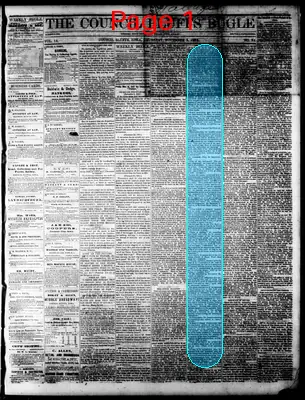
Story
November 3, 1864
Council Bluffs Bugle
Council Bluffs, Pottawattamie County, Iowa
What is this article about?
Historical commentary contrasting Abraham Lincoln's February 1861 speeches downplaying the secession crisis as artificial and harmless with his later 1864 view that it is real and caused by slave labor, citing speeches in Columbus, Pittsburgh, Cleveland, New York, and Philadelphia.
Clipping

OCR Quality
70%
Good
Full Text
[Garbled header: 4itoiamanamam :tie bay hoend Mam (nisblal to the Comnditnliont cord et, thin Lait finr TTar pertiad 'tuil,rdioa Wihy and, demsed shas, il b4 mads:U: dinmssioi 4fGhesilitiredf imiir 48e: 8.749 ty daids, mouib4Emcahaithwisalit ists Godyowamit Tat Yoy dhr mi,al" in lodses, Dilith t 11r5 - 71: 1rrear 8r oconsion ol jauchspeoch-making.rs]
The topic which was then uppermost in the public thoughts was the then accomplished secession of seven states, and their open defiance of the federal arm. At Columbus, Ohio, Mr. Lincoln made allusion to the troubles which then darkened the land in these words:
"It is a good thing that there is no more than anxiety, for there is nothing going wrong. It is a consoling circumstance that, when we look out, there is nothing that really hurts anybody. We entertain different views upon political questions, but nobody is suffering anything."
At Pittsburgh, he assured his fellow-citizens that:
"Notwithstanding the troubles across the river the speaker pointed southwardly across the Monongahela, and smiled there is no crisis but an artificial one,— What is there to warrant the condition of affair presented by our friends over the river? Take even the view of the questions involved, and there is nothing to justify the course they are pursuing. I repeat, then, there is no crisis excepting such a one as may be gotten up at any time by turbulent men, aided by designing politicians."
At Cleveland, Ohio, he impatiently asked:
"Why all this excitement? Why are these complaints? As I said before, this crisis is all artificial. It has no foundation in fact. It was not 'argued up,' and as the saying is it cannot be argued down, Let it alone and it will go down of itself. (Laughter.)
To-day, Mr. Lincoln proclaims, with a positiveness only surpassed by his declarations in February, 1861, that the crisis has "foundation in fact," and that it is slave labor. Three years and a half ago and the "let alone" policy was the true one; now "my policy" is just the opposite. Then it was "artificial;" now it is terribly real. Do sensible men see evidence of statesmanlike prevision of events in these early utterances of the President-elect?
When Mr. Lincoln reached New York city he appears to have got perception that something was "going wrong," and somebody was "hurt," for, mounting a table, his biographer, Mr. Raymond, informs us, in the Astor House parlor, he said:
"I hope to feel no necessity PRESSING upon me to say anything (hereafter) in conflict with the Constitution; in conflict with the Union of these States; in conflict with the perpetuation of the liberties of this people; or anything in conflict with anything whatever that I have ever given you reason to expect from me."
On the next day, at the City Hall, in response to an address from Mayor Wood, the President elect reproduced the thought of the previous evening:
"There is nothing," he remarked, "that could ever, bring me to consent, willingly to consent, to the DESTRUCTION or main Union, (in which not only the great city of New-York, but the whole country, has acquired its greatness. Unless it would be that for which the Union itself was made. I understand that the ship is made for the carrying and preservation of the cargo; and, so long as the ship is safe with the cargo, it shall not be abandoned."
It is worthy of remark that in the welcoming address of Mayor Wood these words were employed;
"To you, therefore, chosen under the form of the Constitution as the head of the confederacy, we look for a restoration of fraternal relations between the States—only to be accomplished by peaceful and conciliatory means, aided by the wisdom of Almighty God."
To this, Raymond (p. W) reports Mr. Lincoln as replying in
"In regard to the difficulties that confront us at this time, and of which you have seen fit to speak so becomingly and justly, I can only say that I agree with the sentiments expressed."
The whole atmosphere of the speeches of the President elect in New York city harmonized with the "let-alone" policy proclaimed at Cleveland, Ohio. There was no talk about destruction of slave labor to bring back the seven seceded States. There was, indeed, allusion to the "pressure" so often referred to since that time, and an indication of being faithful to the Constitution by "destruction of the Union." Perhaps some zealous Republican discovers in the speeches indications of "capability" but nothing of the kind is revealed to us. On the contrary, we see nothing but intellectual helplessness.
At Philadelphia, Mr. Lincoln reiterates the proposition that nobody. in "hurt," and adds:
"I deem it a happy circumstance that this dissatisfied portion of our fellow-citizens does not point us to anything in which they are being injured, or about to be injured; for which reason I have felt all the while justified in concluding that the crisis, the panic, the anxiety of the country dispelled these, is artificial Again, in Independence Hall on February 21, 1861, he said:
Now, in view of preot or aair tere need bg No At SuaD ox WaN.5Tberd is ne Deo for it."
All this, be it remembered, Int ileei bad' coofer with or teand Rnnriynt (roo) Coald fatneun foll; so fartd ex n. Bresuieted Soavey cai. Aliodila
The topic which was then uppermost in the public thoughts was the then accomplished secession of seven states, and their open defiance of the federal arm. At Columbus, Ohio, Mr. Lincoln made allusion to the troubles which then darkened the land in these words:
"It is a good thing that there is no more than anxiety, for there is nothing going wrong. It is a consoling circumstance that, when we look out, there is nothing that really hurts anybody. We entertain different views upon political questions, but nobody is suffering anything."
At Pittsburgh, he assured his fellow-citizens that:
"Notwithstanding the troubles across the river the speaker pointed southwardly across the Monongahela, and smiled there is no crisis but an artificial one,— What is there to warrant the condition of affair presented by our friends over the river? Take even the view of the questions involved, and there is nothing to justify the course they are pursuing. I repeat, then, there is no crisis excepting such a one as may be gotten up at any time by turbulent men, aided by designing politicians."
At Cleveland, Ohio, he impatiently asked:
"Why all this excitement? Why are these complaints? As I said before, this crisis is all artificial. It has no foundation in fact. It was not 'argued up,' and as the saying is it cannot be argued down, Let it alone and it will go down of itself. (Laughter.)
To-day, Mr. Lincoln proclaims, with a positiveness only surpassed by his declarations in February, 1861, that the crisis has "foundation in fact," and that it is slave labor. Three years and a half ago and the "let alone" policy was the true one; now "my policy" is just the opposite. Then it was "artificial;" now it is terribly real. Do sensible men see evidence of statesmanlike prevision of events in these early utterances of the President-elect?
When Mr. Lincoln reached New York city he appears to have got perception that something was "going wrong," and somebody was "hurt," for, mounting a table, his biographer, Mr. Raymond, informs us, in the Astor House parlor, he said:
"I hope to feel no necessity PRESSING upon me to say anything (hereafter) in conflict with the Constitution; in conflict with the Union of these States; in conflict with the perpetuation of the liberties of this people; or anything in conflict with anything whatever that I have ever given you reason to expect from me."
On the next day, at the City Hall, in response to an address from Mayor Wood, the President elect reproduced the thought of the previous evening:
"There is nothing," he remarked, "that could ever, bring me to consent, willingly to consent, to the DESTRUCTION or main Union, (in which not only the great city of New-York, but the whole country, has acquired its greatness. Unless it would be that for which the Union itself was made. I understand that the ship is made for the carrying and preservation of the cargo; and, so long as the ship is safe with the cargo, it shall not be abandoned."
It is worthy of remark that in the welcoming address of Mayor Wood these words were employed;
"To you, therefore, chosen under the form of the Constitution as the head of the confederacy, we look for a restoration of fraternal relations between the States—only to be accomplished by peaceful and conciliatory means, aided by the wisdom of Almighty God."
To this, Raymond (p. W) reports Mr. Lincoln as replying in
"In regard to the difficulties that confront us at this time, and of which you have seen fit to speak so becomingly and justly, I can only say that I agree with the sentiments expressed."
The whole atmosphere of the speeches of the President elect in New York city harmonized with the "let-alone" policy proclaimed at Cleveland, Ohio. There was no talk about destruction of slave labor to bring back the seven seceded States. There was, indeed, allusion to the "pressure" so often referred to since that time, and an indication of being faithful to the Constitution by "destruction of the Union." Perhaps some zealous Republican discovers in the speeches indications of "capability" but nothing of the kind is revealed to us. On the contrary, we see nothing but intellectual helplessness.
At Philadelphia, Mr. Lincoln reiterates the proposition that nobody. in "hurt," and adds:
"I deem it a happy circumstance that this dissatisfied portion of our fellow-citizens does not point us to anything in which they are being injured, or about to be injured; for which reason I have felt all the while justified in concluding that the crisis, the panic, the anxiety of the country dispelled these, is artificial Again, in Independence Hall on February 21, 1861, he said:
Now, in view of preot or aair tere need bg No At SuaD ox WaN.5Tberd is ne Deo for it."
All this, be it remembered, Int ileei bad' coofer with or teand Rnnriynt (roo) Coald fatneun foll; so fartd ex n. Bresuieted Soavey cai. Aliodila
What sub-type of article is it?
Historical Event
Biography
What themes does it cover?
Catastrophe
Fortune Reversal
What keywords are associated?
Lincoln Speeches
Secession Crisis
Artificial Crisis
Civil War
Slave Labor
What entities or persons were involved?
Mr. Lincoln
Mayor Wood
Mr. Raymond
Where did it happen?
Columbus Ohio, Pittsburgh, Cleveland Ohio, New York City, Philadelphia
Story Details
Key Persons
Mr. Lincoln
Mayor Wood
Mr. Raymond
Location
Columbus Ohio, Pittsburgh, Cleveland Ohio, New York City, Philadelphia
Event Date
February 1861
Story Details
Article critiques Abraham Lincoln's speeches during his 1861 inaugural journey, where he described the secession crisis as artificial and harmless, contrasting with his later recognition of its reality due to slave labor.