Thank you for visiting SNEWPapers!
Sign up free
Richmond Palladium
Richmond, Wayne County, Indiana
What is this article about?
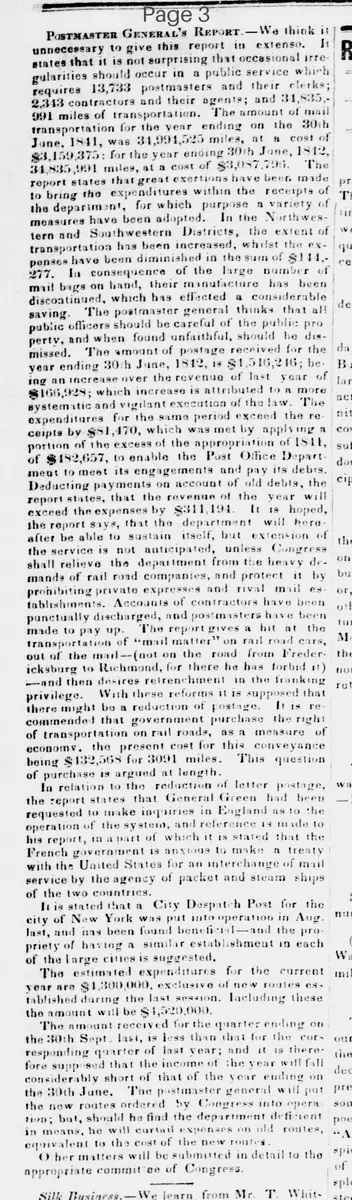
The Postmaster General's report for the year ending June 30, 1842, outlines postal operations involving 13,733 postmasters, 2,343 contractors, and 34,835,991 miles of mail transportation at $3,057,795 cost. Revenue increased to $1,516,216, but expenditures exceeded receipts by $81,470, met by prior funds. After old debts, revenue exceeded expenses by $311,191. Reforms include cost reductions, discontinuing bag manufacture, and suggestions for railroad purchases, reduced postage, and city despatch posts like New York's.
Clipping
OCR Quality
Full Text
In relation to the reduction of letter postage, the report states that General Green had been requested to make inquiries in England as to the operation of the system, and reference is made to his report, in a part of which it is stated that the French government is anxious to make a treaty with the United States for an interchange of mail service by the agency of packet and steam ships of the two countries.
It is stated that a City Despatch Post for the city of New York was put into operation in August last, and has been found beneficial—and the propriety of having a similar establishment in each of the large cities is suggested.
The estimated expenditures for the current year are $1,300,000, exclusive of new routes established during the last session. Including these the amount will be $1,520,000.
The amount received for the quarter ending on the 30th Sept. last, is less than that for the corresponding quarter of last year; and it is therefore supposed that the income of the year will fall considerably short of that of the year ending on the 30th June. The postmaster general will put the new routes ordered by Congress into operation; but, should he find the department deficient in means, he will curtail expenses on old routes, equivalent to the cost of the new routes.
Other matters will be submitted in detail to the appropriate committee of Congress.
What sub-type of article is it?
What keywords are associated?
What entities or persons were involved?
Domestic News Details
Event Date
Year Ending 30th June, 1842
Key Persons
Outcome
revenue of $1,516,216 exceeded expenses by $311,191 after deducting old debts; expenditures exceeded receipts by $81,470 met by prior appropriation; estimated current year expenditures $1,300,000 to $1,520,000
Event Details
The Postmaster General's report details postal service scale with 13,733 postmasters, 2,343 contractors, and 34,835,991 miles of mail transportation in 1842 at reduced cost from 1841. Efforts to align expenditures with receipts include increased transportation in districts with $11,277 savings, discontinued mail bag manufacture, dismissal of unfaithful officers, and vigilant law execution leading to $166,928 revenue increase. Hopes for self-sustainability if Congress addresses railroad demands and prohibits private mails. Recommendations for government purchase of railroad transport rights, retrenchment in franking, postage reduction, and city despatch posts like New York's started in August. New routes to be implemented with potential curtailments if funds short.