Thank you for visiting SNEWPapers!
Sign up free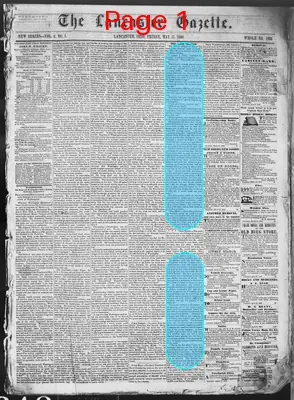
Story
May 11, 1849
The Lancaster Gazette
Lancaster, Fairfield County, Ohio
What is this article about?
An Irish widow leaves her six young children in Ireland and immigrates to America to work at the Sailor's Home, sending money home. Despite hardships, sailors donate to bring the children over, leading to a joyful reunion in New York.
Clipping

OCR Quality
95%
Excellent
Full Text
THE IRISH MOTHER.
"You will be obliged to dismiss that woman, she does her work so badly," said Capt. R. to the steward of the Sailor's Home, one day.
"I suppose I shall," answered the steward, "I took her in from pity."
"From pity? Who is she, and what is she?"
"She is a poor woman, just arrived in this country; her husband died a few months ago, and left her a widow with six young children. She has left them in Ireland, and come over here to find employment to earn enough, if possible, to bring them over; such is her story, and she seems honest enough."
"Well, show her how to do her work, and keep her awhile, till we know more about her."
She was modest, diffident, and retiring, little disposed to be communicative, and with little appearance of energy of character.
"You have left your children in Ireland, I understand," said the Captain approaching her.
"I have all of them, the dear ones."
"How old are they?"
"The oldest little girl was thirteen and a half when I left her in care of them all, and the youngest, sweet one, was a little more than two."
"How long since your husband died; and how have you supported them since?"
"My husband died about four months before I left Ireland, poor man, and left us in a little cottage and not half of a quarter acre of land; and the rent was twenty-five shillings a year. I put in it potatoes and garden vegetables for the support of the children; but that was little, you see sir, after paying the rent.—I thought I should be obliged to take them to the poor house; so I says what I thought to the children; but Johny says to me—that is the second one, dear boy.
"Oh dear mother, do not send us to the poor house, for ye see that they will not let you come with us, and we shall be separated from you; and the white swelling is there, and many of the children die: but do dear mother leave us here to get along as well as we can, while you go to America, and it may be mother, with the blessing of God, ye may be able to fetch us all over at last, if it be but only one at a time." And so the child was teasing ready and night to come to America: so I wrote a letter to my two sisters in New York, the one at service, the other married, for the loan of a few pounds to fetch me over; and they sent me six pounds; and I left the younger children asleep when I came away, for I knew sir, if I parted from them awake, they would cry so after me, it would break my poor heart."
The Irish mother toiled on, after this conversation for weeks and even months doing her work better and better, remitting every cent of her wages, often in advance, to her children, and receiving in return from them, letters, from which we give a few extracts:
"Dear Mother:—Soon after you left us, the landlord, seeing we could not pay the rent, took the best bed, and the bedstead, and the table and the chairs, and left us only the blankets and the straw on the ground; but I hope you will return him thanks, and his family, in your next letter, for giving the house gratis to us, this present year."
mother, I hope you will send for myself, that is Johny, as soon as you can, if you think I would be any benefit to you there.
The mother, with her Irish heart almost crushed with the thought, that although nearly a year had passed not a dollar had been saved to pay the passage money of the first child, was about resolving to go back and starve with her children in Ireland. But by a good providence, she was in the Sailors' home—her case reached the ears of sailors. The distance from a sailor's ear to his heart is short; from his heart to his pocket shorter.
A subscription was started among the boarders and raised at once sixty dollars; increased a few days afterwards, by another set of boarders, to one hundred dollars; and by a loan from her relatives, and an advance of wages to one hundred and forty dollars; sufficient to provision and pay the passage of the whole six.
The second Sabbath in November, in the morning, one of the runners of the house made his appearance before the door with six thinly clad, bare headed, and bare footed Irish children. The meeting of mother and children was a meeting of Irish hearts; they laughed and cried all at once, and all together. The first burst of joy over, Croton water and hair-brush, did all that a mother's ingenuity could do to improve the condition and the appearance of the young voyagers. At evening she might be seen in her little room, by a cheerful light, and with a more cheerful heart, gazing into the face of one and then another of her sleeping children, as they lay in pairs in different parts of the room.
"This is the first place I came to in America," said she, "and this is the best place I have found yet, and this is the happiest hour I have seen. By the blessing of God and the kindness of the sailors, God bless them all their days, we are all here in America. The children want shoes and clothes and the older ones employment; if we can get the latter, we will soon have all the rest."—Sailor's Magazine.
"You will be obliged to dismiss that woman, she does her work so badly," said Capt. R. to the steward of the Sailor's Home, one day.
"I suppose I shall," answered the steward, "I took her in from pity."
"From pity? Who is she, and what is she?"
"She is a poor woman, just arrived in this country; her husband died a few months ago, and left her a widow with six young children. She has left them in Ireland, and come over here to find employment to earn enough, if possible, to bring them over; such is her story, and she seems honest enough."
"Well, show her how to do her work, and keep her awhile, till we know more about her."
She was modest, diffident, and retiring, little disposed to be communicative, and with little appearance of energy of character.
"You have left your children in Ireland, I understand," said the Captain approaching her.
"I have all of them, the dear ones."
"How old are they?"
"The oldest little girl was thirteen and a half when I left her in care of them all, and the youngest, sweet one, was a little more than two."
"How long since your husband died; and how have you supported them since?"
"My husband died about four months before I left Ireland, poor man, and left us in a little cottage and not half of a quarter acre of land; and the rent was twenty-five shillings a year. I put in it potatoes and garden vegetables for the support of the children; but that was little, you see sir, after paying the rent.—I thought I should be obliged to take them to the poor house; so I says what I thought to the children; but Johny says to me—that is the second one, dear boy.
"Oh dear mother, do not send us to the poor house, for ye see that they will not let you come with us, and we shall be separated from you; and the white swelling is there, and many of the children die: but do dear mother leave us here to get along as well as we can, while you go to America, and it may be mother, with the blessing of God, ye may be able to fetch us all over at last, if it be but only one at a time." And so the child was teasing ready and night to come to America: so I wrote a letter to my two sisters in New York, the one at service, the other married, for the loan of a few pounds to fetch me over; and they sent me six pounds; and I left the younger children asleep when I came away, for I knew sir, if I parted from them awake, they would cry so after me, it would break my poor heart."
The Irish mother toiled on, after this conversation for weeks and even months doing her work better and better, remitting every cent of her wages, often in advance, to her children, and receiving in return from them, letters, from which we give a few extracts:
"Dear Mother:—Soon after you left us, the landlord, seeing we could not pay the rent, took the best bed, and the bedstead, and the table and the chairs, and left us only the blankets and the straw on the ground; but I hope you will return him thanks, and his family, in your next letter, for giving the house gratis to us, this present year."
mother, I hope you will send for myself, that is Johny, as soon as you can, if you think I would be any benefit to you there.
The mother, with her Irish heart almost crushed with the thought, that although nearly a year had passed not a dollar had been saved to pay the passage money of the first child, was about resolving to go back and starve with her children in Ireland. But by a good providence, she was in the Sailors' home—her case reached the ears of sailors. The distance from a sailor's ear to his heart is short; from his heart to his pocket shorter.
A subscription was started among the boarders and raised at once sixty dollars; increased a few days afterwards, by another set of boarders, to one hundred dollars; and by a loan from her relatives, and an advance of wages to one hundred and forty dollars; sufficient to provision and pay the passage of the whole six.
The second Sabbath in November, in the morning, one of the runners of the house made his appearance before the door with six thinly clad, bare headed, and bare footed Irish children. The meeting of mother and children was a meeting of Irish hearts; they laughed and cried all at once, and all together. The first burst of joy over, Croton water and hair-brush, did all that a mother's ingenuity could do to improve the condition and the appearance of the young voyagers. At evening she might be seen in her little room, by a cheerful light, and with a more cheerful heart, gazing into the face of one and then another of her sleeping children, as they lay in pairs in different parts of the room.
"This is the first place I came to in America," said she, "and this is the best place I have found yet, and this is the happiest hour I have seen. By the blessing of God and the kindness of the sailors, God bless them all their days, we are all here in America. The children want shoes and clothes and the older ones employment; if we can get the latter, we will soon have all the rest."—Sailor's Magazine.
What sub-type of article is it?
Biography
Family Drama
Personal Triumph
What themes does it cover?
Family
Misfortune
Triumph
What keywords are associated?
Irish Widow
Family Separation
Sailor Charity
Immigration Reunion
Child Poverty
What entities or persons were involved?
Irish Mother
Johny
Sailors
Where did it happen?
Sailor's Home In New York, Ireland
Story Details
Key Persons
Irish Mother
Johny
Sailors
Location
Sailor's Home In New York, Ireland
Story Details
An Irish widow, left with six children after her husband's death, immigrates to America to work and send money home. Her children face eviction but encourage her. She toils at the Sailor's Home, receives letters from children. Sailors raise funds to bring all six children over, leading to a tearful reunion.