Thank you for visiting SNEWPapers!
Sign up free
Literary
August 18, 1830
Morning Star
Limerick, York County, Maine
What is this article about?
A meditative prose essay on the grave as the ultimate equalizer, reflecting on mortality, the transience of earthly glory, and the shared destiny of kings and commoners in death, incorporating poetic quotes to underscore themes of pride's futility and eternal rest.
Clipping
OCR Quality
95%
Excellent
Full Text
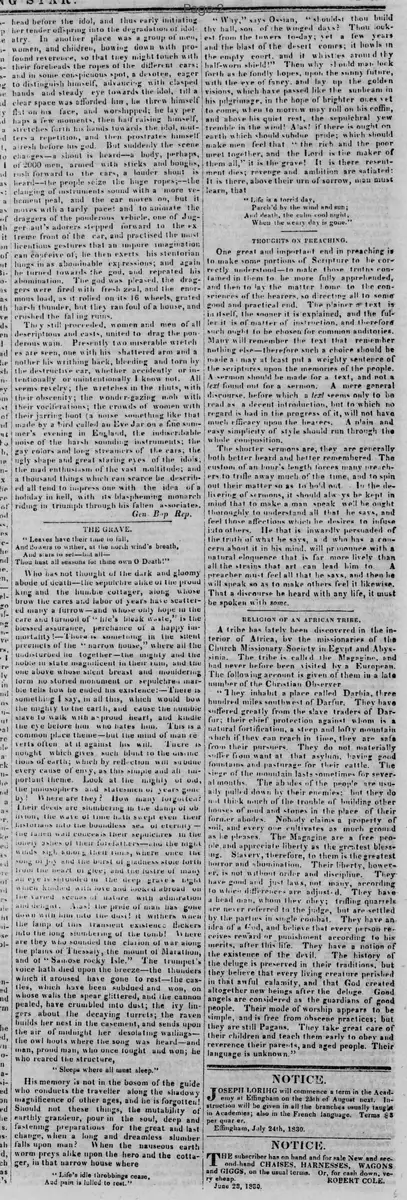
THE GRAVE.
"Leaves have their time to fall,
And flowers to wither, at the north wind's breath,
And stars to set-but all-
Thou hast all seasons for thine own, O Death!"
Who has not thought of the dark and gloomy abode of death--the sepulchre alike of the proud king and the humble cottager, along whose brow the cares and labor of years have scattered many a furrow-and whose only hope in the care and turmoil of "life's bleak waste," is the blessed assurance, perchance of a happy immortality!-'There is something in the silent precincts of the "narrow house," where all the undisturbed lie together-the mighty and the noble in state magnificent in their urn, and the one above whose silent breast and mouldering form no storied monument or sepulchred marble tells how he ended his existence:--There is something I say, in all this, which would bow the mighty to the earth, and cause the humble slave to walk with a proud heart, and kindle the eye before him who hates him. This is a common place theme-but the mind of man reverts often to it against his will. There is nought which gives such blunt to the distinctions of earth; which by reflection will subdue every cause of envy, as this simple and all important theme. Look at the mighty of old, the philosophers and statesmen of years gone by! Where are they? How many forgotten: Their deeds are slumbering in the deep of oblivion, the wave of time hath swept even them historians into the boundless sea of eternity-the laden vault conceals their sepulchres in the mouldering ashes of their forefathers-and the mighty winds sigh among their tombs, where once the song of joy and the burst of gladness stole forth loud from the heart of glee; and no lustre of many an eye is shrouded in the deep grass's height when kindled with love and looked abroad on the varied scenes of nature with admiration and delight. Alas! the pride of man has gone down with him into the dust! it withers when the lamp of his transient existence flickers into the long slumbering of the tomb! Where are they who sounded the clarion of war along the plains of Thessaly, the mount of Marathon, and of "Samos rocky Isle." The trumpet's voice hath died upon the breeze--the thunders which it aroused have gone to rest-the castles, which have been subdued and won, on whose walls the spear glittered, and the cannon pealed, have crumbled into dust; the ivy lingers about the decaying turrets; the raven builds her nest in the casement, and sends upon the air of midnight her desolating wailings-the owl hoots where the song was heard-and man, proud man, who once fought and won; he who reared the structure,
"Sleeps where all must sleep."
His memory is not in the bosom of the guide who conducts the traveller along the shadowy magnificence of other ages, and he is forgotten! Should not these things, the mutability of earthly grandeur, pour in the soul, deep and fastening preparations for the great and last change, when a long and dreamless slumber falls upon man? When the nauseous earth worm preys alike upon the hero and the cottager, in that narrow house where
"Life's idle throbbings cease,
And pain is lulled to rest."
"Why," says Ossian, "shouldst thou build thy hall, son of the winged days? Thou lookest from the towers to-day; set a few years and the blast of the desert comes; it howls in the empty court. and it whistles around thy half-worn shield!" Then why should man look forth as he fondly hopes, upon the sunny future, with the eye of fancy. and lay up the golden visions, which have passed like the sunbeam in his pilgrimage, in the hope of brighter ones yet to come, when to-morrow may roll on his coffin, and above his quiet rest, the sepulchral yew tremble in the wind! Alas! if there is ought on earth which should subdue pride; which should make men feel that "the rich and the poor meet together, and the Lord is the maker of them all," it is the grave! It is there resentment dies; revenge and ambition are satiated: It is there, above their urn of sorrow, man must learn, that
"Life is a torrid day,
Parch'd by the wind and sun;
And death, the calm cool night,
When the weary day is gone."
"Leaves have their time to fall,
And flowers to wither, at the north wind's breath,
And stars to set-but all-
Thou hast all seasons for thine own, O Death!"
Who has not thought of the dark and gloomy abode of death--the sepulchre alike of the proud king and the humble cottager, along whose brow the cares and labor of years have scattered many a furrow-and whose only hope in the care and turmoil of "life's bleak waste," is the blessed assurance, perchance of a happy immortality!-'There is something in the silent precincts of the "narrow house," where all the undisturbed lie together-the mighty and the noble in state magnificent in their urn, and the one above whose silent breast and mouldering form no storied monument or sepulchred marble tells how he ended his existence:--There is something I say, in all this, which would bow the mighty to the earth, and cause the humble slave to walk with a proud heart, and kindle the eye before him who hates him. This is a common place theme-but the mind of man reverts often to it against his will. There is nought which gives such blunt to the distinctions of earth; which by reflection will subdue every cause of envy, as this simple and all important theme. Look at the mighty of old, the philosophers and statesmen of years gone by! Where are they? How many forgotten: Their deeds are slumbering in the deep of oblivion, the wave of time hath swept even them historians into the boundless sea of eternity-the laden vault conceals their sepulchres in the mouldering ashes of their forefathers-and the mighty winds sigh among their tombs, where once the song of joy and the burst of gladness stole forth loud from the heart of glee; and no lustre of many an eye is shrouded in the deep grass's height when kindled with love and looked abroad on the varied scenes of nature with admiration and delight. Alas! the pride of man has gone down with him into the dust! it withers when the lamp of his transient existence flickers into the long slumbering of the tomb! Where are they who sounded the clarion of war along the plains of Thessaly, the mount of Marathon, and of "Samos rocky Isle." The trumpet's voice hath died upon the breeze--the thunders which it aroused have gone to rest-the castles, which have been subdued and won, on whose walls the spear glittered, and the cannon pealed, have crumbled into dust; the ivy lingers about the decaying turrets; the raven builds her nest in the casement, and sends upon the air of midnight her desolating wailings-the owl hoots where the song was heard-and man, proud man, who once fought and won; he who reared the structure,
"Sleeps where all must sleep."
His memory is not in the bosom of the guide who conducts the traveller along the shadowy magnificence of other ages, and he is forgotten! Should not these things, the mutability of earthly grandeur, pour in the soul, deep and fastening preparations for the great and last change, when a long and dreamless slumber falls upon man? When the nauseous earth worm preys alike upon the hero and the cottager, in that narrow house where
"Life's idle throbbings cease,
And pain is lulled to rest."
"Why," says Ossian, "shouldst thou build thy hall, son of the winged days? Thou lookest from the towers to-day; set a few years and the blast of the desert comes; it howls in the empty court. and it whistles around thy half-worn shield!" Then why should man look forth as he fondly hopes, upon the sunny future, with the eye of fancy. and lay up the golden visions, which have passed like the sunbeam in his pilgrimage, in the hope of brighter ones yet to come, when to-morrow may roll on his coffin, and above his quiet rest, the sepulchral yew tremble in the wind! Alas! if there is ought on earth which should subdue pride; which should make men feel that "the rich and the poor meet together, and the Lord is the maker of them all," it is the grave! It is there resentment dies; revenge and ambition are satiated: It is there, above their urn of sorrow, man must learn, that
"Life is a torrid day,
Parch'd by the wind and sun;
And death, the calm cool night,
When the weary day is gone."
What sub-type of article is it?
Essay
What themes does it cover?
Death Mortality
Moral Virtue
Religious
What keywords are associated?
Grave
Death
Mortality
Pride
Eternity
Equality
Transience
Immortality
Literary Details
Title
The Grave.
Form / Style
Prose Meditation With Embedded Poetry
Key Lines
"Leaves Have Their Time To Fall,
And Flowers To Wither, At The North Wind's Breath,
And Stars To Set But All
Thou Hast All Seasons For Thine Own, O Death!"
"Sleeps Where All Must Sleep."
"Life's Idle Throbbings Cease,
And Pain Is Lulled To Rest."
"Why," Says Ossian, "Shouldst Thou Build Thy Hall, Son Of The Winged Days? Thou Lookest From The Towers To Day; Set A Few Years And The Blast Of The Desert Comes; It Howls In The Empty Court. And It Whistles Around Thy Half Worn Shield!"
"Life Is A Torrid Day,
Parch'd By The Wind And Sun;
And Death, The Calm Cool Night,
When The Weary Day Is Gone."