Thank you for visiting SNEWPapers!
Sign up free
Literary
December 27, 1817
Richmond Enquirer
Richmond, Richmond County, Virginia
What is this article about?
An account from Mr. Kerarty's 'Moral and Physiological Introductions' describes a man in Ile and Villaine who, despite blindness, deafness, paralysis, and loss of most senses, retains intelligence and communicates via touch on his cheek, supervising tasks and feeling family affection.
Clipping
OCR Quality
95%
Excellent
Full Text
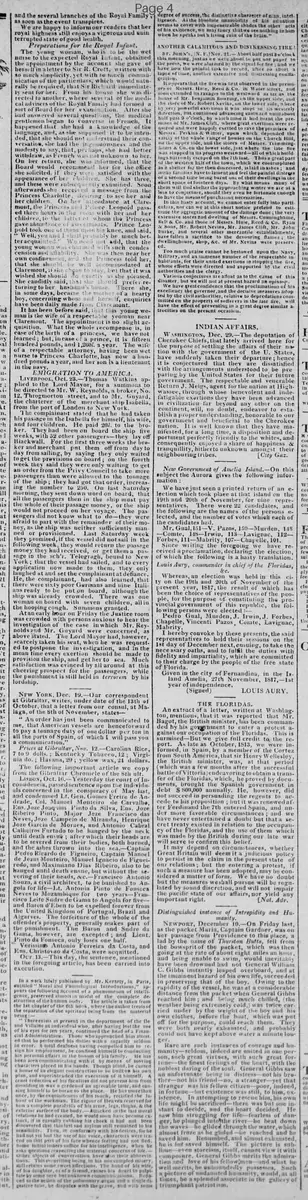
In a work lately published by Mr. Kerarty, in Paris, entitled 'Moral and Physiological Introductions,' appears the following account of a phenomenon of intelligence, preserved almost in midst of the complete destruction of the human body. The article is taken from the 1st chapter of the 6th book, where the author treats of the separation of the spiritual being from the material being:—
'There exists at present in the department of the Ile and Villaine an individual who, after having lost the use of his eyes for ten years, continued the head of a Financial Administration. Those who approached him attested that he performed his duties with a sagacity seldom in error. A total deafness having compelled him to resign his employment, he confined himself to conducting his personal affairs in the bosom of his family. He has been seen communicating with it by means of moving characters placed in his hands. Though blind, he caused a house of an elegant construction to be built on his own plan, and superintended the execution of it himself. A cruel reduction of his faculties did not prevent him from moulding in wax a garden of an agreeable taste, and causing himself to be borne to the place. He has more than once, by the exquisiteness of his touch, rectified the labour of the workman. The rigour of Heaven reserved for him a complete paralysis of his arms, legs, thighs, & the exterior surface of the body.—Attacked in the last moral relations he had created, he would soon have become extinct, if in casually rubbing his cheek it had not been discovered that this last sad asylum still remained to his sensibility. Then, in conformity with his desires, for he had not yet lost the use of his voice, characters were traced on that part of his face whence feeling had not fled. Some initial letters suffice for his intelligence, when he asks questions respecting the material concerns of life.—Other objects of conversation have also their abbreviations. This surprising being, in his unparalleled misery, still retains some sweet affections. The hand of his wife, of his daughter, or of a friend, causes his heart to palpitate by some secret but unknown communications. Reduced to the action of the pulmonary organ and a single digestive tube, he disputes with the grave, and with some degree of success, the distinctive character of man, intelligence. As the absolute immobility of his situation seems to cover with impenetrable shades the other acts of his existence, we may fancy that we see nothing in him when he speaks but a living ruin of the brain.'
'There exists at present in the department of the Ile and Villaine an individual who, after having lost the use of his eyes for ten years, continued the head of a Financial Administration. Those who approached him attested that he performed his duties with a sagacity seldom in error. A total deafness having compelled him to resign his employment, he confined himself to conducting his personal affairs in the bosom of his family. He has been seen communicating with it by means of moving characters placed in his hands. Though blind, he caused a house of an elegant construction to be built on his own plan, and superintended the execution of it himself. A cruel reduction of his faculties did not prevent him from moulding in wax a garden of an agreeable taste, and causing himself to be borne to the place. He has more than once, by the exquisiteness of his touch, rectified the labour of the workman. The rigour of Heaven reserved for him a complete paralysis of his arms, legs, thighs, & the exterior surface of the body.—Attacked in the last moral relations he had created, he would soon have become extinct, if in casually rubbing his cheek it had not been discovered that this last sad asylum still remained to his sensibility. Then, in conformity with his desires, for he had not yet lost the use of his voice, characters were traced on that part of his face whence feeling had not fled. Some initial letters suffice for his intelligence, when he asks questions respecting the material concerns of life.—Other objects of conversation have also their abbreviations. This surprising being, in his unparalleled misery, still retains some sweet affections. The hand of his wife, of his daughter, or of a friend, causes his heart to palpitate by some secret but unknown communications. Reduced to the action of the pulmonary organ and a single digestive tube, he disputes with the grave, and with some degree of success, the distinctive character of man, intelligence. As the absolute immobility of his situation seems to cover with impenetrable shades the other acts of his existence, we may fancy that we see nothing in him when he speaks but a living ruin of the brain.'
What sub-type of article is it?
Essay
What themes does it cover?
Moral Virtue
Religious
What keywords are associated?
Intelligence Preservation
Spiritual Separation
Physical Disability
Human Resilience
Moral Relations
What entities or persons were involved?
Mr. Kerarty
Literary Details
Author
Mr. Kerarty
Subject
Separation Of The Spiritual Being From The Material Being
Key Lines
This Surprising Being, In His Unparalleled Misery, Still Retains Some Sweet Affections.
Reduced To The Action Of The Pulmonary Organ And A Single Digestive Tube, He Disputes With The Grave, And With Some Degree Of Success, The Distinctive Character Of Man, Intelligence.
As The Absolute Immobility Of His Situation Seems To Cover With Impenetrable Shades The Other Acts Of His Existence, We May Fancy That We See Nothing In Him When He Speaks But A Living Ruin Of The Brain.