Thank you for visiting SNEWPapers!
Sign up free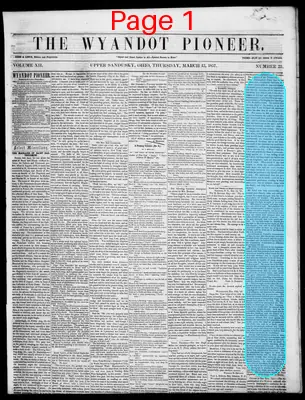
Story
March 12, 1857
The Wyandot Pioneer
Upper Sandusky, Wyandot County, Ohio
What is this article about?
Sensational reports from the Tombs prison on suspects in Dr. Burdell's murder: Mrs. Cunningham's fortitude and secret marriage fears; Eckel's calm denial of evidence and motive; Snodgrass's realization of his serious situation and innocence claims. (214 chars)
Clipping

OCR Quality
95%
Excellent
Full Text
The Suspected Murderers in the Tombs.
The reporter of the Tribune says:
Mrs. Cunningham bears her trying situation with remarkable fortitude, and receives visitors with an ease and dignity that would seem to convey the impression that she felt conscious of her innocence.
One of the lady visitors asked why she, a woman of full age and ripe experience, ever consented to put herself in so equivocal a situation by keeping her marriage to Dr. Burdell a secret. She replied that she was afraid of the Doctor, as he had sworn that if she divulged the marriage before the time that he would take her life. The reason he did not attend the party was because she told him if he did, that she would there proclaim herself his wife; and he told her if she did he would blow her brains out on the spot; and she added, he certainly would have done it, his temper was so very violent. She says no tongue can tell how much she loved that man, notwithstanding she stood in such mortal fear of her life. In all her conversation, she maintains her perfect innocence of the crime laid at her door, and scoffs at the idea that she could have committed it; or that the community can believe that she did. "Why," said she, "it is not possible for them to prove anything against us. I was willing to tell all I knew, but they would not believe me nor my daughters; and yet they are the soul of truth. When asked if she had friends to whom she could confide her little boys, she said she had a brother and sister, but as she had never yet gone to them for assistance, she should not ask it now. We understand that the poor little fellows will be kindly cared for by a benevolent gentleman residing in Bond street, who was on intimate terms with the family, and fully believes in their innocence.
Mr. Eckel was very comfortable, and seemed marvellously calm and self-possessed for a man charged with the heinous crime of murder. His meals are sent in from a restaurant, and he has the privilege of a light at night if he wishes it. Newspapers, segars, and other luxuries are allowed him. He admitted that the circumstantial evidence against the family was rather weighty, but he asserted his entire innocence and his full belief that the others now charged with the crime would be proved innocent. This he said earnestly and with much emotion. In emphatic terms he denied that he went to the door on that night, as Farrell charges; but said he never left the third floor after he went up, at 9 or 10 o'clock, until he went out to his business the next morning.
In reference to Farrell's identification of him, he says that his picture has been hawked about the streets, and his person described until he believed nine-tenths of the community would have no difficulty in pointing him out.
Mr. Eckel, in allusion to the eagerness with which his private character was canvassed, said that perhaps there were few men whose morality would stand the test of a rigid scrutiny; but he argued that they were not therefore to be set down as murderers, or capable of doing murder.
Where was his motive for committing such a crime? He never knew Dr. Burdell nor Mrs. Cunningham until about the middle of October last, when he saw by an advertisement that he could obtain board at No. 31 Bond street, and called and gave references. Subsequently he went there again, according to agreement, and Mrs. Cunningham, having consulted with Dr. Burdell, received him as a boarder. The first night he was there he overheard a dispute between Mrs. Cunningham and the Dr., in which the latter used language that convinced him that he was no gentleman, and therefore he refrained from cultivating his acquaintance. His whole intercourse with him never exceeded the usual forms of recognition when they passed each other in the hall. The idea that he could have personated Dr. Burdell in the marriage with Mrs. Cunningham, in two weeks after he entered their house, was simply absurd. And as for murdering him for a middle-aged widow, with five children, and the chance of a fortune of only $33,000 at furthest, why, it was so absurd, that were people not blinded by excitement and prejudice, they would scorn the idea as preposterous.
All of this was said in a frank, manly way by the accused, without any bitterness or anger, and when our reporter bade him adieu he felt impelled to believe that his innocence would be established.
George Vail Snodgrass seems to have laid aside his devil-may-care manner, and realizes that he has got himself into a serious scrape. That he had no hand in the murder, nor knows anything about it, is very generally believed. He is altogether too shallow to conceal it if he was in any way concerned in the crime. That he purchased the dagger he most emphatically denies, and he feels assured that the woman who swore he did will prove to have been altogether mistaken in his identity. He says that when he gets clear of this affair, it will be a lesson to him which he will certainly profit by.
Mr. Snodgrass is confined in the third corridor of the male prison, above Mr. Eckel. His cheerfulness seems to have departed with his banjo and his liberty.
The reporter of the Tribune says:
Mrs. Cunningham bears her trying situation with remarkable fortitude, and receives visitors with an ease and dignity that would seem to convey the impression that she felt conscious of her innocence.
One of the lady visitors asked why she, a woman of full age and ripe experience, ever consented to put herself in so equivocal a situation by keeping her marriage to Dr. Burdell a secret. She replied that she was afraid of the Doctor, as he had sworn that if she divulged the marriage before the time that he would take her life. The reason he did not attend the party was because she told him if he did, that she would there proclaim herself his wife; and he told her if she did he would blow her brains out on the spot; and she added, he certainly would have done it, his temper was so very violent. She says no tongue can tell how much she loved that man, notwithstanding she stood in such mortal fear of her life. In all her conversation, she maintains her perfect innocence of the crime laid at her door, and scoffs at the idea that she could have committed it; or that the community can believe that she did. "Why," said she, "it is not possible for them to prove anything against us. I was willing to tell all I knew, but they would not believe me nor my daughters; and yet they are the soul of truth. When asked if she had friends to whom she could confide her little boys, she said she had a brother and sister, but as she had never yet gone to them for assistance, she should not ask it now. We understand that the poor little fellows will be kindly cared for by a benevolent gentleman residing in Bond street, who was on intimate terms with the family, and fully believes in their innocence.
Mr. Eckel was very comfortable, and seemed marvellously calm and self-possessed for a man charged with the heinous crime of murder. His meals are sent in from a restaurant, and he has the privilege of a light at night if he wishes it. Newspapers, segars, and other luxuries are allowed him. He admitted that the circumstantial evidence against the family was rather weighty, but he asserted his entire innocence and his full belief that the others now charged with the crime would be proved innocent. This he said earnestly and with much emotion. In emphatic terms he denied that he went to the door on that night, as Farrell charges; but said he never left the third floor after he went up, at 9 or 10 o'clock, until he went out to his business the next morning.
In reference to Farrell's identification of him, he says that his picture has been hawked about the streets, and his person described until he believed nine-tenths of the community would have no difficulty in pointing him out.
Mr. Eckel, in allusion to the eagerness with which his private character was canvassed, said that perhaps there were few men whose morality would stand the test of a rigid scrutiny; but he argued that they were not therefore to be set down as murderers, or capable of doing murder.
Where was his motive for committing such a crime? He never knew Dr. Burdell nor Mrs. Cunningham until about the middle of October last, when he saw by an advertisement that he could obtain board at No. 31 Bond street, and called and gave references. Subsequently he went there again, according to agreement, and Mrs. Cunningham, having consulted with Dr. Burdell, received him as a boarder. The first night he was there he overheard a dispute between Mrs. Cunningham and the Dr., in which the latter used language that convinced him that he was no gentleman, and therefore he refrained from cultivating his acquaintance. His whole intercourse with him never exceeded the usual forms of recognition when they passed each other in the hall. The idea that he could have personated Dr. Burdell in the marriage with Mrs. Cunningham, in two weeks after he entered their house, was simply absurd. And as for murdering him for a middle-aged widow, with five children, and the chance of a fortune of only $33,000 at furthest, why, it was so absurd, that were people not blinded by excitement and prejudice, they would scorn the idea as preposterous.
All of this was said in a frank, manly way by the accused, without any bitterness or anger, and when our reporter bade him adieu he felt impelled to believe that his innocence would be established.
George Vail Snodgrass seems to have laid aside his devil-may-care manner, and realizes that he has got himself into a serious scrape. That he had no hand in the murder, nor knows anything about it, is very generally believed. He is altogether too shallow to conceal it if he was in any way concerned in the crime. That he purchased the dagger he most emphatically denies, and he feels assured that the woman who swore he did will prove to have been altogether mistaken in his identity. He says that when he gets clear of this affair, it will be a lesson to him which he will certainly profit by.
Mr. Snodgrass is confined in the third corridor of the male prison, above Mr. Eckel. His cheerfulness seems to have departed with his banjo and his liberty.
What sub-type of article is it?
Crime Story
Mystery
What themes does it cover?
Crime Punishment
Justice
Misfortune
What keywords are associated?
Murder Suspects
Dr Burdell Murder
Tombs Prison
Innocence Claims
Secret Marriage
What entities or persons were involved?
Mrs. Cunningham
Dr. Burdell
Mr. Eckel
George Vail Snodgrass
Farrell
Where did it happen?
The Tombs
Story Details
Key Persons
Mrs. Cunningham
Dr. Burdell
Mr. Eckel
George Vail Snodgrass
Farrell
Location
The Tombs
Story Details
Mrs. Cunningham maintains her innocence in Dr. Burdell's murder, explaining her secret marriage due to fear of him. Mr. Eckel denies involvement, refuting circumstantial evidence and claiming no motive. George Snodgrass also asserts innocence, denying purchase of the dagger.