Thank you for visiting SNEWPapers!
Sign up free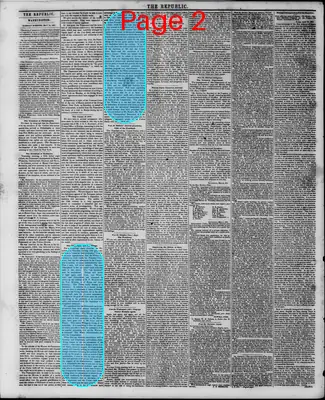
Editorial
May 13, 1851
The Republic
Washington, District Of Columbia
What is this article about?
This editorial supports the Whig administration under President Fillmore, arguing that Whigs hold power and popular principles like the Compromise, protectionism, and infrastructure improvements, making them unbeatable. It criticizes Democrats as distracted and reliant on outdated issues, predicting their electoral weakness.
Clipping
OCR Quality
98%
Excellent
Full Text
The Opposition and the Whigs.
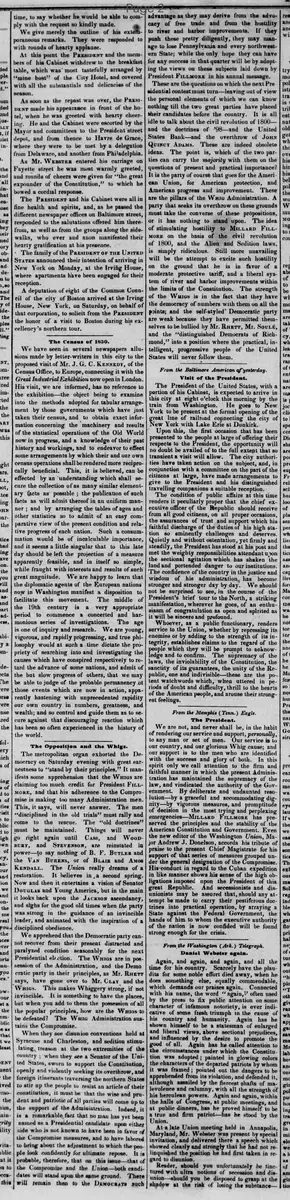
The metropolitan organ exhorted the Democracy on Saturday evening with great earnestness to "stand by their principles." It manifests some apprehension that the Whigs are claiming too much credit for President Fillmore, and that his adherence to the Compromise is making too many Administration men. This, it says, will never answer. The men "disciplined in the old trials" must rally and come to the rescue. The "old doctrines" must be maintained. Things will never go right again until Cass, and Woodbury, and Stevenson, are reinstated in power—to say nothing of B. F. Butler and the Van Burens, or of Blair and Amos Kendall. The Union really dreams of a restoration. It believes in a second spring. Now and then it entertains a vision of Senator Douglas and Young America, but in the main it looks back upon the Jackson ascendancy, and sighs for the good old times when the party was strong in the guidance of an invincible leader, and animated with the inspiration of a disciplined obedience.
We apprehend that the Democratic party cannot recover from their present distracted and paralyzed condition seasonably for the next Presidential election. The Whigs are in possession of the Administration, and the Democratic party in their principles, as Mr. Rhett says, have gone over to Mr. Clay and the Whigs. This makes Whiggery strong, if not invincible. It is something to have the places, but when you add to them the possession of all the popular principles, how are the Whigs to be defeated? The Whig Administration sustains the Compromise.
When they see disunion conventions held at Syracuse and Charleston, and sedition stimulating treason at the two extremities of the country; when they see a Senator of the United States, sworn to support the Constitution, openly and violently seeking its overthrow, and foreign itinerants traversing the northern States to stir up the people to resist an article of their constitution, it must be that the wise and prudent and patriotic of all parties will come up to the support of the Administration. Indeed, it is a remarkable fact that no man has yet been named as a Presidential candidate upon either side who is not known to have been in favor of the Compromise measures, and to have labored to bring about the adjustment to which the people look confidently for ultimate repose. It is probable, therefore, that on this issue—that of the Compromise and the Union—both candidates will stand upon the same ground. There will remain then to the Democrats such advantage as they may derive from the advocacy of free trade and from the hostility to river and harbor improvements. If they push these pretty diligently, they may manage to lose Pennsylvania and every northwestern State; while the only hope they can have for any success in that quarter will be by adopting the views on these subjects laid down by President Fillmore in his annual message.
These are the questions on which the next Presidential contest must turn—leaving out of view the personal elements of which we can know nothing till the two great parties have placed their candidates before the country. It is all idle to talk about the civil revolution of 1800—and the doctrines of '98—and the United States Bank—and the overthrow of John Quincy Adams. These are indeed obsolete ideas. The point is, which of the two parties can carry the majority with them on the questions of present and practical importance? It is the party of course that goes for the American Union, for American protection, and American progress and improvement. These are the pillars of the Whig Administration. A party that seeks its overthrow on these grounds must take the converse of these propositions, or it has nothing to stand upon. The idea of stimulating hostility to Millard Fillmore on the basis of the civil revolution of 1800, and the Alien and Sedition laws, is simply ridiculous. Still more unavailing will be the attempt to excite such hostility on the ground that he is in favor of a moderate protective tariff, and a liberal system of river and harbor improvements within the limits of the Constitution. The strength of the Whigs is in the fact that they have the democracy of numbers with them on all the points; and the self-styled Democratic party are weak because they have permitted themselves to be bullied by Mr. Rhett, Mr. Soulé, and the "distinguished Democrats of Richmond," into a position where the practical, intelligent, progressive people of the United States will never follow them.
The metropolitan organ exhorted the Democracy on Saturday evening with great earnestness to "stand by their principles." It manifests some apprehension that the Whigs are claiming too much credit for President Fillmore, and that his adherence to the Compromise is making too many Administration men. This, it says, will never answer. The men "disciplined in the old trials" must rally and come to the rescue. The "old doctrines" must be maintained. Things will never go right again until Cass, and Woodbury, and Stevenson, are reinstated in power—to say nothing of B. F. Butler and the Van Burens, or of Blair and Amos Kendall. The Union really dreams of a restoration. It believes in a second spring. Now and then it entertains a vision of Senator Douglas and Young America, but in the main it looks back upon the Jackson ascendancy, and sighs for the good old times when the party was strong in the guidance of an invincible leader, and animated with the inspiration of a disciplined obedience.
We apprehend that the Democratic party cannot recover from their present distracted and paralyzed condition seasonably for the next Presidential election. The Whigs are in possession of the Administration, and the Democratic party in their principles, as Mr. Rhett says, have gone over to Mr. Clay and the Whigs. This makes Whiggery strong, if not invincible. It is something to have the places, but when you add to them the possession of all the popular principles, how are the Whigs to be defeated? The Whig Administration sustains the Compromise.
When they see disunion conventions held at Syracuse and Charleston, and sedition stimulating treason at the two extremities of the country; when they see a Senator of the United States, sworn to support the Constitution, openly and violently seeking its overthrow, and foreign itinerants traversing the northern States to stir up the people to resist an article of their constitution, it must be that the wise and prudent and patriotic of all parties will come up to the support of the Administration. Indeed, it is a remarkable fact that no man has yet been named as a Presidential candidate upon either side who is not known to have been in favor of the Compromise measures, and to have labored to bring about the adjustment to which the people look confidently for ultimate repose. It is probable, therefore, that on this issue—that of the Compromise and the Union—both candidates will stand upon the same ground. There will remain then to the Democrats such advantage as they may derive from the advocacy of free trade and from the hostility to river and harbor improvements. If they push these pretty diligently, they may manage to lose Pennsylvania and every northwestern State; while the only hope they can have for any success in that quarter will be by adopting the views on these subjects laid down by President Fillmore in his annual message.
These are the questions on which the next Presidential contest must turn—leaving out of view the personal elements of which we can know nothing till the two great parties have placed their candidates before the country. It is all idle to talk about the civil revolution of 1800—and the doctrines of '98—and the United States Bank—and the overthrow of John Quincy Adams. These are indeed obsolete ideas. The point is, which of the two parties can carry the majority with them on the questions of present and practical importance? It is the party of course that goes for the American Union, for American protection, and American progress and improvement. These are the pillars of the Whig Administration. A party that seeks its overthrow on these grounds must take the converse of these propositions, or it has nothing to stand upon. The idea of stimulating hostility to Millard Fillmore on the basis of the civil revolution of 1800, and the Alien and Sedition laws, is simply ridiculous. Still more unavailing will be the attempt to excite such hostility on the ground that he is in favor of a moderate protective tariff, and a liberal system of river and harbor improvements within the limits of the Constitution. The strength of the Whigs is in the fact that they have the democracy of numbers with them on all the points; and the self-styled Democratic party are weak because they have permitted themselves to be bullied by Mr. Rhett, Mr. Soulé, and the "distinguished Democrats of Richmond," into a position where the practical, intelligent, progressive people of the United States will never follow them.
What sub-type of article is it?
Partisan Politics
Economic Policy
Infrastructure
What keywords are associated?
Whig Party
Democratic Party
Compromise Measures
Presidential Election
Protective Tariff
River Improvements
American Union
Free Trade
What entities or persons were involved?
President Fillmore
Whigs
Democrats
Mr. Clay
Mr. Rhett
Mr. Soulé
Cass
Woodbury
Stevenson
B. F. Butler
Van Burens
Blair
Amos Kendall
Senator Douglas
Young America
Jackson
Editorial Details
Primary Topic
Whig Advantages In The Upcoming Presidential Election Due To Compromise Support And Economic Policies
Stance / Tone
Supportive Of Whig Administration And Critical Of Democratic Weakness
Key Figures
President Fillmore
Whigs
Democrats
Mr. Clay
Mr. Rhett
Mr. Soulé
Cass
Woodbury
Stevenson
B. F. Butler
Van Burens
Blair
Amos Kendall
Senator Douglas
Young America
Jackson
Key Arguments
Whigs Hold The Administration And Popular Principles, Making Them Strong
Democrats Are Distracted And Paralyzed, Unable To Recover In Time For The Election
Both Parties' Candidates Support The Compromise Measures And Union
Democrats' Advocacy Of Free Trade And Opposition To River Improvements Will Cost Them Key States
Old Democratic Issues Like The Revolution Of 1800 Are Obsolete
Whigs Represent American Union, Protection, Progress, And Improvement
Democrats Weakened By Following Rhett, Soulé, And Richmond Democrats