Thank you for visiting SNEWPapers!
Sign up free
Story
October 30, 1878
The Hawaiian Gazette
Honolulu, Honolulu County, Hawaii
What is this article about?
In the South Atlantic, the schooner Carrie E. Long rescues escaped Brazilian convict Manuel Francisco from a fragile bamboo raft after 10 days at sea. He survived the deaths of two companions, starvation, thirst, and shark attacks, having fled the penal island of Fernando Noronha.
Clipping
OCR Quality
95%
Excellent
Full Text
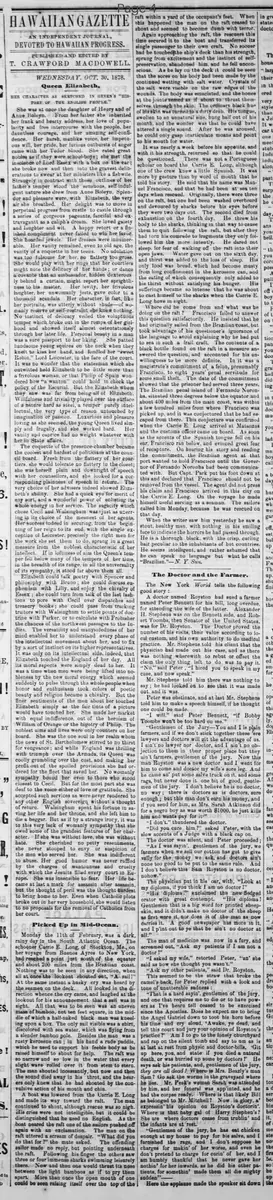
Picked Up in Mid-Ocean.
Monday the 11th of February, was a dark, rainy day in the South Atlantic Ocean. The schooner Carrie E. Long, of Stockton, Me., on her voyage from Buenos Ayres to New York, had reached a point just south of the equator and about 200 miles from the Brazilian coast. Nothing was to be seen in any direction, when all at once the lookout shouted out. "A sail!"
At the same instant a husky cry was heard by the seamen on the deck. All looked in the direction whence the cry came, and laughed at the lookout for his announcement that a sail was in sight. All that was to be seen was an uneven mass of bamboo, not ten feet square, in the middle of which a half-naked black man was kneeling upon a box. The only sail visible was a shirt, discolored with sea water, which was flying from a slender bamboo pole. Besides the man was a rusty kerosene can; in his hand a rude paddle, which he used to support his feeble body as he raised himself to shout for help. The raft was even so narrow and so low in the water that every slight wave rolled over it from stem to stern.
The man shouted incessantly, but now and then the sound died away in his throat, and the hearers only knew that he had shouted by the convulsive action of his mouth and chin.
A boat was lowered from the Carrie E. Long and made its way toward the raft. The man continued to shout, although rescue was so nigh. His cries were not intelligible, but it could be distinguished that he used no English. As the boat neared the raft one of the sailors pushed off again with an exclamation. The man on the raft uttered a scream of despair. "What did you do that for?" the mate asked. The offending sailor made no reply, but pointing underneath the raft. Following his finger the others saw three or four immense sharks swimming leisurely there. Now and then one would thrust its nose between the light bamboos as if to pry them apart. More than once the open mouth of one could be seen raising itself over the top of the raft within a yard of the occupant's feet. When this happened the man on the raft ceased to shout and seemed to become dumb with terror.
Again approaching the raft, the rescuers this time secured it to the boat and transferred its single passenger to their own craft. No sooner had he touched the ship's deck than his strength, sprung from excitement and the instinct of self-preservation, abandoned him, and he fell unconscious. As he lay on the deck it could be seen that the sores on his body had been made by the continued wetting with salt water. Crystals of the salt were visible on the raw edges of the wounds. The body was emaciated, and the bones at the joints seemed as if about to thrust themselves through the skin. The ordinary black hue of his skin was turned to a dirty drab. His tongue, swollen to an unnatural size, hung half out of his mouth, and the wonder was that he could have uttered a single sound. After he was aroused, he could only gasp inarticulate moans and point to his mouth for water.
It was nearly a week before his appetite, and with it his strength, returned so that he could be questioned. There was not a Portuguese scholar on board the Carrie E. Long, although one of the crew knew a little Spanish. It was more by gesture than by word of mouth that he told his story. He said that his name was Manuel Francisco, and that he had been at sea ten days when rescued. Originally, there were three on the raft, but one had been washed overboard and devoured by sharks before his eyes before they were two days out. The second died from exhaustion on the fourth day. He threw his body to the sharks, thinking in that way to cause them to quit following the raft, but after they had torn his comrade to fragments they only followed him the more intently. He dared not sleep, for fear of falling off the raft into their open jaws. Water gave out on the sixth day, and thirst was added to the loss of sleep. His only food was bread, which had become musty from long confinement in the kerosene can, and the eating of which consequently only added to his thirst without satisfying his hunger. His sufferings became so intense that he was about to cast himself to the sharks when the Carrie E. Long hove in sight.
Where did he come from and what was he doing on the raft? Francisco failed to answer this question satisfactorily. He insisted that he had originally sailed from the Brazilian coast, but took advantage of his questioner's ignorance of the language to avoid explaining why he had put to sea in such a frail craft. The contents of a black bottle found on the raft in a measure answered the question, and accounted for his unwillingness to be more definite. In it was a magistrate's commitment of a felon, presumably Francisco, to eight years' penal servitude for some small theft. The date of the commitment showed that the prisoner had served three years.
The Brazilian penal island of Fernando Noronha, situated three degrees below the equator and about 400 miles from the main coast, was within a few hundred miles from where Francisco was picked up, and it was conjectured that he had escaped from there. This conjecture was confirmed when the Carrie E. Long arrived at Matanzas and the customs officer came on board. As soon as the accents of the Spanish tongue fell on his ear, Francisco ran below, and evinced great fear of recapture. On hearing his story and reading the commitment, the Brazilian agent at that port wanted to hold Francisco until the Governor of Fernando Noronha had been communicated with. But Capt. Park put his foot down at this and declared that Francisco should not be removed from the vessel. The agent did not press his claim and Francisco arrived in this city on the Carrie E. Long. On the voyage he made himself useful serving as a seaman. The sailors called him Monday, because he was rescued on that day.
When the writer saw him yesterday he saw a stout, healthy man, with nothing in his smiling face to indicate the horrors he had passed through. He is a thorough black, with the crisp, curling hair peculiar to the inhabitants of hot countries. He seems intelligent, and rather ashamed that he can speak no language but what he calls Brazilian."-N. Y. Sun.
Monday the 11th of February, was a dark, rainy day in the South Atlantic Ocean. The schooner Carrie E. Long, of Stockton, Me., on her voyage from Buenos Ayres to New York, had reached a point just south of the equator and about 200 miles from the Brazilian coast. Nothing was to be seen in any direction, when all at once the lookout shouted out. "A sail!"
At the same instant a husky cry was heard by the seamen on the deck. All looked in the direction whence the cry came, and laughed at the lookout for his announcement that a sail was in sight. All that was to be seen was an uneven mass of bamboo, not ten feet square, in the middle of which a half-naked black man was kneeling upon a box. The only sail visible was a shirt, discolored with sea water, which was flying from a slender bamboo pole. Besides the man was a rusty kerosene can; in his hand a rude paddle, which he used to support his feeble body as he raised himself to shout for help. The raft was even so narrow and so low in the water that every slight wave rolled over it from stem to stern.
The man shouted incessantly, but now and then the sound died away in his throat, and the hearers only knew that he had shouted by the convulsive action of his mouth and chin.
A boat was lowered from the Carrie E. Long and made its way toward the raft. The man continued to shout, although rescue was so nigh. His cries were not intelligible, but it could be distinguished that he used no English. As the boat neared the raft one of the sailors pushed off again with an exclamation. The man on the raft uttered a scream of despair. "What did you do that for?" the mate asked. The offending sailor made no reply, but pointing underneath the raft. Following his finger the others saw three or four immense sharks swimming leisurely there. Now and then one would thrust its nose between the light bamboos as if to pry them apart. More than once the open mouth of one could be seen raising itself over the top of the raft within a yard of the occupant's feet. When this happened the man on the raft ceased to shout and seemed to become dumb with terror.
Again approaching the raft, the rescuers this time secured it to the boat and transferred its single passenger to their own craft. No sooner had he touched the ship's deck than his strength, sprung from excitement and the instinct of self-preservation, abandoned him, and he fell unconscious. As he lay on the deck it could be seen that the sores on his body had been made by the continued wetting with salt water. Crystals of the salt were visible on the raw edges of the wounds. The body was emaciated, and the bones at the joints seemed as if about to thrust themselves through the skin. The ordinary black hue of his skin was turned to a dirty drab. His tongue, swollen to an unnatural size, hung half out of his mouth, and the wonder was that he could have uttered a single sound. After he was aroused, he could only gasp inarticulate moans and point to his mouth for water.
It was nearly a week before his appetite, and with it his strength, returned so that he could be questioned. There was not a Portuguese scholar on board the Carrie E. Long, although one of the crew knew a little Spanish. It was more by gesture than by word of mouth that he told his story. He said that his name was Manuel Francisco, and that he had been at sea ten days when rescued. Originally, there were three on the raft, but one had been washed overboard and devoured by sharks before his eyes before they were two days out. The second died from exhaustion on the fourth day. He threw his body to the sharks, thinking in that way to cause them to quit following the raft, but after they had torn his comrade to fragments they only followed him the more intently. He dared not sleep, for fear of falling off the raft into their open jaws. Water gave out on the sixth day, and thirst was added to the loss of sleep. His only food was bread, which had become musty from long confinement in the kerosene can, and the eating of which consequently only added to his thirst without satisfying his hunger. His sufferings became so intense that he was about to cast himself to the sharks when the Carrie E. Long hove in sight.
Where did he come from and what was he doing on the raft? Francisco failed to answer this question satisfactorily. He insisted that he had originally sailed from the Brazilian coast, but took advantage of his questioner's ignorance of the language to avoid explaining why he had put to sea in such a frail craft. The contents of a black bottle found on the raft in a measure answered the question, and accounted for his unwillingness to be more definite. In it was a magistrate's commitment of a felon, presumably Francisco, to eight years' penal servitude for some small theft. The date of the commitment showed that the prisoner had served three years.
The Brazilian penal island of Fernando Noronha, situated three degrees below the equator and about 400 miles from the main coast, was within a few hundred miles from where Francisco was picked up, and it was conjectured that he had escaped from there. This conjecture was confirmed when the Carrie E. Long arrived at Matanzas and the customs officer came on board. As soon as the accents of the Spanish tongue fell on his ear, Francisco ran below, and evinced great fear of recapture. On hearing his story and reading the commitment, the Brazilian agent at that port wanted to hold Francisco until the Governor of Fernando Noronha had been communicated with. But Capt. Park put his foot down at this and declared that Francisco should not be removed from the vessel. The agent did not press his claim and Francisco arrived in this city on the Carrie E. Long. On the voyage he made himself useful serving as a seaman. The sailors called him Monday, because he was rescued on that day.
When the writer saw him yesterday he saw a stout, healthy man, with nothing in his smiling face to indicate the horrors he had passed through. He is a thorough black, with the crisp, curling hair peculiar to the inhabitants of hot countries. He seems intelligent, and rather ashamed that he can speak no language but what he calls Brazilian."-N. Y. Sun.
What sub-type of article is it?
Survival
Adventure
Crime Story
What themes does it cover?
Survival
Misfortune
Triumph
What keywords are associated?
Raft Survival
Ocean Rescue
Escaped Convict
Shark Attacks
Fernando Noronha
What entities or persons were involved?
Manuel Francisco
Capt. Park
Where did it happen?
South Atlantic Ocean, Near The Brazilian Coast
Story Details
Key Persons
Manuel Francisco
Capt. Park
Location
South Atlantic Ocean, Near The Brazilian Coast
Event Date
Monday The 11th Of February
Story Details
Escaped convict Manuel Francisco survives 10 days on a bamboo raft after fleeing Fernando Noronha penal island, losing two companions to sharks and exhaustion, enduring thirst, hunger, and shark threats, before rescue by the schooner Carrie E. Long.