Thank you for visiting SNEWPapers!
Sign up free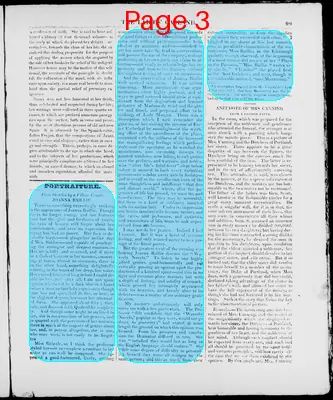
Literary
December 1, 1827
The Ladies' Garland
Harpers Ferry, Jefferson County, West Virginia
What is this article about?
Descriptive portrait from 'Sketches by a Village Curate' of Joanna Baillie, noting her striking tragic features, reserved manner, and eloquent conversation on literature, including a poetic reflection on Exeter Cathedral by moonlight and critical discussion of the Waverley Novels, contrasting her with her lively sister Miss Grizzle.
Clipping
OCR Quality
98%
Excellent
Full Text
PORTRAITURE.
From Sketches by a Village Curate
JOANNA BAILLIE.
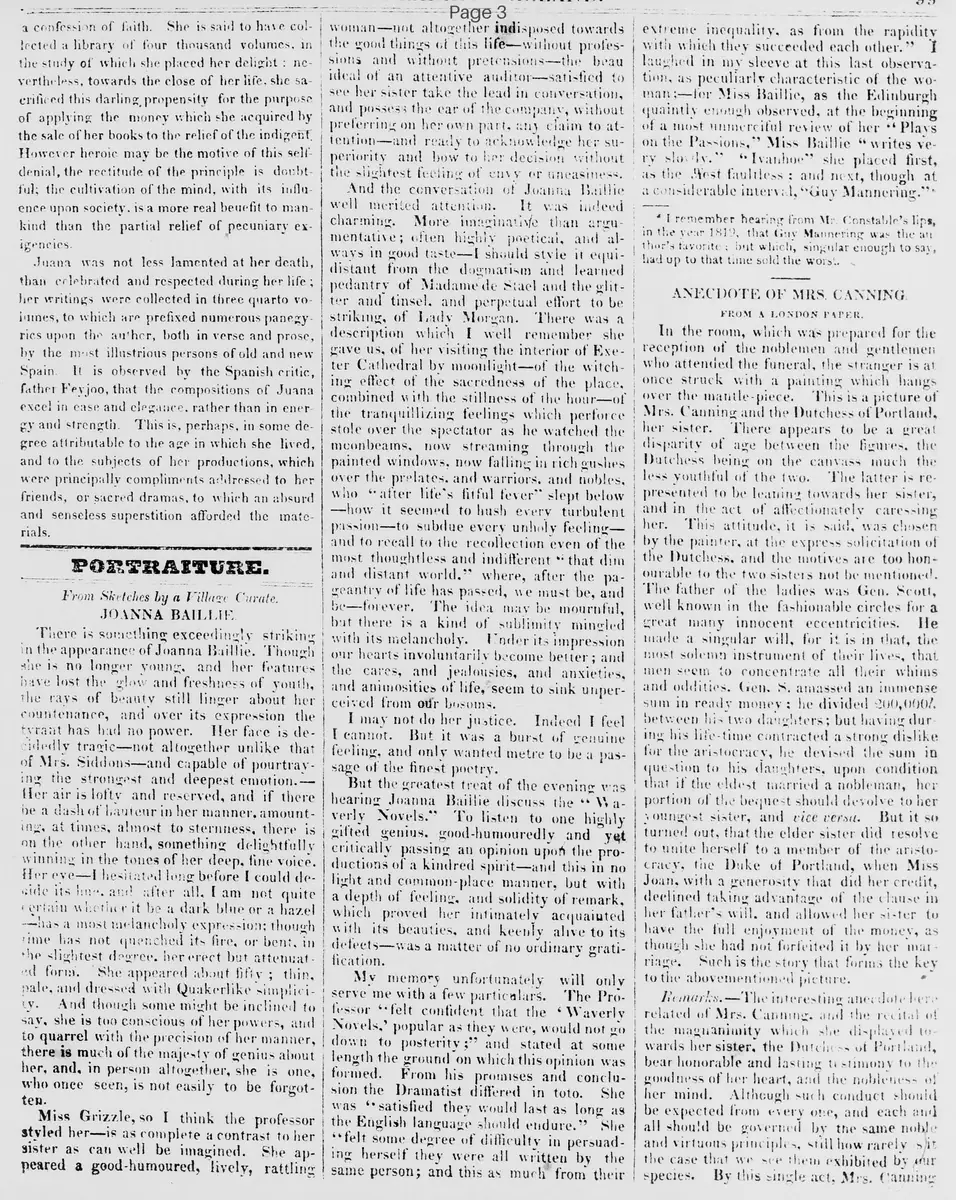
There is something exceedingly striking in the appearance of Joanna Baillie. Though she is no longer young, and her features have lost the glow and freshness of youth, the rays of beauty still linger about her countenance, and over its expression the tyrant has had no power. Her face is decidedly tragic--not altogether unlike that of Mrs. Siddons--and capable of portraying the strongest and deepest emotion.
Her air is lofty and reserved, and if there be a dash of hauteur in her manner, amounting, at times, almost to sternness, there is on the other hand, something delightfully winning in the tones of her deep, fine voice. Her eye--I hesitated long before I could decide its hue, and after all, I am not quite certain whether it be a dark blue or a hazel--has a most melancholy expression; though time has not quenched its fire, or bent, in the slightest degree, her erect but attenuated form. She appeared about fifty; thin, pale, and dressed with Quakerlike simplicity. And though some might be inclined to say, she is too conscious of her powers, and to quarrel with the precision of her manner, there is much of the majesty of genius about her, and, in person altogether, she is one who once seen, is not easily to be forgotten.
Miss Grizzle, so I think the professor styled her--is as complete a contrast to her sister as can well be imagined. She appeared a good-humoured, lively, rattling woman--not altogether indisposed towards the good things of this life--without professions and without pretensions--the beau ideal of an attentive auditor--satisfied to see her sister take the lead in conversation, and possess the ear of the company, without preferring on her own part, any claim to attention--and ready to acknowledge her superiority and bow to her decision without the slightest feeling of envy or uneasiness.
And the conversation of Joanna Baillie well merited attention. It was indeed charming. More imaginative than argumentative; often highly poetical, and always in good taste--I should style it equidistant from the dogmatism and learned pedantry of Madame de Stael and the glitter and tinsel, and perpetual effort to be striking, of Lady Morgan. There was a description which I well remember she gave us, of her visiting the interior of Exeter Cathedral by moonlight--of the witching effect of the sacredness of the place, combined with the stillness of the hour--of the tranquillizing feelings which perforce stole over the spectator as he watched the moonbeams, now streaming through the painted windows, now falling in rich gushes over the prelates and warriors and nobles, who "after life's fitful fever" slept below--how it seemed to hush every turbulent passion--to subdue every unholy feeling--and to recall to the recollection even of the most thoughtless and indifferent "that dim and distant world," where, after the pageantry of life has passed, we must be, and be--forever. The idea may be mournful, but there is a kind of sublimity mingled with its melancholy. Under its impression our hearts involuntarily become better; and the cares, and jealousies, and anxieties, and animosities of life, seem to sink unperceived from our bosoms.
I may not do her justice. Indeed I feel I cannot. But it was a burst of genuine feeling, and only wanted metre to be a passage of the finest poetry.
But the greatest treat of the evening was hearing Joanna Baillie discuss the "Waverley Novels." To listen to one highly gifted genius, good-humouredly and yet critically passing an opinion upon the productions of a kindred spirit--and this in no light and common-place manner, but with a depth of feeling, and solidity of remark, which proved her intimately acquainted with its beauties, and keenly alive to its defects--was a matter of no ordinary gratification.
My memory unfortunately will only serve me with a few particulars. The Professor felt confident that the "Waverley Novels," popular as they were, would not go down to posterity; and stated at some length the ground on which this opinion was formed. From his premises and conclusion the Dramatist differed in toto. She was satisfied they would last as long as the English language should endure. She felt some degree of difficulty in persuading herself they were all written by the same person; and this as much from their extreme inequality, as from the rapidity with which they succeeded each other.
I laughed in my sleeve at this last observation, as peculiarly characteristic of the woman;--for Miss Baillie, as the Edinburgh Review quaintly enough observed, at the beginning of a most unmerciful review of her "Plays on the Passions," Miss Baillie "writes very slowly." "Ivanhoe" she placed first, as the most faultless: and next, though at a considerable interval, "Guy Mannering."
* I remember hearing from Mr. Constable's lips, in the year 1810, that Guy Mannering was the author's favorite: but which, singular enough to say, had up to that time sold the worst.
From Sketches by a Village Curate
JOANNA BAILLIE.
There is something exceedingly striking in the appearance of Joanna Baillie. Though she is no longer young, and her features have lost the glow and freshness of youth, the rays of beauty still linger about her countenance, and over its expression the tyrant has had no power. Her face is decidedly tragic--not altogether unlike that of Mrs. Siddons--and capable of portraying the strongest and deepest emotion.
Her air is lofty and reserved, and if there be a dash of hauteur in her manner, amounting, at times, almost to sternness, there is on the other hand, something delightfully winning in the tones of her deep, fine voice. Her eye--I hesitated long before I could decide its hue, and after all, I am not quite certain whether it be a dark blue or a hazel--has a most melancholy expression; though time has not quenched its fire, or bent, in the slightest degree, her erect but attenuated form. She appeared about fifty; thin, pale, and dressed with Quakerlike simplicity. And though some might be inclined to say, she is too conscious of her powers, and to quarrel with the precision of her manner, there is much of the majesty of genius about her, and, in person altogether, she is one who once seen, is not easily to be forgotten.
Miss Grizzle, so I think the professor styled her--is as complete a contrast to her sister as can well be imagined. She appeared a good-humoured, lively, rattling woman--not altogether indisposed towards the good things of this life--without professions and without pretensions--the beau ideal of an attentive auditor--satisfied to see her sister take the lead in conversation, and possess the ear of the company, without preferring on her own part, any claim to attention--and ready to acknowledge her superiority and bow to her decision without the slightest feeling of envy or uneasiness.
And the conversation of Joanna Baillie well merited attention. It was indeed charming. More imaginative than argumentative; often highly poetical, and always in good taste--I should style it equidistant from the dogmatism and learned pedantry of Madame de Stael and the glitter and tinsel, and perpetual effort to be striking, of Lady Morgan. There was a description which I well remember she gave us, of her visiting the interior of Exeter Cathedral by moonlight--of the witching effect of the sacredness of the place, combined with the stillness of the hour--of the tranquillizing feelings which perforce stole over the spectator as he watched the moonbeams, now streaming through the painted windows, now falling in rich gushes over the prelates and warriors and nobles, who "after life's fitful fever" slept below--how it seemed to hush every turbulent passion--to subdue every unholy feeling--and to recall to the recollection even of the most thoughtless and indifferent "that dim and distant world," where, after the pageantry of life has passed, we must be, and be--forever. The idea may be mournful, but there is a kind of sublimity mingled with its melancholy. Under its impression our hearts involuntarily become better; and the cares, and jealousies, and anxieties, and animosities of life, seem to sink unperceived from our bosoms.
I may not do her justice. Indeed I feel I cannot. But it was a burst of genuine feeling, and only wanted metre to be a passage of the finest poetry.
But the greatest treat of the evening was hearing Joanna Baillie discuss the "Waverley Novels." To listen to one highly gifted genius, good-humouredly and yet critically passing an opinion upon the productions of a kindred spirit--and this in no light and common-place manner, but with a depth of feeling, and solidity of remark, which proved her intimately acquainted with its beauties, and keenly alive to its defects--was a matter of no ordinary gratification.
My memory unfortunately will only serve me with a few particulars. The Professor felt confident that the "Waverley Novels," popular as they were, would not go down to posterity; and stated at some length the ground on which this opinion was formed. From his premises and conclusion the Dramatist differed in toto. She was satisfied they would last as long as the English language should endure. She felt some degree of difficulty in persuading herself they were all written by the same person; and this as much from their extreme inequality, as from the rapidity with which they succeeded each other.
I laughed in my sleeve at this last observation, as peculiarly characteristic of the woman;--for Miss Baillie, as the Edinburgh Review quaintly enough observed, at the beginning of a most unmerciful review of her "Plays on the Passions," Miss Baillie "writes very slowly." "Ivanhoe" she placed first, as the most faultless: and next, though at a considerable interval, "Guy Mannering."
* I remember hearing from Mr. Constable's lips, in the year 1810, that Guy Mannering was the author's favorite: but which, singular enough to say, had up to that time sold the worst.
What sub-type of article is it?
Essay
What themes does it cover?
Social Manners
Moral Virtue
What keywords are associated?
Joanna Baillie
Waverley Novels
Literary Portrait
Exeter Cathedral
Scott Criticism
Miss Grizzle
What entities or persons were involved?
From Sketches By A Village Curate
Literary Details
Title
Portraiture. Joanna Baillie.
Author
From Sketches By A Village Curate
Subject
Portrait Of Joanna Baillie And Discussion Of Waverley Novels
Form / Style
Descriptive Prose Sketch
Key Lines
There Is Something Exceedingly Striking In The Appearance Of Joanna Baillie. Though She Is No Longer Young, And Her Features Have Lost The Glow And Freshness Of Youth, The Rays Of Beauty Still Linger About Her Countenance, And Over Its Expression The Tyrant Has Had No Power.
There Was A Description Which I Well Remember She Gave Us, Of Her Visiting The Interior Of Exeter Cathedral By Moonlight Of The Witching Effect Of The Sacredness Of The Place, Combined With The Stillness Of The Hour Of The Tranquillizing Feelings Which Perforce Stole Over The Spectator As He Watched The Moonbeams, Now Streaming Through The Painted Windows, Now Falling In Rich Gushes Over The Prelates And Warriors And Nobles, Who "After Life's Fitful Fever" Slept Below How It Seemed To Hush Every Turbulent Passion To Subdue Every Unholy Feeling And To Recall To The Recollection Even Of The Most Thoughtless And Indifferent "That Dim And Distant World," Where, After The Pageantry Of Life Has Passed, We Must Be, And Be Forever.
She Was Satisfied They Would Last As Long As The English Language Should Endure. She Felt Some Degree Of Difficulty In Persuading Herself They Were All Written By The Same Person; And This As Much From Their Extreme Inequality, As From The Rapidity With Which They Succeeded Each Other.