Thank you for visiting SNEWPapers!
Sign up free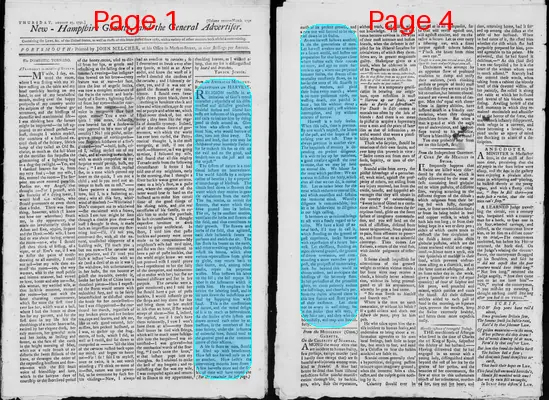
Literary
August 25, 1791
The New Hampshire Gazette And General Advertiser
Portsmouth, Rockingham County, New Hampshire
What is this article about?
An essay reflecting on harvest as a symbol of God's benevolence, urging imitation through charity and moral living. It draws parallels between natural cycles and human society, emphasizing preparation for eternal life amid temporal labors.
Merged-components note: This is a continuation of the literary piece 'Reflections on HARVEST' as indicated by the text '(For the remainder see last page.)'.
Clippings
1 of 2
OCR Quality
88%
Good
Full Text
From the American Mercury.
Reflections on HARVEST.
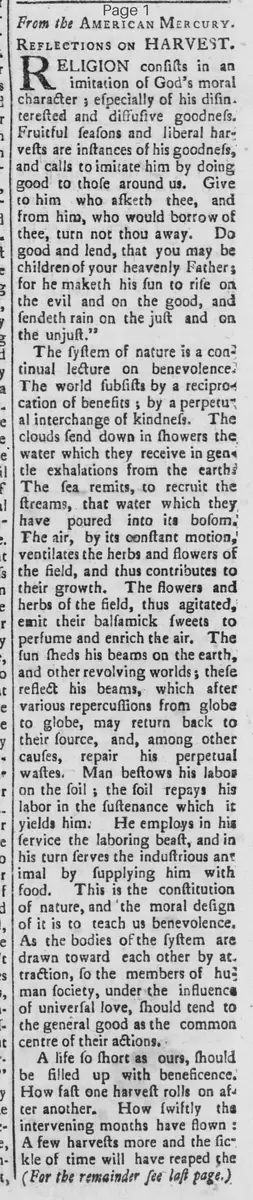
RELIGION consists in an imitation of God's moral character: especially of his disinterested and diffusive goodness. Fruitful seasons and liberal harvests are instances of his goodness, and calls to imitate him by doing good to those around us. Give to him who asketh thee, and from him, who would borrow of thee, turn not thou away. Do good and lend, that you may be children of your heavenly Father for he maketh his sun to rise on the evil and on the good, and sendeth rain on the just and on the unjust."
The system of nature is a continual lecture on benevolence. The world subsists by a reciprocation of benefits; by a perpetual interchange of kindness. The clouds send down in showers the water which they receive in gentle exhalations from the earth's The sea remits, to recruit the streams, that water which they have poured into its bosom. The air, by its constant motion, ventilates the herbs and flowers of the field, and thus contributes to their growth. The flowers and herbs of the field, thus agitated, emit their balsamic sweets to perfume and enrich the air. The sun sheds his beams on the earth and other revolving worlds; these reflect his beams, which after various repercussions from globe to globe, may return back to their source, and, among other causes, repair his perpetual wastes. Man bestows his labor on the soil; the soil repays his labor in the sustenance which it yields him: He employs in his service the laboring beast, and in his turn serves the industrious animal by supplying him with food. This is the constitution of nature, and the moral design of it is to teach us benevolence. As the bodies of the system are drawn toward each other by attraction, so the members of human society, under the influence of universal love, should tend to the general good as the common centre of their actions.
A life so short as ours, should be filled up with beneficence.' How fast one harvest rolls on after another. How swiftly the intervening months have flown: A few harvests more and the sickle of time will have reaped the (For the remainder see last page.) With the scythe of its present growth, and a new one will succeed to be reaped down in its season.
As one harvest follows another, so do the generations of men.
Let harvest awaken our attention to a future world, and hasten our preparation for that happier clime where seasons walk their rounds no more, and age no more succeeds to age; where one perpetual summer smiles, the stream of immortality constantly flows, on its banks the trees of life flourish in unfading verdure, and yield their fruits every month; where is no more poisonous curse, nor wasting death, nor painful labour; but life without decay: fullness without toil; rest without interruption, and joy without mixture of sorrow.
Harvest is a busy season. When this calls, time is precious. By one week's neglect, the labors of the past, and the hopes of the ensuing year are lost. Time is always precious in another view. The happiness of eternity is depending on present diligence.
It is wise to lay up for ourselves, a good treasure against the time to come, that we may lay hold on eternal life. We labour for the meat which perishes: We are anxious to sustain the body, which after all that we can do, is mortal still. Let us rather labor for the meat which endures to eternal life, and which nourishes and sustains the immortal mind. Worldly diligence is commendable, but let it be subservient to diligence in our high calling.
It becomes us as rational beings to act with a steady regard to futurity. We have a kind of natural faith, if I may so call it, which standing on the ground of past experience, looks forward with expectation of a future harvest. Let Christians, standing on more elevated ground, the ground of divine revelation, and commanding a more extensive prospect, the prospect of immortality, look far beyond this world to things unseen, and anticipate the blessings of the heavenly state.
In full persuasion of the promised glory, let them patiently endure the sufferings, and cheerfully perform the duties allotted them in this low station and short period of their existence. Let them not be weary in well doing, for in due season they will reap, if they faint not; and they who sow bountifully, will reap also bountifully.
Reflections on HARVEST.
RELIGION consists in an imitation of God's moral character: especially of his disinterested and diffusive goodness. Fruitful seasons and liberal harvests are instances of his goodness, and calls to imitate him by doing good to those around us. Give to him who asketh thee, and from him, who would borrow of thee, turn not thou away. Do good and lend, that you may be children of your heavenly Father for he maketh his sun to rise on the evil and on the good, and sendeth rain on the just and on the unjust."
The system of nature is a continual lecture on benevolence. The world subsists by a reciprocation of benefits; by a perpetual interchange of kindness. The clouds send down in showers the water which they receive in gentle exhalations from the earth's The sea remits, to recruit the streams, that water which they have poured into its bosom. The air, by its constant motion, ventilates the herbs and flowers of the field, and thus contributes to their growth. The flowers and herbs of the field, thus agitated, emit their balsamic sweets to perfume and enrich the air. The sun sheds his beams on the earth and other revolving worlds; these reflect his beams, which after various repercussions from globe to globe, may return back to their source, and, among other causes, repair his perpetual wastes. Man bestows his labor on the soil; the soil repays his labor in the sustenance which it yields him: He employs in his service the laboring beast, and in his turn serves the industrious animal by supplying him with food. This is the constitution of nature, and the moral design of it is to teach us benevolence. As the bodies of the system are drawn toward each other by attraction, so the members of human society, under the influence of universal love, should tend to the general good as the common centre of their actions.
A life so short as ours, should be filled up with beneficence.' How fast one harvest rolls on after another. How swiftly the intervening months have flown: A few harvests more and the sickle of time will have reaped the (For the remainder see last page.) With the scythe of its present growth, and a new one will succeed to be reaped down in its season.
As one harvest follows another, so do the generations of men.
Let harvest awaken our attention to a future world, and hasten our preparation for that happier clime where seasons walk their rounds no more, and age no more succeeds to age; where one perpetual summer smiles, the stream of immortality constantly flows, on its banks the trees of life flourish in unfading verdure, and yield their fruits every month; where is no more poisonous curse, nor wasting death, nor painful labour; but life without decay: fullness without toil; rest without interruption, and joy without mixture of sorrow.
Harvest is a busy season. When this calls, time is precious. By one week's neglect, the labors of the past, and the hopes of the ensuing year are lost. Time is always precious in another view. The happiness of eternity is depending on present diligence.
It is wise to lay up for ourselves, a good treasure against the time to come, that we may lay hold on eternal life. We labour for the meat which perishes: We are anxious to sustain the body, which after all that we can do, is mortal still. Let us rather labor for the meat which endures to eternal life, and which nourishes and sustains the immortal mind. Worldly diligence is commendable, but let it be subservient to diligence in our high calling.
It becomes us as rational beings to act with a steady regard to futurity. We have a kind of natural faith, if I may so call it, which standing on the ground of past experience, looks forward with expectation of a future harvest. Let Christians, standing on more elevated ground, the ground of divine revelation, and commanding a more extensive prospect, the prospect of immortality, look far beyond this world to things unseen, and anticipate the blessings of the heavenly state.
In full persuasion of the promised glory, let them patiently endure the sufferings, and cheerfully perform the duties allotted them in this low station and short period of their existence. Let them not be weary in well doing, for in due season they will reap, if they faint not; and they who sow bountifully, will reap also bountifully.
What sub-type of article is it?
Essay
What themes does it cover?
Religious
Moral Virtue
Seasonal Cycle
What keywords are associated?
Harvest
Benevolence
Religion
Nature
Eternity
Immortality
Moral Duty
Divine Goodness
Literary Details
Title
Reflections On Harvest
Subject
On Harvest, Benevolence, And Preparation For Eternity
Key Lines
Religion Consists In An Imitation Of God's Moral Character: Especially Of His Disinterested And Diffusive Goodness.
The System Of Nature Is A Continual Lecture On Benevolence.
Let Harvest Awaken Our Attention To A Future World, And Hasten Our Preparation For That Happier Clime Where Seasons Walk Their Rounds No More...
Let Them Not Be Weary In Well Doing, For In Due Season They Will Reap, If They Faint Not; And They Who Sow Bountifully, Will Reap Also Bountifully.