Thank you for visiting SNEWPapers!
Sign up free
The Ronan Pioneer
Ronan, Lake County, Montana
What is this article about?
Recommendation for using small-top milking pails over traditional wide-top ones to improve sanitation, reduce bacterial content in milk by 50%, and ensure easier cleaning in dairy farming.
Clipping
OCR Quality
Full Text
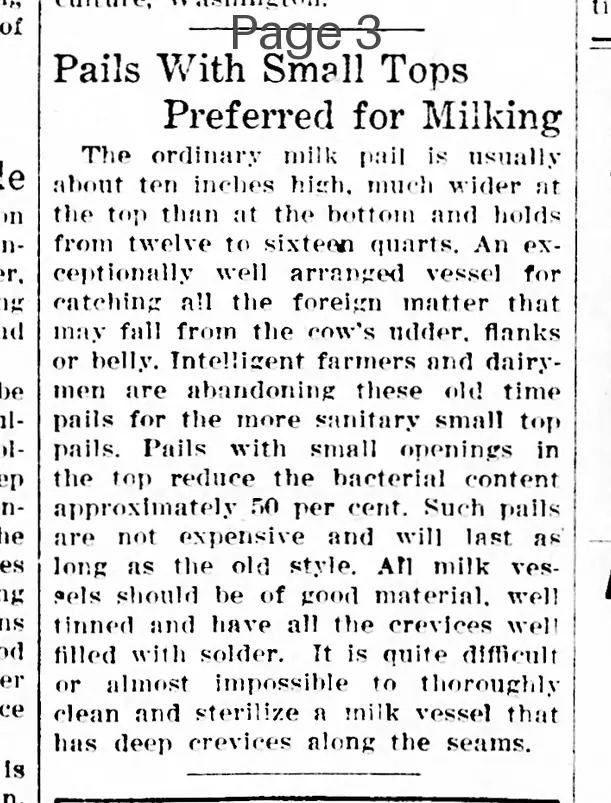
The ordinary milk pail is usually about ten inches high, much wider at the top than at the bottom and holds from twelve to sixteen quarts. An exceptionally well arranged vessel for catching all the foreign matter that may fall from the cow's udder, flanks or belly. Intelligent farmers and dairymen are abandoning these old time pails for the more sanitary small top pails. Pails with small openings in the top reduce the bacterial content approximately 50 per cent. Such pails are not expensive and will last as long as the old style. All milk vessels should be of good material, well tinned and have all the crevices well filled with solder. It is quite difficult or almost impossible to thoroughly clean and sterilize a milk vessel that has deep crevices along the seams.
What sub-type of article is it?
What keywords are associated?
Domestic News Details
Event Details
The ordinary milk pail is about ten inches high, wider at the top, holds twelve to sixteen quarts, and catches foreign matter from the cow. Intelligent farmers and dairymen are abandoning these for small top pails, which reduce bacterial content by approximately 50 percent. Such pails are not expensive and last as long as the old style. All milk vessels should be of good material, well tinned, with crevices filled with solder, as deep crevices make cleaning and sterilizing difficult.