Thank you for visiting SNEWPapers!
Sign up free
Editorial
August 25, 1812
The Enquirer
Richmond, Henrico County, Virginia
What is this article about?
Editorial condemns British General Brock's use of Indian allies in the War of 1812, praises Gen. Hull's policy of no quarter to whites fighting with them, cites Vattel, historical atrocities like Wyoming, and Chatham's 1777 denunciation of such tactics as inhuman and unchristian.
Clipping
OCR Quality
95%
Excellent
Full Text
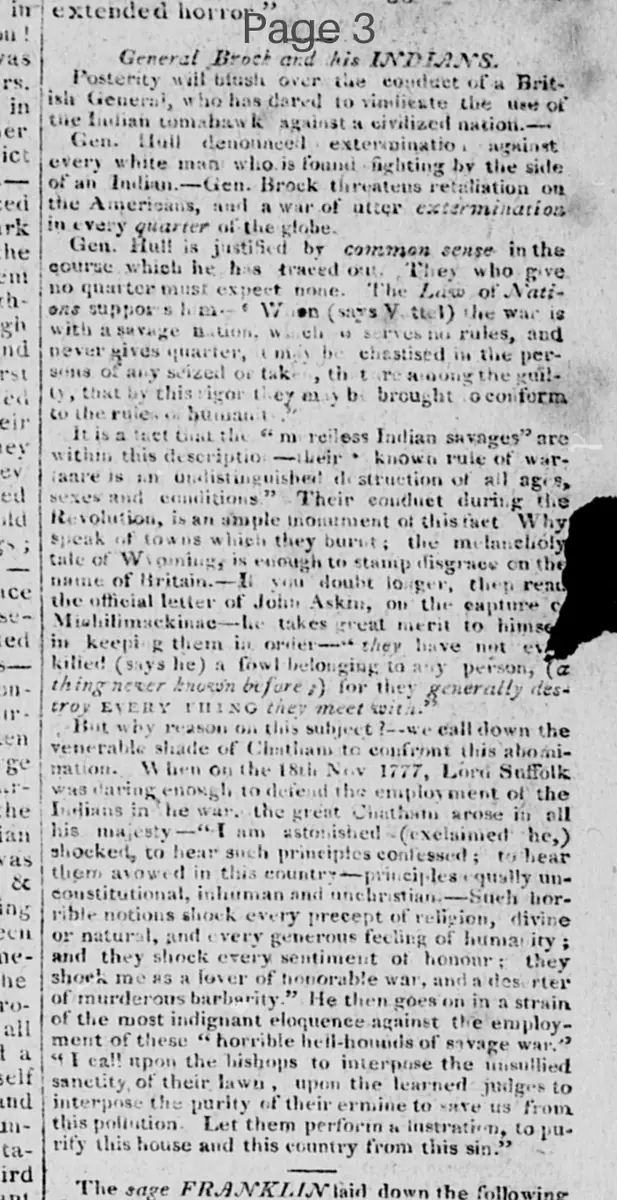
General Brock and his INDIANS.
Posterity will blush over the conduct of a British General, who has dared to vindicate the use of the Indian tomahawk against a civilized nation.— Gen. Hull denounces extermination, against every white man who is found fighting by the side of an Indian.—Gen. Brock threatens retaliation on the Americans, and a war of utter extermination in every quarter of the globe.
Gen. Hull is justified by common sense in the course which he has traced out. They who give no quarter must expect none. The Law of Nations supports him. When (says Vattel) the war is with a savage nation, who observes no rules, and never gives quarter, the same conduct may be chastised in the persons of any seized or taken, that are among the guilty, that by this rigor they may be brought to conform to the rule, humane.
It is a fact that the "relentless Indian savages" are within this description—their known rule of warfare is the undistinguished destruction of all ages sexes and conditions. Their conduct during the Revolution, is an ample monument of this fact Why speak of towns which they burnt: the melancholy tale of Wyoming, is enough to stamp disgrace on the name of Britain.—I say no more, then read the official letter of John Askin, on the capture of Michilimackinac—he takes great merit to himself in keeping them in order—n" they have not even killed! (says he) a fowl belonging to any person, (a thing never known before) for they generally destroy EVERY THING they meet with.
But why reason on this subject?—we call down the venerable shade of Chatham to confront this abomination. When on the 18th Nov. 1777. Lord Suffolk was daring enough to defend the employment of the Indians in the war. the great Chatham arose in all his majesty—“I am astonished—(exclaimed he,) shocked, to hear such principles confessed; to hear them avowed in this country—principles equally unconstitutional, inhuman and unchristian.—Such horrible notions shock every precept of religion, divine or natural, and every generous feeling of humanity ; and they shock every sentiment of honour; they shock me as a lover of honorable war, and a detester of murderous barbarity.” He then goes on in a strain of the most indignant eloquence against the employment of these "horrible hell-hounds of savage war."
" I call upon the bishops to interpose the unsullied sanctity, of their lawn, upon the learned judges to interpose the purity of their ermine to save us from this pollution Let them perform an inquisition, to purify this house and this country from this sin."
Posterity will blush over the conduct of a British General, who has dared to vindicate the use of the Indian tomahawk against a civilized nation.— Gen. Hull denounces extermination, against every white man who is found fighting by the side of an Indian.—Gen. Brock threatens retaliation on the Americans, and a war of utter extermination in every quarter of the globe.
Gen. Hull is justified by common sense in the course which he has traced out. They who give no quarter must expect none. The Law of Nations supports him. When (says Vattel) the war is with a savage nation, who observes no rules, and never gives quarter, the same conduct may be chastised in the persons of any seized or taken, that are among the guilty, that by this rigor they may be brought to conform to the rule, humane.
It is a fact that the "relentless Indian savages" are within this description—their known rule of warfare is the undistinguished destruction of all ages sexes and conditions. Their conduct during the Revolution, is an ample monument of this fact Why speak of towns which they burnt: the melancholy tale of Wyoming, is enough to stamp disgrace on the name of Britain.—I say no more, then read the official letter of John Askin, on the capture of Michilimackinac—he takes great merit to himself in keeping them in order—n" they have not even killed! (says he) a fowl belonging to any person, (a thing never known before) for they generally destroy EVERY THING they meet with.
But why reason on this subject?—we call down the venerable shade of Chatham to confront this abomination. When on the 18th Nov. 1777. Lord Suffolk was daring enough to defend the employment of the Indians in the war. the great Chatham arose in all his majesty—“I am astonished—(exclaimed he,) shocked, to hear such principles confessed; to hear them avowed in this country—principles equally unconstitutional, inhuman and unchristian.—Such horrible notions shock every precept of religion, divine or natural, and every generous feeling of humanity ; and they shock every sentiment of honour; they shock me as a lover of honorable war, and a detester of murderous barbarity.” He then goes on in a strain of the most indignant eloquence against the employment of these "horrible hell-hounds of savage war."
" I call upon the bishops to interpose the unsullied sanctity, of their lawn, upon the learned judges to interpose the purity of their ermine to save us from this pollution Let them perform an inquisition, to purify this house and this country from this sin."
What sub-type of article is it?
Indian Affairs
War Or Peace
Moral Or Religious
What keywords are associated?
Indian Tomahawk
British General Brock
Gen Hull Retaliation
Vattel Law Nations
Wyoming Massacre
Chatham Speech
Savage Warfare
What entities or persons were involved?
General Brock
Gen. Hull
Indians
Vattel
John Askin
Chatham
Lord Suffolk
Editorial Details
Primary Topic
Denunciation Of British Use Of Indians In War
Stance / Tone
Strongly Condemnatory Of British Tactics And Supportive Of American Retaliation
Key Figures
General Brock
Gen. Hull
Indians
Vattel
John Askin
Chatham
Lord Suffolk
Key Arguments
British General Brock Vindicates Use Of Indian Tomahawk Against Civilized Nation
Gen. Hull Denounces Extermination Against Whites Fighting With Indians
Gen. Brock Threatens Retaliation And War Of Extermination
Law Of Nations By Vattel Justifies No Quarter Against Savages Who Give None
Indians' Warfare Involves Undistinguished Destruction Of All Ages, Sexes, Conditions
Historical Example: Wyoming Massacre Stains Britain's Name
John Askin's Letter Praises Restraint At Michilimackinac, Unusual For Indians
Chatham's 1777 Speech Condemns Employment Of Indians As Unconstitutional, Inhuman, Unchristian