Thank you for visiting SNEWPapers!
Sign up free
The National Intelligencer And Washington Advertiser
Washington, District Of Columbia
What is this article about?
Rumors circulate that Admiral Berkeley is attempting to shift blame for the murder of American citizens aboard the USS Chesapeake onto Captain Humphreys. Berkeley's letters to British consuls deny authorizing violence, amid fears of repercussions. Analysis argues the order from Halifax implicitly authorized force to search for deserters despite prior refusals.
Clipping
OCR Quality
Full Text
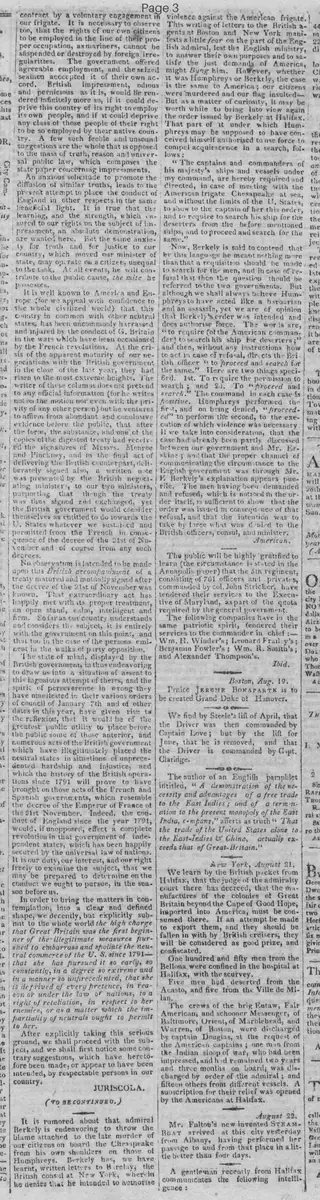
"The captains and commanders of his majesty's ships and vessels under my command, are hereby required and directed, in case of meeting with the American frigate Chesapeake at sea, and without the limits of the U. States, to show to the captain of her this order, and to require to search his ship for the deserters from the before mentioned ships, and to proceed and search for the same."
Now, Berkeley is said to contend that by this language he meant nothing more than that a requisition should be made to search for the men, and in case of refusal that then the question should be referred to the two governments. But although we shall always believe Humphreys to have acted like a barbarian and an assassin, yet we are of opinion that Berkeley's order was intended and does authorise force. The words are, "to require (of the American commander) to search his ship for deserters:" and then, without any instructions how to act in case of refusal, directs the British officer "to proceed and search for the same." Here are two things specified. 1st. To require the permission to search: and 2d. To "proceed and search." The command in each case is hostile. Humphreys performed the first, and on being denied, "proceeded" to perform the second, to the execution of which violence was necessary. It we take into consideration, that the case had already been partly discussed between our government and Mr. Erskine; and that the proper channel of communicating the circumstance to the English government was through Mr. H. Berkeley's explanation appears puerile. The men having been demanded and refused, which is noticed in the order itself, is sufficient to show that the order was issued in consequence of that refusal, and that the intention was to take by force what was denied to the British officers, consul, and minister.
American.
What sub-type of article is it?
What keywords are associated?
What entities or persons were involved?
Domestic News Details
Key Persons
Outcome
our citizens were murdered and our flag insulted
Event Details
Rumors that admiral Berkeley is endeavoring to throw the blame for the late murder of American citizens on board the Chesapeake onto Humphreys. Berkeley wrote letters to B. relay denying intent to authorize violence. The order issued by Berkeley at Halifax directed British officers to require and proceed to search the American frigate for deserters. Analysis contends the order authorized force despite refusal.