Thank you for visiting SNEWPapers!
Sign up free
New York Tribune
New York, New York County, New York
What is this article about?
The article discusses the ongoing political contest in Great Britain ahead of an election, portraying a Whig victory as a win for freedom and commercial reforms against Tory monopoly, while critiquing how U.S. trade policies undermine British reformers' arguments for reciprocity.
Clipping
OCR Quality
Full Text
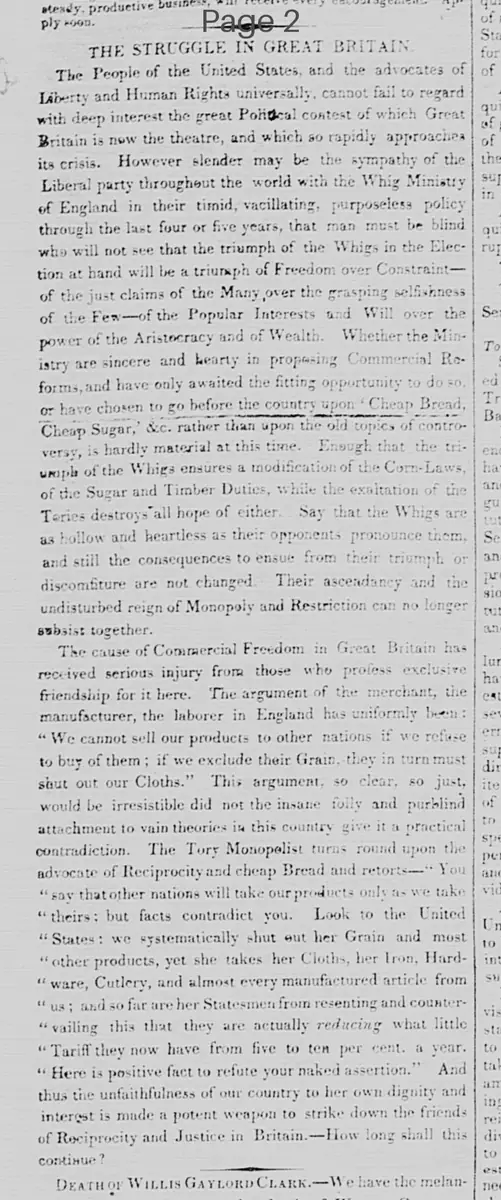
The People of the United States, and the advocates of Liberty and Human Rights universally, cannot fail to regard with deep interest the great Political contest of which Great Britain is now the theatre, and which so rapidly approaches its crisis. However slender may be the sympathy of the Liberal party throughout the world with the Whig Ministry of England in their timid, vacillating, purposeless policy through the last four or five years, that man must be blind who will not see that the triumph of the Whigs in the Election at hand will be a triumph of Freedom over Constraint—of the just claims of the Many over the grasping selfishness of the Few—of the Popular Interests and Will over the power of the Aristocracy and of Wealth. Whether the Ministry are sincere and hearty in proposing Commercial Reforms, and have only awaited the fitting opportunity to do so, or have chosen to go before the country upon 'Cheap Bread, Cheap Sugar,' &c. rather than upon the old topics of controversy, is hardly material at this time. Enough that the triumph of the Whigs ensures a modification of the Corn-Laws, of the Sugar and Timber Duties, while the exaltation of the Tories destroys all hope of either. Say that the Whigs are as hollow and heartless as their opponents pronounce them, and still the consequences to ensue from their triumph, or discomfiture are not changed. Their ascendancy and the undisturbed reign of Monopoly and Restriction can no longer subsist together.
The cause of Commercial Freedom in Great Britain has received serious injury from those who profess exclusive friendship for it here. The argument of the merchant, the manufacturer, the laborer in England has uniformly been: 'We cannot sell our products to other nations if we refuse to buy of them; if we exclude their Grain, they in turn must shut out our Cloths.' This argument, so clear, so just, would be irresistible did not the insane folly and purblind attachment to vain theories in this country give it a practical contradiction. The Tory Monopolist turns round upon the advocate of Reciprocity and cheap Bread and retorts—'You say that other nations will take our products only as we take theirs: but facts contradict you. Look to the United States: we systematically shut out her Grain and most other products, yet she takes her Cloths, her Iron, Hardware, Cutlery, and almost every manufactured article from us; and so far are her Statesmen from resenting and countervailing this that they are actually reducing what little Tariff they now have from five to ten per cent. a year. Here is positive fact to refute your naked assertion.' And thus the unfaithfulness of our country to her own dignity and interest is made a potent weapon to strike down the friends of Reciprocity and Justice in Britain. How long shall this continue?
What sub-type of article is it?
What keywords are associated?
Where did it happen?
Foreign News Details
Primary Location
Great Britain
Outcome
triumph of the whigs ensures modification of the corn-laws, sugar and timber duties; exaltation of the tories destroys all hope of such reforms.
Event Details
The article highlights the impending political election in Great Britain as a contest between Whigs advocating for commercial reforms like cheaper bread and sugar, and Tories supporting monopoly and restriction. It argues that a Whig victory would advance freedom and popular interests over aristocracy and wealth, while critiquing how U.S. trade policies contradict British reformers' reciprocity arguments, weakening their cause.