Thank you for visiting SNEWPapers!
Sign up free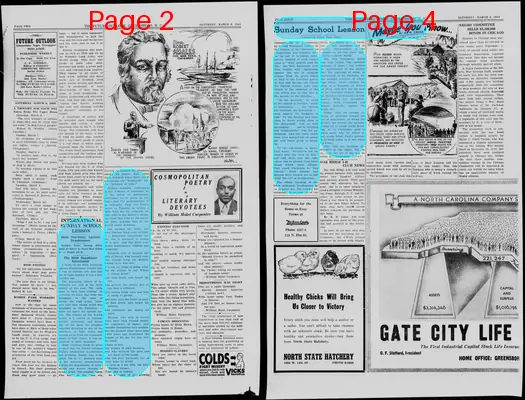
Literary
March 6, 1943
The Future Outlook
Greensboro, Guilford County, North Carolina
What is this article about?
This Sunday school lesson examines biblical teachings against drunkenness, tracing its condemnation from early Jewish history through prophets like Isaiah, Amos, and Joel, to New Testament injunctions by Paul. It refutes misinterpretations supporting moderate drinking and affirms Christianity's opposition to intoxicants as immoral.
Merged-components note: Continuation of Sunday School lesson across pages
Clippings
1 of 2
OCR Quality
95%
Excellent
Full Text
INTERNATIONAL SUNDAY SCHOOL LESSON
Bible Teachings Against Drunkenness
Golden Text:
Strong drink shall be bitter to them that drink it. - Isaiah 24:9.
The Bible Repudiates Intoxicants
A study of the Bible teachings against drunkenness reveals that it was an ancient evil. and that the struggle against it was a progressive one.
The degrading effects of intoxicants are told in the early history of the race. The curbs seem to have been gradual. In Leviticus we learn that wine was forbidden to the sons of Aaron, the high priest. Numbers tells that strong drink was forbidden to the Nazarites - those set apart for special service. The history of the Jewish people is a record of national growth, prosperity, and downfall. In the main the prophets regarded drinking as one of the evidences of high living and turning away from the commandments of God. Hence. it was announced in their messages.
Many citations could be given to show that the Jewish religious leaders condemned drunkenness and drinking. Isaiah., who wrote about 740 B. C.. directed some of his bitterest denunciations against the degradation of strong people and priests because of strong drink. The prophet Amos, who wrote in the same era,
fiercely denounced drunkenness among his people. Joel, some three hundred years later, cried out against the "drunkards" and the "drinkers of wine."
Modern drinkers. confronted by the evidence of specialists as to the effect of intoxicants, sometimes try to prove by the Bible that the prohibitionist is an extremist. They cite Paul's advice to Timothy on taking a little wine for his stomach. Or they refer to the Master's changing water into wine at the marriage feast, arguing that he endorsed social drinking.
But quoting the Bible, the most fearless book ever written, is a dangerous experiment unless one is prepared to accept all it says. And the Bible condemns drunkenness without any exceptions.
Proverbs tells of Lemuel, the king of Massa, who learned valuable lessons from his mother. Among them was this:
It is not for kings to drink wine,
Nor for princes to say, Where is strong drink?
Lest they drink, and forget the law,
And pervert the justice due to any that is afflicted.
Give strong drink unto him that is ready to perish,
And wine unto the bitter in soul:
Let him drink. and forget his poverty,
And remember his misery no more.
Women, who only in recent years have been classed among the consumers of liquor, may consider themselves very modern.
But the prophet Amos more than 2,600 years ago denounced the women of his day for this evil.
He cried:
Listen to this, . ..
you women in high Samaria,
you who defraud the poor and are hard on the needy,
who tell your husbands, Let us have wine to drink!
As sure as I am God, the Lord Eternal swears,
Your day is coming.
As a result of the growing
PAGE FOUR
THE FUTURE OUTLOOK. GREENSBORO. N. C.
Sunday School Lesson
(Continued From Page Two)
condemnation of drunkenness by the Old Testament writers, by the coming of the Christian era drunkenness and drinking were on the list of forbidden indulgences. Instead of such expressions as "wine maketh glad the life," the New Testament writings bristle with injunctions against the use of alcoholic drinks.
With the great letters of Paul to the Christian groups in Asia and Europe, the Christian Church became fully committed to the abolition of this evil, which was no new vice to the apostle to the Gentiles.
"Be not deceived." he wrote to the church at Corinth, "neither fornicators . . . nor thieves, nor covetous, nor drunkards . . . shall inherit the kingdom of God." To the Romans and Galatians he wrote urging them to live decorously. "Let us walk becomingly, . . . not in revelling and drunkenness," was his admonition. And the early Christians were warned not to associate with those given to drinking.
To the Christians in Rome, Paul wrote, "Overthrow not for meat's sake the work of God." and told them that the right course was to abstain from those things which cause offense.
Paul urged Christians to "live soberly."
Even bishops and deacons were warned not to fall under the evil of drunkenness.
The whole teaching of the Bible condemns drunkenness as an immoral act. The craving for intoxicants is an appetite of the flesh. Indulgence of it is harmful to the individual and to society.
Drunkenness is the opposite of all that Jesus planned for a better world.
The New Testament, which has been called "the apostolic memoirs of Jesus," was written by eyewitnesses of his earthly life. The teachings of Jesus, as interpreted by his disciples, are the guiding principles of Christian living.
These embody his ideal of a kingdom of heaven on earth, and they are the goal of the Christian Church. Hence, all churches stand against drunkenness.
With few exceptions, leaders, both Protestant and Roman Catholic, oppose the drink evil.
Today, with the strange reversal of attitudes toward the use of intoxicants, in which the drinker has become the aggressor urging all to accept social drinking, we, as Christians, need to learn anew why we refuse to use strong drink. Paul's message is as fresh today as it was when he wrote:
They that are drunken are drunken in the night. But let us, since we are of the day be sober. (1 Thessalonians 5:7-8.)
Bible Teachings Against Drunkenness
Golden Text:
Strong drink shall be bitter to them that drink it. - Isaiah 24:9.
The Bible Repudiates Intoxicants
A study of the Bible teachings against drunkenness reveals that it was an ancient evil. and that the struggle against it was a progressive one.
The degrading effects of intoxicants are told in the early history of the race. The curbs seem to have been gradual. In Leviticus we learn that wine was forbidden to the sons of Aaron, the high priest. Numbers tells that strong drink was forbidden to the Nazarites - those set apart for special service. The history of the Jewish people is a record of national growth, prosperity, and downfall. In the main the prophets regarded drinking as one of the evidences of high living and turning away from the commandments of God. Hence. it was announced in their messages.
Many citations could be given to show that the Jewish religious leaders condemned drunkenness and drinking. Isaiah., who wrote about 740 B. C.. directed some of his bitterest denunciations against the degradation of strong people and priests because of strong drink. The prophet Amos, who wrote in the same era,
fiercely denounced drunkenness among his people. Joel, some three hundred years later, cried out against the "drunkards" and the "drinkers of wine."
Modern drinkers. confronted by the evidence of specialists as to the effect of intoxicants, sometimes try to prove by the Bible that the prohibitionist is an extremist. They cite Paul's advice to Timothy on taking a little wine for his stomach. Or they refer to the Master's changing water into wine at the marriage feast, arguing that he endorsed social drinking.
But quoting the Bible, the most fearless book ever written, is a dangerous experiment unless one is prepared to accept all it says. And the Bible condemns drunkenness without any exceptions.
Proverbs tells of Lemuel, the king of Massa, who learned valuable lessons from his mother. Among them was this:
It is not for kings to drink wine,
Nor for princes to say, Where is strong drink?
Lest they drink, and forget the law,
And pervert the justice due to any that is afflicted.
Give strong drink unto him that is ready to perish,
And wine unto the bitter in soul:
Let him drink. and forget his poverty,
And remember his misery no more.
Women, who only in recent years have been classed among the consumers of liquor, may consider themselves very modern.
But the prophet Amos more than 2,600 years ago denounced the women of his day for this evil.
He cried:
Listen to this, . ..
you women in high Samaria,
you who defraud the poor and are hard on the needy,
who tell your husbands, Let us have wine to drink!
As sure as I am God, the Lord Eternal swears,
Your day is coming.
As a result of the growing
PAGE FOUR
THE FUTURE OUTLOOK. GREENSBORO. N. C.
Sunday School Lesson
(Continued From Page Two)
condemnation of drunkenness by the Old Testament writers, by the coming of the Christian era drunkenness and drinking were on the list of forbidden indulgences. Instead of such expressions as "wine maketh glad the life," the New Testament writings bristle with injunctions against the use of alcoholic drinks.
With the great letters of Paul to the Christian groups in Asia and Europe, the Christian Church became fully committed to the abolition of this evil, which was no new vice to the apostle to the Gentiles.
"Be not deceived." he wrote to the church at Corinth, "neither fornicators . . . nor thieves, nor covetous, nor drunkards . . . shall inherit the kingdom of God." To the Romans and Galatians he wrote urging them to live decorously. "Let us walk becomingly, . . . not in revelling and drunkenness," was his admonition. And the early Christians were warned not to associate with those given to drinking.
To the Christians in Rome, Paul wrote, "Overthrow not for meat's sake the work of God." and told them that the right course was to abstain from those things which cause offense.
Paul urged Christians to "live soberly."
Even bishops and deacons were warned not to fall under the evil of drunkenness.
The whole teaching of the Bible condemns drunkenness as an immoral act. The craving for intoxicants is an appetite of the flesh. Indulgence of it is harmful to the individual and to society.
Drunkenness is the opposite of all that Jesus planned for a better world.
The New Testament, which has been called "the apostolic memoirs of Jesus," was written by eyewitnesses of his earthly life. The teachings of Jesus, as interpreted by his disciples, are the guiding principles of Christian living.
These embody his ideal of a kingdom of heaven on earth, and they are the goal of the Christian Church. Hence, all churches stand against drunkenness.
With few exceptions, leaders, both Protestant and Roman Catholic, oppose the drink evil.
Today, with the strange reversal of attitudes toward the use of intoxicants, in which the drinker has become the aggressor urging all to accept social drinking, we, as Christians, need to learn anew why we refuse to use strong drink. Paul's message is as fresh today as it was when he wrote:
They that are drunken are drunken in the night. But let us, since we are of the day be sober. (1 Thessalonians 5:7-8.)
What sub-type of article is it?
Essay
What themes does it cover?
Religious
Moral Virtue
Temperance
Literary Details
Title
Bible Teachings Against Drunkenness
Subject
International Sunday School Lesson
Key Lines
Strong Drink Shall Be Bitter To Them That Drink It. Isaiah 24:9.
It Is Not For Kings To Drink Wine,
Nor For Princes To Say, Where Is Strong Drink?
Lest They Drink, And Forget The Law,
And Pervert The Justice Due To Any That Is Afflicted.
Listen To This, . ..
You Women In High Samaria,
You Who Defraud The Poor And Are Hard On The Needy,
Who Tell Your Husbands, Let Us Have Wine To Drink!
As Sure As I Am God, The Lord Eternal Swears,
Your Day Is Coming.
Be Not Deceived." He Wrote To The Church At Corinth, "Neither Fornicators . . . Nor Thieves, Nor Covetous, Nor Drunkards . . . Shall Inherit The Kingdom Of God."
Keywords": [