Thank you for visiting SNEWPapers!
Sign up free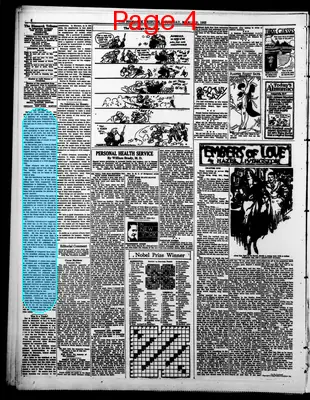
Editorial
March 21, 1933
The Bismarck Tribune
Bismarck, Mandan, Burleigh County, Morton County, North Dakota
What is this article about?
President Roosevelt's economic recovery efforts have congressional support, but unfulfilled patronage promises and pressures from bankers, railroads, agriculture, and veterans threaten to undermine cooperation and lead to revolt against his leadership.
Clipping

OCR Quality
98%
Excellent
Full Text
Not All Roses
Despite the success which has greeted his efforts to make straight the pathway of economic recovery and political justice, President Roosevelt still faces some momentous battles and one of them is with the congress.
The house and senate have cooperated splendidly to date and are deserving of all credit, but how much longer they will be able to stand the strain remains to be seen.
The difficulty lies, of course, in their pre-election promises.
In the nation, just as here in North Dakota, the desire for a place on the payroll actuated much enthusiastic support during the campaign. Some congressmen and senators are known to have promised everything in sight and some things which were only within the bounds of a vivid imagination.
These chickens now are coming home to roost, just as they always do.
The faithful clamor at the pie counter. They cry for bread in the form of jobs.
But the distribution has been painfully slow. Only a few of the major offices have been transferred from Republicans to Democrats. The real distribution of patronage has not yet begun. Apportionment of the pie is being held up pending the solution of graver matters.
The explanation within the party is that the new regime has been too busy with the unselfish business of restoring conditions within the nation to concentrate on rewards for the party faithful. It is so true it cannot be gain-said. Yet the fact that activity in this direction has been delayed is one of the things which has won the cooperation of congress for the president.
A Carolina representative suggested the other day on the floor that the vote on the economy bill might be the measuring stick which the president would use in determining party loyalty. He was booed for his remarks, yet there was more than a grain of truth in them. Each Democratic senator and congressman is well aware that the president may not look with favor on the friends of those who have refused to cooperate with him.
Thousands of telegrams have come to the president praising his courageous course and urging him to continue.
But thousands of others have come to senators and congressmen urging their opposition to those same policies. The bankers have wanted help but no government supervision of their practices; the railroads have pleaded for assistance but have fought the necessity of putting their houses in order; agriculture has wanted relief, and its unofficial leaders have disagreed violently on methods of getting it; many war veterans have assailed the policy of curtailing benefits now given them by law.
This constitutes pressure upon the lawmakers, mindful of the need for re-election. Continued long enough it may cause them, in time, to revolt against the president's leadership and resort to the old log-rolling tactics.
It is to be hoped that the major job will have been completed before that time comes.
Despite the success which has greeted his efforts to make straight the pathway of economic recovery and political justice, President Roosevelt still faces some momentous battles and one of them is with the congress.
The house and senate have cooperated splendidly to date and are deserving of all credit, but how much longer they will be able to stand the strain remains to be seen.
The difficulty lies, of course, in their pre-election promises.
In the nation, just as here in North Dakota, the desire for a place on the payroll actuated much enthusiastic support during the campaign. Some congressmen and senators are known to have promised everything in sight and some things which were only within the bounds of a vivid imagination.
These chickens now are coming home to roost, just as they always do.
The faithful clamor at the pie counter. They cry for bread in the form of jobs.
But the distribution has been painfully slow. Only a few of the major offices have been transferred from Republicans to Democrats. The real distribution of patronage has not yet begun. Apportionment of the pie is being held up pending the solution of graver matters.
The explanation within the party is that the new regime has been too busy with the unselfish business of restoring conditions within the nation to concentrate on rewards for the party faithful. It is so true it cannot be gain-said. Yet the fact that activity in this direction has been delayed is one of the things which has won the cooperation of congress for the president.
A Carolina representative suggested the other day on the floor that the vote on the economy bill might be the measuring stick which the president would use in determining party loyalty. He was booed for his remarks, yet there was more than a grain of truth in them. Each Democratic senator and congressman is well aware that the president may not look with favor on the friends of those who have refused to cooperate with him.
Thousands of telegrams have come to the president praising his courageous course and urging him to continue.
But thousands of others have come to senators and congressmen urging their opposition to those same policies. The bankers have wanted help but no government supervision of their practices; the railroads have pleaded for assistance but have fought the necessity of putting their houses in order; agriculture has wanted relief, and its unofficial leaders have disagreed violently on methods of getting it; many war veterans have assailed the policy of curtailing benefits now given them by law.
This constitutes pressure upon the lawmakers, mindful of the need for re-election. Continued long enough it may cause them, in time, to revolt against the president's leadership and resort to the old log-rolling tactics.
It is to be hoped that the major job will have been completed before that time comes.
What sub-type of article is it?
Economic Policy
Partisan Politics
What keywords are associated?
Roosevelt Leadership
Congressional Cooperation
Economic Recovery
Patronage Delays
Party Loyalty
Interest Group Pressures
What entities or persons were involved?
President Roosevelt
Congress
House
Senate
Democrats
Republicans
Bankers
Railroads
Agriculture
War Veterans
Editorial Details
Primary Topic
Challenges To Roosevelt's Leadership From Congressional Patronage Pressures
Stance / Tone
Supportive Of Roosevelt With Caution About Potential Congressional Revolt
Key Figures
President Roosevelt
Congress
House
Senate
Democrats
Republicans
Bankers
Railroads
Agriculture
War Veterans
Key Arguments
Congress Has Cooperated On Economic Recovery But Faces Strain From Pre Election Promises
Patronage Distribution Delayed Due To Focus On National Recovery
Party Loyalty Measured By Support For President's Policies Like The Economy Bill
Pressures From Interest Groups Urging Opposition To Roosevelt's Policies
Risk Of Lawmakers Reverting To Log Rolling If Pressures Continue