Thank you for visiting SNEWPapers!
Sign up free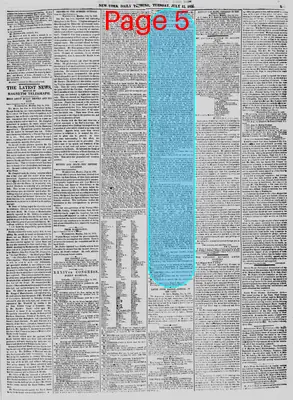
Story
July 15, 1856
New York Daily Tribune
New York, New York County, New York
What is this article about?
In the U.S. House, Rep. Preston Brooks defends his caning of Sen. Charles Sumner, rejects expulsion by resigning, amid applause, hisses, and debate on related resolutions involving Reps. Edmundson and Keitt.
Clipping

OCR Quality
85%
Good
Full Text
Giddings
Mr. CAMPBELL of Ohio earnestly appealed to Mr. to withdraw his objection. Mr. Brooks, he said, ought to be heard as he was vitally interested.
Mr. COMINS likewise appealed to Mr. Giddings to withdraw his objection.
Mr. GIDDINGS yielded only on the ground to satisfy his friends.
Members now crowded round Mr. Brooks, and intensely interested spectators in the galleries leaned over to hear him.
Mr. BROOKS said Mr. Sumner uttered a slander on his State and venerable relative, who was absent. Not content with this, he published a libel on his State and blood. Whoever insulted South Carolina insulted him, and he stood ready at all times, humbly and modestly as her son to perform his duty. He should have forfeited his self-respect, and the good opinion of his countrymen, if he had permitted the offense to pass unpunished. It was a personal affair, and in taking revenge into his own hands he meant no disrespect to the Senate or the House, nor did he mean disrespect to Massachusetts. He was aware of his personal responsibility. He incurred it, and was prepared to meet it. He knew he was amenable to the laws which offered the same protection to every citizen, whether a Member of Congress or in the private walks of life. He did not believe he could be punished by a Court of law and by the majority of the House at the same time. If he had committed a breach of privilege, he was answerable to the Senate which had no right to present him to the House for punishment. The question not only involved him and his friends, but the whole House. If the consequences were confined to himself he would be prepared to meet them here or elsewhere. Others must not suffer for him. He had felt more for his friends, Messrs. Edmundson and Keitt, than himself. They are blameless. Each has proved a friend who "sticketh closer than a brother."
When, he remarked, the people of the great North speak of me as a bad man they will do me the justice to say, that a blow from me at this time would be followed by revolution, and they know it [applause seemingly confined to the galleries], but no act of mine shall favor revolution. I am not willing to see the Constitution wounded through me. He would say to the House, that the ax uplifted over him may fall on them. He had only to say he could not retain his seat consistently with self-respect and rights under the Constitution.
During this very session, a member from Pennsylvania charged a colleague with an attempt at bribery. Where were the proceedings in that case? By passing it in silence, the House has declared bribery is excusable; but simple assault and battery is not. He spoke of Massachusetts as being in rebellion against the laws and Constitution of the United States while sitting in judgment on him and demanding his expulsion without a hearing. He had never been called to order, nor had he offended any officer. Yet a vote has been taken to-day transmitting him to posterity as unworthy of a seat here, because of disorderly behavior; and in this connection he spoke of Mr. Pennington as the prosecutor, as the "thumb-paper," the "Falstaffian member," &c., for which the Speaker called him to order. Mr. Brooks said that Mr. Pennington charged that the assault was murderous, and that with a bludgeon I had attempted to kill Mr. Sumner. My friend from Massachusetts over there has a pretty good sized stick. I would thank him to raise it and submit it to the inspection of the gentlemen from New Jersey. (Mr. De Witt, the gentleman alluded to, held up his stick for a moment. Laughter.) Now, that stick is double the size of the one used by me.
Mr. TRAFTON here rose and asked that the disorder in the galleries be quieted, or that they be cleared. (Hisses from the galleries.)
The SPEAKER said if the disturbance was continued he would give that order.
Mr. JONES (Tenn.)—Why, I did not hear any up there just now.
Mr. BROOKS (looking up)—If I have friends in the galleries I desire them to be quiet. He then continued: If I desired to kill the Senator from Massachusetts, why did I not do it? You all admit that I had it in my power. Let me tell the gentleman from New Jersey, that expressly to prevent taking life I used an ordinary cane presented by a friend in Baltimore. I went to the Senate deliberately. I hesitated whether I should use a horsewhip or a cowhide, but knowing that the strength of the Senator from Massachusetts was superior to mine, I thought he might wrest it from me. If he had, I might have done what I should have regretted for the remainder of my life.
A Voice—He would have killed him!
Mr. BROOKS resuming, said—Ten days ago, foreseeing what the action of the House would be, my resignation was put into the hands of the Governor of South Carolina. Mr. Brooks replied to several members who had said hard things of him, including Mr. Comins, quoting the remark that "Massachusetts would take her own time for the remedy;" but he would never plead the Statute of Limitations against the wrath of that State. He quoted from Mr. Woodruff's speech, so strongly condemnatory of his conduct, saying he thought a gentleman uttering such sentiments "a foeman worthy of his steel," and related, in the language of his friend Col. Savage how Mr. Woodruff declined meeting Mr. Brooks in the manner recognized by gentlemen.
The narration caused laughter. He said to Mr. Woodruff: Go, little wretch there is room enough in this world for you and me. In his judgment, the cock that crows and will not fight is despised even by hens and pullets [Laughter.] Alluding to the remark of James Watson Webb which had been quoted that the act of assault deserved death on the spot, he said if those who indorsed that sentiment wished to play the game of chivalry, let them, with their whole Republican crew, come and take the life which they say is forfeited. If his opponents were satisfied with the present state of the case, he was. He returned his thanks to his friends, especially to good Northern Democrats and gentlemen who had the manliness to stand by him—not forgetting John Scott Harrison. Some gentlemen, he believed, had voted against him contrary to their wishes, but were operated upon by outside pressure, and he spoke in commendation of those who gave their votes without indulging in vilification. He concluded by saying: Mr. Speaker, I announce to you and to the House, I am no longer a member of the XXXIVth Congress.
Confusion, hisses and applause followed, during which Mr. Brooks retired.
Mr. CARUTHERS said if he had been present, he should have voted against expulsion, believing that no offense to the House had been committed.
It was a long time before order was thoroughly restored.
The next resolution of the majority of the Committee, declaring disapprobation of the conduct of "Messrs. Edmundson and Keitt in regard to the assault.
Mr. CAMPBELL (Ohio) and others called for a division of the question.
The SPEAKER decided that the resolution could not be divided.
Mr. JONES (Tenn.) moved that the resolution be tabled.
Motion disagreed to by Yeas 96, Nays 111.
Pending the resolution the House adjourned.
Mr. CAMPBELL of Ohio earnestly appealed to Mr. to withdraw his objection. Mr. Brooks, he said, ought to be heard as he was vitally interested.
Mr. COMINS likewise appealed to Mr. Giddings to withdraw his objection.
Mr. GIDDINGS yielded only on the ground to satisfy his friends.
Members now crowded round Mr. Brooks, and intensely interested spectators in the galleries leaned over to hear him.
Mr. BROOKS said Mr. Sumner uttered a slander on his State and venerable relative, who was absent. Not content with this, he published a libel on his State and blood. Whoever insulted South Carolina insulted him, and he stood ready at all times, humbly and modestly as her son to perform his duty. He should have forfeited his self-respect, and the good opinion of his countrymen, if he had permitted the offense to pass unpunished. It was a personal affair, and in taking revenge into his own hands he meant no disrespect to the Senate or the House, nor did he mean disrespect to Massachusetts. He was aware of his personal responsibility. He incurred it, and was prepared to meet it. He knew he was amenable to the laws which offered the same protection to every citizen, whether a Member of Congress or in the private walks of life. He did not believe he could be punished by a Court of law and by the majority of the House at the same time. If he had committed a breach of privilege, he was answerable to the Senate which had no right to present him to the House for punishment. The question not only involved him and his friends, but the whole House. If the consequences were confined to himself he would be prepared to meet them here or elsewhere. Others must not suffer for him. He had felt more for his friends, Messrs. Edmundson and Keitt, than himself. They are blameless. Each has proved a friend who "sticketh closer than a brother."
When, he remarked, the people of the great North speak of me as a bad man they will do me the justice to say, that a blow from me at this time would be followed by revolution, and they know it [applause seemingly confined to the galleries], but no act of mine shall favor revolution. I am not willing to see the Constitution wounded through me. He would say to the House, that the ax uplifted over him may fall on them. He had only to say he could not retain his seat consistently with self-respect and rights under the Constitution.
During this very session, a member from Pennsylvania charged a colleague with an attempt at bribery. Where were the proceedings in that case? By passing it in silence, the House has declared bribery is excusable; but simple assault and battery is not. He spoke of Massachusetts as being in rebellion against the laws and Constitution of the United States while sitting in judgment on him and demanding his expulsion without a hearing. He had never been called to order, nor had he offended any officer. Yet a vote has been taken to-day transmitting him to posterity as unworthy of a seat here, because of disorderly behavior; and in this connection he spoke of Mr. Pennington as the prosecutor, as the "thumb-paper," the "Falstaffian member," &c., for which the Speaker called him to order. Mr. Brooks said that Mr. Pennington charged that the assault was murderous, and that with a bludgeon I had attempted to kill Mr. Sumner. My friend from Massachusetts over there has a pretty good sized stick. I would thank him to raise it and submit it to the inspection of the gentlemen from New Jersey. (Mr. De Witt, the gentleman alluded to, held up his stick for a moment. Laughter.) Now, that stick is double the size of the one used by me.
Mr. TRAFTON here rose and asked that the disorder in the galleries be quieted, or that they be cleared. (Hisses from the galleries.)
The SPEAKER said if the disturbance was continued he would give that order.
Mr. JONES (Tenn.)—Why, I did not hear any up there just now.
Mr. BROOKS (looking up)—If I have friends in the galleries I desire them to be quiet. He then continued: If I desired to kill the Senator from Massachusetts, why did I not do it? You all admit that I had it in my power. Let me tell the gentleman from New Jersey, that expressly to prevent taking life I used an ordinary cane presented by a friend in Baltimore. I went to the Senate deliberately. I hesitated whether I should use a horsewhip or a cowhide, but knowing that the strength of the Senator from Massachusetts was superior to mine, I thought he might wrest it from me. If he had, I might have done what I should have regretted for the remainder of my life.
A Voice—He would have killed him!
Mr. BROOKS resuming, said—Ten days ago, foreseeing what the action of the House would be, my resignation was put into the hands of the Governor of South Carolina. Mr. Brooks replied to several members who had said hard things of him, including Mr. Comins, quoting the remark that "Massachusetts would take her own time for the remedy;" but he would never plead the Statute of Limitations against the wrath of that State. He quoted from Mr. Woodruff's speech, so strongly condemnatory of his conduct, saying he thought a gentleman uttering such sentiments "a foeman worthy of his steel," and related, in the language of his friend Col. Savage how Mr. Woodruff declined meeting Mr. Brooks in the manner recognized by gentlemen.
The narration caused laughter. He said to Mr. Woodruff: Go, little wretch there is room enough in this world for you and me. In his judgment, the cock that crows and will not fight is despised even by hens and pullets [Laughter.] Alluding to the remark of James Watson Webb which had been quoted that the act of assault deserved death on the spot, he said if those who indorsed that sentiment wished to play the game of chivalry, let them, with their whole Republican crew, come and take the life which they say is forfeited. If his opponents were satisfied with the present state of the case, he was. He returned his thanks to his friends, especially to good Northern Democrats and gentlemen who had the manliness to stand by him—not forgetting John Scott Harrison. Some gentlemen, he believed, had voted against him contrary to their wishes, but were operated upon by outside pressure, and he spoke in commendation of those who gave their votes without indulging in vilification. He concluded by saying: Mr. Speaker, I announce to you and to the House, I am no longer a member of the XXXIVth Congress.
Confusion, hisses and applause followed, during which Mr. Brooks retired.
Mr. CARUTHERS said if he had been present, he should have voted against expulsion, believing that no offense to the House had been committed.
It was a long time before order was thoroughly restored.
The next resolution of the majority of the Committee, declaring disapprobation of the conduct of "Messrs. Edmundson and Keitt in regard to the assault.
Mr. CAMPBELL (Ohio) and others called for a division of the question.
The SPEAKER decided that the resolution could not be divided.
Mr. JONES (Tenn.) moved that the resolution be tabled.
Motion disagreed to by Yeas 96, Nays 111.
Pending the resolution the House adjourned.
What sub-type of article is it?
Historical Event
Crime Story
Biography
What themes does it cover?
Crime Punishment
Justice
Bravery Heroism
What keywords are associated?
Congressional Debate
Brooks Defense
Sumner Assault
House Resignation
Expulsion Vote
What entities or persons were involved?
Mr. Brooks
Mr. Sumner
Mr. Giddings
Mr. Campbell
Mr. Comins
Mr. Edmundson
Mr. Keitt
Mr. Pennington
Mr. Trafton
Mr. Jones
Mr. Caruthers
Mr. Woodruff
Col. Savage
James Watson Webb
John Scott Harrison
Where did it happen?
House Of Representatives
Story Details
Key Persons
Mr. Brooks
Mr. Sumner
Mr. Giddings
Mr. Campbell
Mr. Comins
Mr. Edmundson
Mr. Keitt
Mr. Pennington
Mr. Trafton
Mr. Jones
Mr. Caruthers
Mr. Woodruff
Col. Savage
James Watson Webb
John Scott Harrison
Location
House Of Representatives
Event Date
During This Very Session
Story Details
Mr. Brooks defends his assault on Senator Sumner in a speech before the House, argues against expulsion, expresses concern for his friends Messrs. Edmundson and Keitt, resigns his seat, and criticizes the proceedings.