Thank you for visiting SNEWPapers!
Sign up free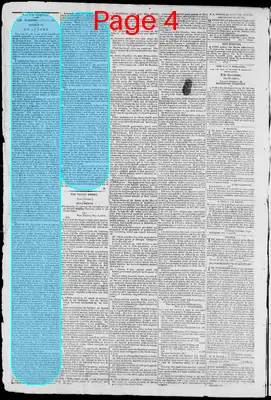
Literary
December 22, 1804
The Enquirer
Richmond, Henrico County, Virginia
What is this article about?
This essay explores luxury as a counterbalance to humanity's aversion to labor, arguing it drives industry and activity in free societies, enhancing happiness and virtue when regulated by prudence and self-denial, without the enervating effects seen in despotic contexts.
Clipping
OCR Quality
95%
Excellent
Full Text
FOR THE ENQUIRER.
The Rainbow.--Series 2d.
NUMBER VI.
ON LUXURY.
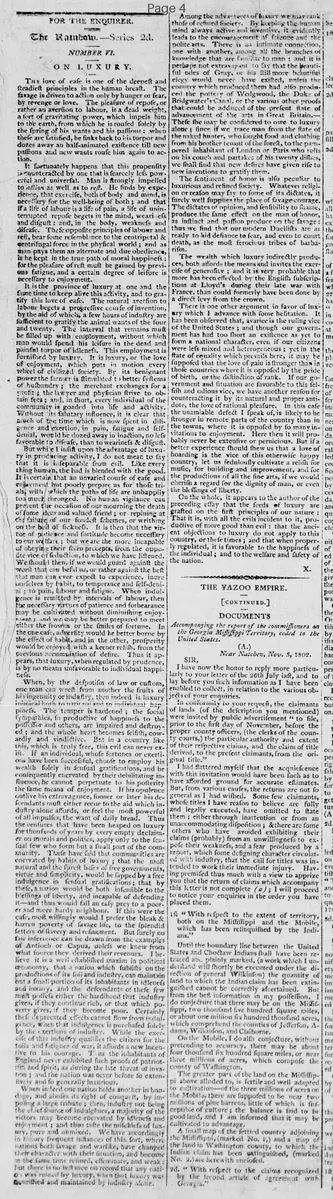
The love of ease is one of the deepest and steadiest principles in the human breast. The savage is driven to action only by hunger or fear, by revenge or love. The pleasure of repose, or rather an aversion to labour, is a deadweight, a sort of gravitating power, which impels him to the earth, from which he is roused solely by the spring of his wants and his passions: when these are satisfied, he sinks back to his torpor and dozes away a half-animated existence till new passions and new wants rouse him again to action.
It fortunately happens that this propensity is counteracted by one that is scarcely less powerful and universal. Man is strongly impelled to action as well as to rest. He finds by experience, that exercise, both of body and mind, is necessary for the well-being of both: and that if a life of labour is a life of pain, a life of uninterrupted repose begets in the mind, weariness and disgust: and, in the body, weakness and disease. These opposite principles of labour and rest, bear some resemblance to the centripetal and centrifugal force in the physical world; and as man pays them an alternate and due obedience, is he kept in the true path of moral happiness: for the pleasure of rest must be gained by previous fatigue, and a certain degree of leisure is necessary to enjoyment.
It is the province of luxury at one and the same time to keep alive this activity, and to gratify this love of ease. The natural aversion to labour begets a progressive course of invention, by the aid of which, a few hours of industry are sufficient to gratify the animal wants of the four and twenty. The interval that remains must be filled up with employment, without which man would spend his leisure in the dead and painful torpor of idleness. This employment is furnished by luxury. It is luxury, or the love of enjoyment, which puts in motion every wheel of civilized society. By its benignant power the farmer is stimulated to better systems of husbandry; the merchant exchanges for a profit; the lawyer and physician strive to obtain fees; and, in short, every individual of the community is goaded into life and activity.
Without its salutary influence, it is clear that much of the time which is now so spent in diligence and exertion, in pain, fatigue and self-denial, would be dozed away in inaction, no less favorable to disease, than to weariness & disgust.
But while I insist upon the advantage of luxury in producing activity, I do not mean to say that it is inseparable from evil. Like every thing human, the bad is blended with the good. It is certain that an unvaried course of ease and enjoyment but poorly prepare us for those trials with which the paths of life are unhappily too much thronged. No human vigilance can prevent the occasion of our mourning the death of some dear and valued friend; or repining at the end failure of our fondest schemes, or writhing on the bed of sickness. It is then that the virtues of patience and fortitude become necessary to our welfare; but we are the more incapable of obeying their stern precepts, from the opposite vicious seduction, to which we have listened.
We should then, if we would guard against the worst that can befall us, or rather against the best that man can ever expect to experience, inure ourselves by habit, to temperance and self-denial; to pain, labour and fatigue. When indulgence is remitted by intervals of labour, then the necessary virtues of patience and forbearance may be cultivated without diminishing enjoyment: and we may be better prepared to meet either the frowns or the smiles of fortune. In the one case, adversity would be better borne by the effect of habit, and in the other, prosperity would be enjoyed with a keener relish, from the previous accumulation of desire. Thus it appears, that luxury, when regulated by prudence, is by no means unfavorable to individual happiness.
When, by the despotism of law or custom, one man can wrest from another the fruits of his ingenuity or industry, then indeed is luxury iniquitous and baneful to individual happiness. The temper is hardened; the social sympathies, so productive of happiness to the possessor and others, are impaired and destroyed; and the whole heart becomes selfish, cowardly and vindictive. But in a country like this, which is truly free, this evil can never exist. If an individual, whose fortunes or exertions have been successful, choose to employ his wealth solely in sensual gratifications, and be consequently enervated by their debilitating influence, he cannot perpetuate to his posterity the same means of enjoyment. If his opulence outlive his extravagance, sooner or later his descendants must either recur to the aid which industry alone affords, or feel the most powerful of all impulses, the want of daily bread. Thus the censures that have been heaped on luxury for thousands of years by every empty declaimer on morals and politics, apply only to the sensual few who form but a small part of the community. These have said that communities are enervated by habits of luxury; that the most natural and the surest bases of free governments, virtue and simplicity, would be sapped by a free indulgence in sensual gratifications; that by these, a nation would be both insensible to the blessings of liberty, and incapable of defending it—and thus would fall an easy prey to a poorer and more hardy neighbour. If this were the case, most willingly would I prefer the bleak & barren poverty of savage life, to the splendid fetters of slavery and refinement. But surely no fair inference can be drawn from the examples of Antioch or Capua, unless we knew from what source they derived their revenues. I believe it is a well established maxim in political economy, that a nation which subsists on the productions of its soil and industry, can maintain but a small portion of its inhabitants in idleness and luxury, and the descendants of these few most possess either the hardihood that industry gives, if they continue rich, or that which poverty gives, if they become poor. Certainly these deprecated effects cannot flow from indulgence, when that indulgence is purchased solely by the exertions of industry. While the exercise of this industry qualifies the citizen for the toils and fatigues of war, it affords a new incentive to his courage. Thus the inhabitants of England never exhibited such proofs of patriotism and spirit, as during the late threat of invasion; and the nation was never before so extensively and so generally luxurious.
When indeed one nation holds another in bondage, and abuses its right of conquest, by imposing a large tribute; then, industry not being the chief source of indulgence, a majority of the victors may become enervated by idleness and enjoyment; and thus taste the mischiefs of luxury, pure and unmixed. We have accordingly in history frequent instances of this sort, where nations both savage and warlike, have changed their character with their situation, and become at the same time refined, effeminate, and weak: but there is no instance on record that any nation was ruined by luxury, when that luxury was nourished and maintained by industry alone.
The Rainbow.--Series 2d.
NUMBER VI.
ON LUXURY.
The love of ease is one of the deepest and steadiest principles in the human breast. The savage is driven to action only by hunger or fear, by revenge or love. The pleasure of repose, or rather an aversion to labour, is a deadweight, a sort of gravitating power, which impels him to the earth, from which he is roused solely by the spring of his wants and his passions: when these are satisfied, he sinks back to his torpor and dozes away a half-animated existence till new passions and new wants rouse him again to action.
It fortunately happens that this propensity is counteracted by one that is scarcely less powerful and universal. Man is strongly impelled to action as well as to rest. He finds by experience, that exercise, both of body and mind, is necessary for the well-being of both: and that if a life of labour is a life of pain, a life of uninterrupted repose begets in the mind, weariness and disgust: and, in the body, weakness and disease. These opposite principles of labour and rest, bear some resemblance to the centripetal and centrifugal force in the physical world; and as man pays them an alternate and due obedience, is he kept in the true path of moral happiness: for the pleasure of rest must be gained by previous fatigue, and a certain degree of leisure is necessary to enjoyment.
It is the province of luxury at one and the same time to keep alive this activity, and to gratify this love of ease. The natural aversion to labour begets a progressive course of invention, by the aid of which, a few hours of industry are sufficient to gratify the animal wants of the four and twenty. The interval that remains must be filled up with employment, without which man would spend his leisure in the dead and painful torpor of idleness. This employment is furnished by luxury. It is luxury, or the love of enjoyment, which puts in motion every wheel of civilized society. By its benignant power the farmer is stimulated to better systems of husbandry; the merchant exchanges for a profit; the lawyer and physician strive to obtain fees; and, in short, every individual of the community is goaded into life and activity.
Without its salutary influence, it is clear that much of the time which is now so spent in diligence and exertion, in pain, fatigue and self-denial, would be dozed away in inaction, no less favorable to disease, than to weariness & disgust.
But while I insist upon the advantage of luxury in producing activity, I do not mean to say that it is inseparable from evil. Like every thing human, the bad is blended with the good. It is certain that an unvaried course of ease and enjoyment but poorly prepare us for those trials with which the paths of life are unhappily too much thronged. No human vigilance can prevent the occasion of our mourning the death of some dear and valued friend; or repining at the end failure of our fondest schemes, or writhing on the bed of sickness. It is then that the virtues of patience and fortitude become necessary to our welfare; but we are the more incapable of obeying their stern precepts, from the opposite vicious seduction, to which we have listened.
We should then, if we would guard against the worst that can befall us, or rather against the best that man can ever expect to experience, inure ourselves by habit, to temperance and self-denial; to pain, labour and fatigue. When indulgence is remitted by intervals of labour, then the necessary virtues of patience and forbearance may be cultivated without diminishing enjoyment: and we may be better prepared to meet either the frowns or the smiles of fortune. In the one case, adversity would be better borne by the effect of habit, and in the other, prosperity would be enjoyed with a keener relish, from the previous accumulation of desire. Thus it appears, that luxury, when regulated by prudence, is by no means unfavorable to individual happiness.
When, by the despotism of law or custom, one man can wrest from another the fruits of his ingenuity or industry, then indeed is luxury iniquitous and baneful to individual happiness. The temper is hardened; the social sympathies, so productive of happiness to the possessor and others, are impaired and destroyed; and the whole heart becomes selfish, cowardly and vindictive. But in a country like this, which is truly free, this evil can never exist. If an individual, whose fortunes or exertions have been successful, choose to employ his wealth solely in sensual gratifications, and be consequently enervated by their debilitating influence, he cannot perpetuate to his posterity the same means of enjoyment. If his opulence outlive his extravagance, sooner or later his descendants must either recur to the aid which industry alone affords, or feel the most powerful of all impulses, the want of daily bread. Thus the censures that have been heaped on luxury for thousands of years by every empty declaimer on morals and politics, apply only to the sensual few who form but a small part of the community. These have said that communities are enervated by habits of luxury; that the most natural and the surest bases of free governments, virtue and simplicity, would be sapped by a free indulgence in sensual gratifications; that by these, a nation would be both insensible to the blessings of liberty, and incapable of defending it—and thus would fall an easy prey to a poorer and more hardy neighbour. If this were the case, most willingly would I prefer the bleak & barren poverty of savage life, to the splendid fetters of slavery and refinement. But surely no fair inference can be drawn from the examples of Antioch or Capua, unless we knew from what source they derived their revenues. I believe it is a well established maxim in political economy, that a nation which subsists on the productions of its soil and industry, can maintain but a small portion of its inhabitants in idleness and luxury, and the descendants of these few most possess either the hardihood that industry gives, if they continue rich, or that which poverty gives, if they become poor. Certainly these deprecated effects cannot flow from indulgence, when that indulgence is purchased solely by the exertions of industry. While the exercise of this industry qualifies the citizen for the toils and fatigues of war, it affords a new incentive to his courage. Thus the inhabitants of England never exhibited such proofs of patriotism and spirit, as during the late threat of invasion; and the nation was never before so extensively and so generally luxurious.
When indeed one nation holds another in bondage, and abuses its right of conquest, by imposing a large tribute; then, industry not being the chief source of indulgence, a majority of the victors may become enervated by idleness and enjoyment; and thus taste the mischiefs of luxury, pure and unmixed. We have accordingly in history frequent instances of this sort, where nations both savage and warlike, have changed their character with their situation, and become at the same time refined, effeminate, and weak: but there is no instance on record that any nation was ruined by luxury, when that luxury was nourished and maintained by industry alone.
What sub-type of article is it?
Essay
What themes does it cover?
Moral Virtue
Political
Liberty Freedom
What keywords are associated?
Luxury
Industry
Moral Virtue
Free Society
Political Economy
Self Denial
Patriotism
Literary Details
Title
On Luxury
Subject
On Luxury
Key Lines
It Is Luxury, Or The Love Of Enjoyment, Which Puts In Motion Every Wheel Of Civilized Society.
Thus It Appears, That Luxury, When Regulated By Prudence, Is By No Means Unfavorable To Individual Happiness.
But In A Country Like This, Which Is Truly Free, This Evil Can Never Exist.
Certainly These Deprecated Effects Cannot Flow From Indulgence, When That Indulgence Is Purchased Solely By The Exertions Of Industry.
But There Is No Instance On Record That Any Nation Was Ruined By Luxury, When That Luxury Was Nourished And Maintained By Industry Alone.