Thank you for visiting SNEWPapers!
Sign up free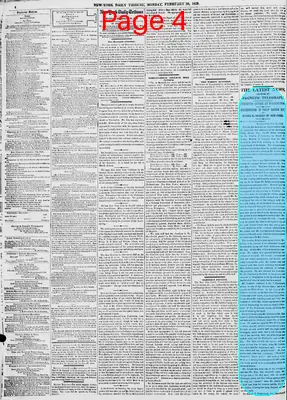
Story
February 28, 1859
New York Daily Tribune
New York, New York County, New York
What is this article about?
In Washington on Feb. 27, 1859, Congressman Daniel E. Sickles assassinates U.S. Attorney Philip Barton Key after learning of Key's affair with Sickles's wife, confirmed by confession; Sickles surrenders to authorities.
Clipping

OCR Quality
95%
Excellent
Full Text
THE LATEST NEWS
RECEIVED BY
MAGNETIC TELEGRAPH
DREADFUL AFFAIR AT WASHINGTON
ASSASSINATION OF PHILIP BARTON KEY.
BY
DANIEL E. SICKLES OF NEW-YORK.
From Our Special Correspondent.
WASHINGTON, Feb. 27, 1859.
This city has been thrown into an unusual state of excitement this afternoon by the shooting of Philip Barton Key, United States Attorney for the District of Columbia, by Daniel E. Sickles, Member of Congress from the III. District in New-York, resulting in the almost instant death of the former. The circumstances as I have learned them from the parties most interested on both sides, including Mr. Sickles, with whom I have had an interview in the District Jail, are as follows:
For more than a year there have been floating rumors of improper intimacy between Mr. Key and Mrs. Sickles. They have from time to time attended parties, the opera, and rode out together. Mr. Sickles has heard of these reports, but would never credit them until Thursday evening last. On that evening, just as a party was about breaking up at his house, Mr. Sickles received among his papers an anonymous letter. Without opening his mail, or knowing the contents of the letter, he accompanied his wife to a hop at Willard's. On his return home at midnight, Mr. Sickles opened the anonymous letter, which informed him of the infidelity of his wife, of her intimacy with Mr. Key, and stating all the details of the manner of their meeting, and naming the place of rendezvous. The letter was so plausible in its statements, and gave such precise directions for the detection of the parties in their assignation meetings that Mr. Sickles decided to investigate the facts. Accordingly he placed the letter in the hands of two of his most intimate friends, who last evening possessed themselves of the evidence satisfactory to Mr. Sickles that Mr. Key had rented a house of a negro in Fifteenth street, which he used as a place of rendezvous with Mrs. Sickles.
This morning, being in great agony of mind, Mr. Sickles, in the presence of two witnesses, charged his wife with having had illicit intercourse with Mr. Key. At first Mrs. Sickles declared her innocence. Mr. Sickles then paraded before her the evidence of her guilt. She became overwhelmed with the sudden arraignment, and fainted, and finally confessed her guilt. Mr. Sickles was not satisfied with this verbal confession, but desired Mrs. Sickles to make the confession in writing. She complied. She also informed him how often Mr. Key had been in the habit of seeing her, and his mode of telegraphing to her by a wave of his handkerchief when he wanted her to come out.
Mr. Sickles's residence is No. 7 President's square, in view of the Jackson statue, which is opposite the White House. In full view of Mr. Sickles's residence, on the other side of the square, Fifteenth-and-a-half street, is the Washington Club-House, where Mr. Key frequented, and from the windows of which Mrs. Sickles says he was in the habit of telegraphing her with his white handkerchief. If Mr. Sickles was absent, she was in the habit of returning the signal.
About 2 o'clock to-day Mr. Sickles saw Mr. Key come out of the Club-House and go round the square and walk past his (Sickles's) house two or three times. He made the signal for Mrs. Sickles once or twice, when Mr. Sickles, arming himself with five-bore six-inch revolver and two single-barrel Derringers, which carry each a ball double the size of the revolver's, went out of his house and walked down past the President's, and met Mr. Key. The latter greeted the former, and was about offering him his hand, when Mr. Sickles, refusing to take Mr. Key's hand, said, "Key, you have dishonored me; prepare to die!" Mr. Key started back a few feet, exclaiming, "What for? What for? Don't! don't!" and made a movement as if seeking for a weapon in his left breast pocket, which proved to be an opera-glass, which he threw at Sickles.
Mr. Sickles then drew one of his Derringers and shot Mr. Key, who staggered some; Mr. Sickles shot at Mr. Key again, with his second Derringer, which sent him reeling against a tree; he cried out "murder," when Mr. Sickles fired a third time, from his revolver, and Mr. Key fell. Mr. Sickles, believing him dying, desisted, and did not fire again.
Mr. Samuel F. Butterworth, Superintendent of Metropolitan Police of New-York, who was standing near by, caught Mr. Key in his arms, and with the assistance of Mr. George Armes, a clerk in the War Department, and Mr. Roach, proprietor of the National Hotel, placed him in a carriage and conveyed him to No. 397 15th st., where he expired in a few minutes. Mr. Sickles walked deliberately to the office of the Clerk of the District Court, and surrendered himself to the Marshal.
RECEIVED BY
MAGNETIC TELEGRAPH
DREADFUL AFFAIR AT WASHINGTON
ASSASSINATION OF PHILIP BARTON KEY.
BY
DANIEL E. SICKLES OF NEW-YORK.
From Our Special Correspondent.
WASHINGTON, Feb. 27, 1859.
This city has been thrown into an unusual state of excitement this afternoon by the shooting of Philip Barton Key, United States Attorney for the District of Columbia, by Daniel E. Sickles, Member of Congress from the III. District in New-York, resulting in the almost instant death of the former. The circumstances as I have learned them from the parties most interested on both sides, including Mr. Sickles, with whom I have had an interview in the District Jail, are as follows:
For more than a year there have been floating rumors of improper intimacy between Mr. Key and Mrs. Sickles. They have from time to time attended parties, the opera, and rode out together. Mr. Sickles has heard of these reports, but would never credit them until Thursday evening last. On that evening, just as a party was about breaking up at his house, Mr. Sickles received among his papers an anonymous letter. Without opening his mail, or knowing the contents of the letter, he accompanied his wife to a hop at Willard's. On his return home at midnight, Mr. Sickles opened the anonymous letter, which informed him of the infidelity of his wife, of her intimacy with Mr. Key, and stating all the details of the manner of their meeting, and naming the place of rendezvous. The letter was so plausible in its statements, and gave such precise directions for the detection of the parties in their assignation meetings that Mr. Sickles decided to investigate the facts. Accordingly he placed the letter in the hands of two of his most intimate friends, who last evening possessed themselves of the evidence satisfactory to Mr. Sickles that Mr. Key had rented a house of a negro in Fifteenth street, which he used as a place of rendezvous with Mrs. Sickles.
This morning, being in great agony of mind, Mr. Sickles, in the presence of two witnesses, charged his wife with having had illicit intercourse with Mr. Key. At first Mrs. Sickles declared her innocence. Mr. Sickles then paraded before her the evidence of her guilt. She became overwhelmed with the sudden arraignment, and fainted, and finally confessed her guilt. Mr. Sickles was not satisfied with this verbal confession, but desired Mrs. Sickles to make the confession in writing. She complied. She also informed him how often Mr. Key had been in the habit of seeing her, and his mode of telegraphing to her by a wave of his handkerchief when he wanted her to come out.
Mr. Sickles's residence is No. 7 President's square, in view of the Jackson statue, which is opposite the White House. In full view of Mr. Sickles's residence, on the other side of the square, Fifteenth-and-a-half street, is the Washington Club-House, where Mr. Key frequented, and from the windows of which Mrs. Sickles says he was in the habit of telegraphing her with his white handkerchief. If Mr. Sickles was absent, she was in the habit of returning the signal.
About 2 o'clock to-day Mr. Sickles saw Mr. Key come out of the Club-House and go round the square and walk past his (Sickles's) house two or three times. He made the signal for Mrs. Sickles once or twice, when Mr. Sickles, arming himself with five-bore six-inch revolver and two single-barrel Derringers, which carry each a ball double the size of the revolver's, went out of his house and walked down past the President's, and met Mr. Key. The latter greeted the former, and was about offering him his hand, when Mr. Sickles, refusing to take Mr. Key's hand, said, "Key, you have dishonored me; prepare to die!" Mr. Key started back a few feet, exclaiming, "What for? What for? Don't! don't!" and made a movement as if seeking for a weapon in his left breast pocket, which proved to be an opera-glass, which he threw at Sickles.
Mr. Sickles then drew one of his Derringers and shot Mr. Key, who staggered some; Mr. Sickles shot at Mr. Key again, with his second Derringer, which sent him reeling against a tree; he cried out "murder," when Mr. Sickles fired a third time, from his revolver, and Mr. Key fell. Mr. Sickles, believing him dying, desisted, and did not fire again.
Mr. Samuel F. Butterworth, Superintendent of Metropolitan Police of New-York, who was standing near by, caught Mr. Key in his arms, and with the assistance of Mr. George Armes, a clerk in the War Department, and Mr. Roach, proprietor of the National Hotel, placed him in a carriage and conveyed him to No. 397 15th st., where he expired in a few minutes. Mr. Sickles walked deliberately to the office of the Clerk of the District Court, and surrendered himself to the Marshal.
What sub-type of article is it?
Crime Story
Family Drama
Tragedy
What themes does it cover?
Betrayal
Deception
Revenge
What keywords are associated?
Assassination
Adultery
Honor Killing
Congressman Shoots Attorney
Washington Scandal
What entities or persons were involved?
Daniel E. Sickles
Philip Barton Key
Mrs. Sickles
Where did it happen?
Washington
Story Details
Key Persons
Daniel E. Sickles
Philip Barton Key
Mrs. Sickles
Location
Washington
Event Date
Feb. 27, 1859
Story Details
Daniel E. Sickles shoots and kills Philip Barton Key after discovering Key's affair with Sickles's wife through an anonymous letter and confession; Sickles confronts and shoots Key near President's square.