Thank you for visiting SNEWPapers!
Sign up free
Portland Gazette, And Maine Advertiser
Portland, Cumberland County, Maine
What is this article about?
Congressional proposition for a 20-day recess passed the Senate but lost in the House 62-58. Government seeks 11 million dollar loan amid projected 20 million military expenses, with additional funding from taxes on lands, carriages, distilled spirits, refined sugar, salt, stamps, tavern licenses, and retailers. Questions public expectations of such measures.
Clipping
OCR Quality
Full Text
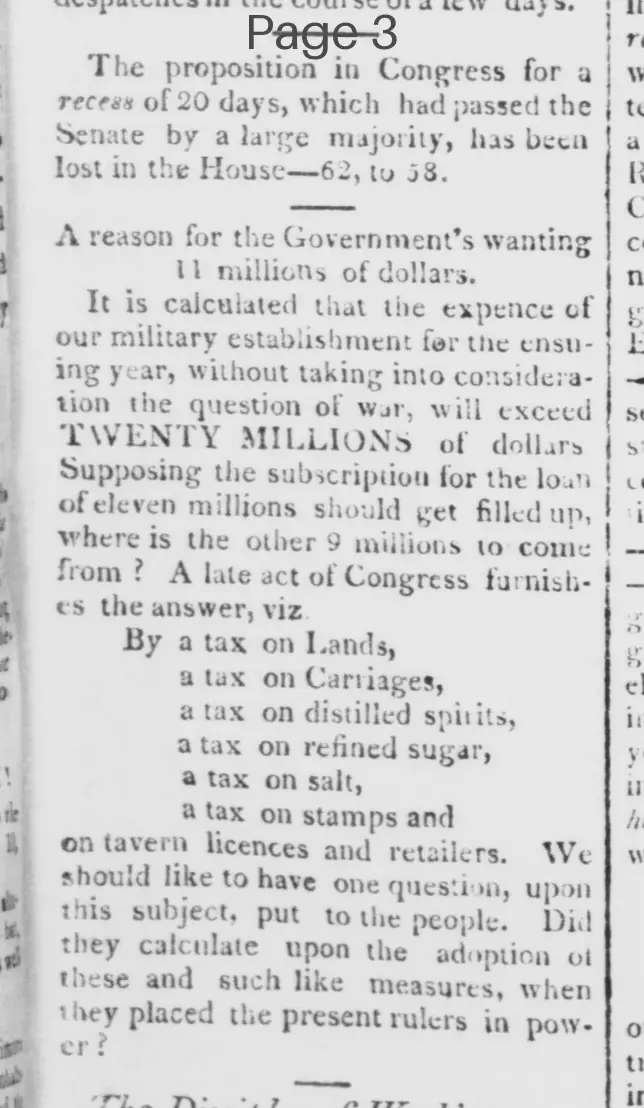
A reason for the Government's wanting 11 millions of dollars.
It is calculated that the expence of our military establishment for the ensuing year, without taking into consideration the question of war, will exceed TWENTY MILLIONS of dollars
Supposing the subscription for the loan of eleven millions should get filled up, where is the other 9 millions to come from? A late act of Congress furnishes the answer, viz
By a tax on Lands,
a tax on Carriages,
a tax on distilled spirits,
a tax on refined sugar,
a tax on salt,
a tax on stamps and
on tavern licences and retailers.
We should like to have one question, upon this subject, put to the people. Did they calculate upon the adoption of these and such like measures, when they placed the present rulers in power?
What sub-type of article is it?
What keywords are associated?
Domestic News Details
Outcome
recess proposition lost in house 62-58; military expenses exceed 20 million dollars; funding via 11 million loan and taxes on lands, carriages, distilled spirits, refined sugar, salt, stamps, tavern licenses, retailers.
Event Details
Proposition for 20-day congressional recess passed Senate by large majority but lost in House. Government requires 11 million dollars due to projected military expenses over 20 million for ensuing year. Loan of 11 million via subscription; remaining 9 million from recent congressional act imposing taxes on lands, carriages, distilled spirits, refined sugar, salt, stamps, tavern licenses, and retailers. Rhetorical question on public expectations of such measures under current rulers.