Thank you for visiting SNEWPapers!
Sign up free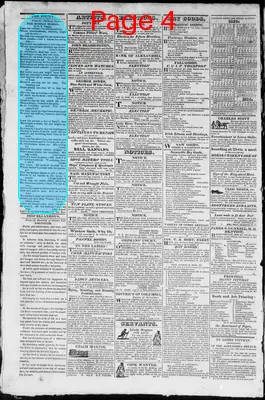
Poem
January 3, 1823
The Alexandria Herald
Alexandria, Virginia
What is this article about?
The poem narrates an abandoned boy's initial wretchedness and dejection, contrasted with his later cheerful transformation after finding solace in Sunday school, where he discovers spiritual fatherly care and peace.
Clipping
OCR Quality
85%
Good
Full Text
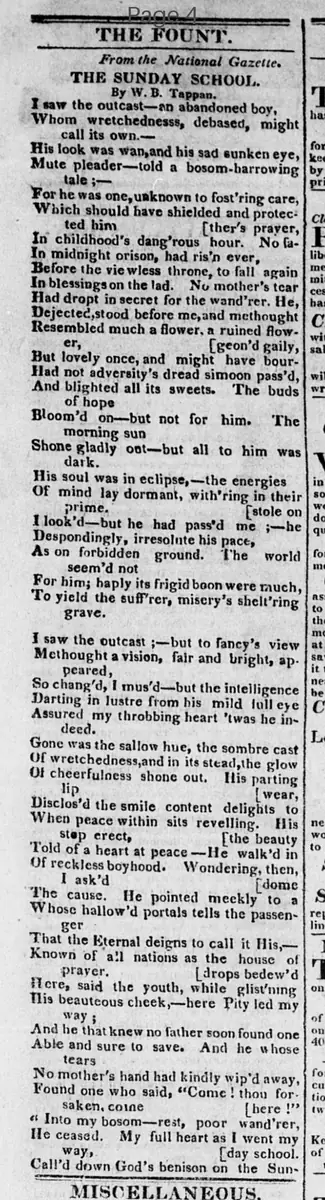
THE FOUNT.
From the National Gazette.
THE SUNDAY SCHOOL.
By W. B. Tappan.
I saw the outcast—an abandoned boy,
Whom wretchedness, debased, might call its own.
His look was wan, and his sad sunken eye,
Mute pleader—told a bosom-borrowing tale;
For he was one, unknown to fostering care,
Which should have shielded and protected him
In childhood's dangerous hour. No Sabbath
Father's prayer,
In midnight orison, had risen ever,
Before the viewless throne, to fall again
In blessings on the lad. No mother's tear
Had dropt in secret for the wanderer. He,
Dejected, stood before me, and methought
Resembled much a flower, a ruined flower,
Grown gaily,
But lovely once, and might have borne
Had not adversity's dread simoon passed,
And blighted all its sweets. The buds of hope
Bloom'd on—but not for him. The
Morning sun
Shone gladly out—but all to him was dark.
His soul was in eclipse,—the energies
Of mind lay dormant, withering in their prime.
I looked—but he had passed me;—he stole on
Despondingly, irresolute his pace,
As on forbidden ground. The world
Seemed not
For him; haply its frigid boon were much,
To yield the sufferer, misery's sheltering grave.
I saw the outcast:—but to fancy's view
Methought a vision, fair and bright, appeared,
So changed, I mused—but the intelligence
Darting in lustre from his mild full eye
Assured my throbbing heart 'twas he indeed.
Gone was the sallow hue, the sombre cast
Of wretchedness, and in its stead, the glow
Of cheerfulness shone out. His parting lip
Disclosed the smile content delights to wear,
When peace within sits revelling. His step erect,
Told of a heart at peace—He walked in
The beauty
Of reckless boyhood.
Wondering, then,
I asked the cause. He pointed meekly to a
Whose hallowed portals tells the passenger
That the Eternal deigns to call it His,—
Known of all nations as the house of prayer.
Here, said the youth, while glistening
Drops bedew'd
His beauteous cheek,—here Pity led my way;
And he that knew no father soon found one
Able and sure to save. And he whose tears
No mother's hand had kindly wiped away,
Found one who said, "Come! thou forsaken, come
here!"
"Into my bosom—rest, poor wanderer,"
He ceased.
My full heart as I went my way,
Called down God's benison on the Sunday School.
From the National Gazette.
THE SUNDAY SCHOOL.
By W. B. Tappan.
I saw the outcast—an abandoned boy,
Whom wretchedness, debased, might call its own.
His look was wan, and his sad sunken eye,
Mute pleader—told a bosom-borrowing tale;
For he was one, unknown to fostering care,
Which should have shielded and protected him
In childhood's dangerous hour. No Sabbath
Father's prayer,
In midnight orison, had risen ever,
Before the viewless throne, to fall again
In blessings on the lad. No mother's tear
Had dropt in secret for the wanderer. He,
Dejected, stood before me, and methought
Resembled much a flower, a ruined flower,
Grown gaily,
But lovely once, and might have borne
Had not adversity's dread simoon passed,
And blighted all its sweets. The buds of hope
Bloom'd on—but not for him. The
Morning sun
Shone gladly out—but all to him was dark.
His soul was in eclipse,—the energies
Of mind lay dormant, withering in their prime.
I looked—but he had passed me;—he stole on
Despondingly, irresolute his pace,
As on forbidden ground. The world
Seemed not
For him; haply its frigid boon were much,
To yield the sufferer, misery's sheltering grave.
I saw the outcast:—but to fancy's view
Methought a vision, fair and bright, appeared,
So changed, I mused—but the intelligence
Darting in lustre from his mild full eye
Assured my throbbing heart 'twas he indeed.
Gone was the sallow hue, the sombre cast
Of wretchedness, and in its stead, the glow
Of cheerfulness shone out. His parting lip
Disclosed the smile content delights to wear,
When peace within sits revelling. His step erect,
Told of a heart at peace—He walked in
The beauty
Of reckless boyhood.
Wondering, then,
I asked the cause. He pointed meekly to a
Whose hallowed portals tells the passenger
That the Eternal deigns to call it His,—
Known of all nations as the house of prayer.
Here, said the youth, while glistening
Drops bedew'd
His beauteous cheek,—here Pity led my way;
And he that knew no father soon found one
Able and sure to save. And he whose tears
No mother's hand had kindly wiped away,
Found one who said, "Come! thou forsaken, come
here!"
"Into my bosom—rest, poor wanderer,"
He ceased.
My full heart as I went my way,
Called down God's benison on the Sunday School.
What sub-type of article is it?
Ballad
What themes does it cover?
Religious Faith
Moral Virtue
What keywords are associated?
Sunday School
Abandoned Boy
Outcast Redemption
Religious Solace
Moral Transformation
What entities or persons were involved?
By W. B. Tappan.
Poem Details
Title
The Sunday School
Author
By W. B. Tappan.
Subject
Redemption Of An Outcast Boy Through Sunday School
Key Lines
I Saw The Outcast—An Abandoned Boy, Whom Wretchedness, Debased, Might Call Its Own.
Here, Said The Youth, While Glistening Drops Bedew'd His Beauteous Cheek,—Here Pity Led My Way;
Found One Who Said, "Come! Thou Forsaken, Come Here! "Into My Bosom—Rest, Poor Wanderer,"
Called Down God's Benison On The Sunday School.