Thank you for visiting SNEWPapers!
Sign up free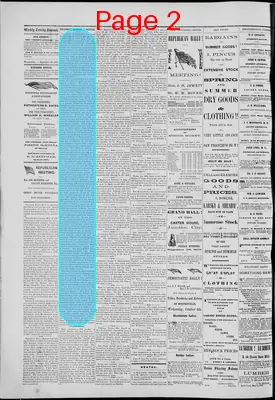
Editorial
September 23, 1876
Weekly Trinity Journal
Weaverville, Trinity County, California
What is this article about?
The editorial discusses the presence of former Confederate officials in Congress, viewing it as a result of the Union's merciful post-war policy. It criticizes Southern Democrats for perpetuating sectional divisions and exploiting power for political gain, rather than pursuing national reform, while praising Northern willingness to reconcile.
Clipping

OCR Quality
98%
Excellent
Full Text
EX-CONFEDERATES IN OFFICE,
Several of our Republican exchanges have published a list of the present Democratic members of Congress from the South, and the position each held under the Confederate government. It appears from the published list, the accuracy of which is not denied or disputed, that the ruling elements of the South was entirely in sympathy with the late rebellion, and that service to the Confederacy is recognized as a claim to honorable position under the government of the United States. The military element of the rebellion seems to have particularly commended itself to the "reconstructed," so much so, indeed, that the House of Representatives in which the Democracy preponderate, is frequently and doubtless very properly alluded to as the "Confederate Brigadiers."
Viewed in the abstract this is a condition of politics of which no one has cause to complain. The policy of the Union party when the war had closed was a liberal and humane one, and in following it the party had the full sympathy of the victorious North. There were some of course, who would like to have had mercy more tempered with justice, and if Jeff. Davis had been hung "to a sour apple tree" instead of spared to loom up as a possible Democratic Presidential candidate in 1880, would have felt better satisfied. But the nation was not ruled by extremists and the errors of policy, if any were committed, were upon the side of mercy.
Those who had taken part in the rebellion, with very few exceptions were soon restored to the privileges of citizenship which had been forfeited by their own act. And a way is provided by which every man who desires to again resume these forfeited rights can do so. That this merciful policy was carried out to its fullest extent is manifest by the fact that the floor of both Senate and House of Representatives is filled by those who were high in the ranks of the late Confederacy, its Vice-President, Stephens, being one of the number.
This, perhaps, was but a logical result of the policy. For if there be freedom of the elective franchise at all, it will be used to the support of the men and principles most acceptable to the majority of the voters. And the removal of the rights of citizenship carried with it to all recipients the incidental right of holding office. We do not question the right of the Southern people to elect the brigadiers if they so see proper, nor the undoubted right of the brigadiers to accept. We vote for the men we choose, sustain the principles we believe best, and are willing to accord to others exactly the same privileges we claim for ourselves.
It is but natural that, where the white population of a section were almost unanimous in their desire for the triumph of a certain end, that looking upon those who prevented them in the light of oppressors, their sympathies should be with those who had stood side by side with them. But what is natural is not always right. The North is less natural and nearer right in this than is the South. For while the North is apparently willing to forget the past, the same cannot be said of our Southern brethren. In the North, the old issues of the war would be ignored were it not that its memories were so studiously sought to be perpetuated by the other side. It was hoped that the Centennial year of our nationality would be marked by a better feeling. The elections held last year should have shown that government mismanagement and suspected corruption will be rebuked in the North as soon as anywhere; that the Republican party, however glorious its memories, cannot rely upon its past alone. And this liberal feeling been met in a reciprocal spirit, party lines would have been in a great measure obliterated, and questions of a general rather than of a sectional nature engaged public attention. But the brigadiers were not actuated by any of this spirit. They acted as if they thought: the Republican reverses which had placed their party in the majority in one House, was a Confederate triumph, and instead of devising means for the better government of the nation, turned their attention to the more congenial task of making political capital for the coming election.
This abuse of power, though limited that power be, is not without its effect upon the minds of thoughtful men. For though they were willing to bury unpleasant memories and invite their late foes to resume their old relations, they are hardly prepared for a triumph of sectional ideas; nor can they be hoodwinked into the support of such by the specious cry of "Tilden and Reform." They know well that neither Tilden nor the Reform with which the Democratic platform bristles, are the moving powers which bring the ex-Confederates to the support of the Democratic party. Tilden is acceptable only because he is as near their ideal as can be got, but who for a moment believes that if a Democratic triumph were certain under any circumstances, that they would be satisfied with any leader but one of their own number? And as for reform, the country has had something of a foretaste of what Democratic reform will be if the Confederate element rules the roost.
Several of our Republican exchanges have published a list of the present Democratic members of Congress from the South, and the position each held under the Confederate government. It appears from the published list, the accuracy of which is not denied or disputed, that the ruling elements of the South was entirely in sympathy with the late rebellion, and that service to the Confederacy is recognized as a claim to honorable position under the government of the United States. The military element of the rebellion seems to have particularly commended itself to the "reconstructed," so much so, indeed, that the House of Representatives in which the Democracy preponderate, is frequently and doubtless very properly alluded to as the "Confederate Brigadiers."
Viewed in the abstract this is a condition of politics of which no one has cause to complain. The policy of the Union party when the war had closed was a liberal and humane one, and in following it the party had the full sympathy of the victorious North. There were some of course, who would like to have had mercy more tempered with justice, and if Jeff. Davis had been hung "to a sour apple tree" instead of spared to loom up as a possible Democratic Presidential candidate in 1880, would have felt better satisfied. But the nation was not ruled by extremists and the errors of policy, if any were committed, were upon the side of mercy.
Those who had taken part in the rebellion, with very few exceptions were soon restored to the privileges of citizenship which had been forfeited by their own act. And a way is provided by which every man who desires to again resume these forfeited rights can do so. That this merciful policy was carried out to its fullest extent is manifest by the fact that the floor of both Senate and House of Representatives is filled by those who were high in the ranks of the late Confederacy, its Vice-President, Stephens, being one of the number.
This, perhaps, was but a logical result of the policy. For if there be freedom of the elective franchise at all, it will be used to the support of the men and principles most acceptable to the majority of the voters. And the removal of the rights of citizenship carried with it to all recipients the incidental right of holding office. We do not question the right of the Southern people to elect the brigadiers if they so see proper, nor the undoubted right of the brigadiers to accept. We vote for the men we choose, sustain the principles we believe best, and are willing to accord to others exactly the same privileges we claim for ourselves.
It is but natural that, where the white population of a section were almost unanimous in their desire for the triumph of a certain end, that looking upon those who prevented them in the light of oppressors, their sympathies should be with those who had stood side by side with them. But what is natural is not always right. The North is less natural and nearer right in this than is the South. For while the North is apparently willing to forget the past, the same cannot be said of our Southern brethren. In the North, the old issues of the war would be ignored were it not that its memories were so studiously sought to be perpetuated by the other side. It was hoped that the Centennial year of our nationality would be marked by a better feeling. The elections held last year should have shown that government mismanagement and suspected corruption will be rebuked in the North as soon as anywhere; that the Republican party, however glorious its memories, cannot rely upon its past alone. And this liberal feeling been met in a reciprocal spirit, party lines would have been in a great measure obliterated, and questions of a general rather than of a sectional nature engaged public attention. But the brigadiers were not actuated by any of this spirit. They acted as if they thought: the Republican reverses which had placed their party in the majority in one House, was a Confederate triumph, and instead of devising means for the better government of the nation, turned their attention to the more congenial task of making political capital for the coming election.
This abuse of power, though limited that power be, is not without its effect upon the minds of thoughtful men. For though they were willing to bury unpleasant memories and invite their late foes to resume their old relations, they are hardly prepared for a triumph of sectional ideas; nor can they be hoodwinked into the support of such by the specious cry of "Tilden and Reform." They know well that neither Tilden nor the Reform with which the Democratic platform bristles, are the moving powers which bring the ex-Confederates to the support of the Democratic party. Tilden is acceptable only because he is as near their ideal as can be got, but who for a moment believes that if a Democratic triumph were certain under any circumstances, that they would be satisfied with any leader but one of their own number? And as for reform, the country has had something of a foretaste of what Democratic reform will be if the Confederate element rules the roost.
What sub-type of article is it?
Partisan Politics
War Or Peace
What keywords are associated?
Ex Confederates
Congressional Office
Post War Reconciliation
Sectional Politics
Democratic Reform
Republican Policy
What entities or persons were involved?
Confederate Brigadiers
Jeff. Davis
Stephens
Tilden
Democratic Party
Republican Party
Editorial Details
Primary Topic
Ex Confederates In Congressional Office
Stance / Tone
Critical Of Southern Sectionalism, Supportive Of Northern Reconciliation
Key Figures
Confederate Brigadiers
Jeff. Davis
Stephens
Tilden
Democratic Party
Republican Party
Key Arguments
Service In The Confederacy Is Seen As A Qualification For U.S. Office In The South.
Union's Post War Policy Was Merciful, Restoring Citizenship To Rebels.
Southern Voters Naturally Support Former Confederates, But This Perpetuates Sectional Divisions.
Northerners Seek To Forget The War, But Southern Actions Revive Old Issues.
Democratic 'Reform' Is A Facade For Confederate Interests, Not Genuine National Improvement.