Thank you for visiting SNEWPapers!
Sign up free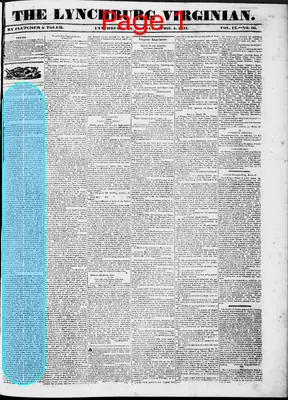
Story
April 4, 1831
Lynchburg Virginian
Lynchburg, Virginia
What is this article about?
Edward Antill communicates to the American Philosophical Society detailed methods for raising and managing hemp in northern colonies, highlighting soil preparation, optimal sowing in moist ground, and separate handling for seed production to maximize yield and quality.
Clipping

OCR Quality
95%
Excellent
Full Text
From the "Transactions of the American Philosophical Society."
OBSERVATIONS ON THE RAISING AND DRESSING OF HEMP, communicated to the American Philosophical Society, by EDWARD Antill,
Hemp, as it employs a great number of poor people in a very advantageous manner, if its culture and manufacture be carried on properly: It may also furnish a ready remittance to the mother country, and become a reciprocal advantage to both; and therefore it becomes worthy of the serious attention of the different legislatures of the northern colonies, of every trading man, and of every man, who truly loves his country,
From their present mismanagement, to be acquainted with the best & most profitable method of cultivating and managing this valuable plant, I beg leave to inform them of some things that may be of advantage to them.
Whoever would raise hemp properly and to advantage, should set aside two pieces of ground, of such dimensions each, as he shall be able to cultivate every year, and sow the one for the succeeding year's crop; the higher whilst he is manuring and preparing the other, well dunged and made strong and mellow; the richer and drier the ground the better, provided it be not too sloping, lest the good soil be washed with hard rains; if it droop toward the south, so that it may have the full advantage of the sun, it will be an advantage; fresh, warm, dry grounds will also produce good hemp; but wet land, though never so rich, will by no means do. The ground being prepared and made very mellow, I now come to that part which must be particularly and exactly attended to, since the success of the crop greatly depends upon it. Some time in April, the ground being moist and in a vegetating order, the furrows close and even, the soil not by any means wet, it must be well sowed with two bushels of seed upon one acre; sown even with an iron tooth harrow following the sower, and harrows in the seed with two horses without any balks, for the less the ground is trampled the better; if harrowing one way is not sufficient to cover the seed, though it would be best if that could be done, it must be cross harrowed. The ground being moist, as said before, but by no means wet, so as to make it sticky which would ruin the crop, the seed will start and come up together, which is a sure sign of a good crop, and nothing after that but too much wet, will hurt it, for hemp thus came up, bids defiance to weeds and grass of every kind; its growth is so quick and it so effectually shades the ground, that nothing but can rise or show its head, and it so preserves all the moisture below, that the hotter and dryer the weather the faster it grows.
Whereas if the seed be sown when the ground is dry, the seed that lies deepest where the moisture is, will come up first, and these will shade and starve those that come after, by which means the first comers will be too large, and the last will be much too small, so that the crop will be greatly damaged every way, so much depends upon this one circumstance, of sowing the seed when the ground is moist and fit to receive it. The crop thus rightly managed will stand as thick as very good wheat, and be from four to six feet high, according to the strength of the ground, and the stems will not be thicker than a good wheat straw. By this means the hemp will be the finer, it will yield the greater quantity, & it may be pulled from the ground like flax, which will be a very great saving: but if it be sowed thin, that is, one bushel to an acre, which is the common practice it grows large, the hemp is harsh and coarse, and then it must be cut with hooks, which occasions great waste, for four or five inches rust above the ground is left, by way of stubble, which contains the best and heaviest part of the hemp.
Whatever hemp is intended for seed, should be sowed on a piece of ground by itself, which must be made very rich and strong; it must be sowed in ridges six feet wide, and the seed must be of the largest and best sort and sowed very thin, at the rate of a peck upon an acre, or rather six quarts, the thinner it is sowed, the more it branches, and the more seed it bears. It should be sown some time in the middle of April, and then the seed will not be ripe, till some time after the other hemp is done with.
If you have no convenient place to sow your seed hemp by itself, then sow a border of six feet wide along the north and west sides of your hemp field; the reason of sowing your seed hemp in such narrow ridges or borders is, that, when the carle, or he-hemp is ripe, and has shed its farina on the fimble or female hemp by which the seed is impregnated, and the leaves of the carle hemp fall off and the stem grows yellow, you may easily step in along the sides and pull up the carle hemp without hurting the female, which now begins to branch out, and looks of a deep green color and very flourishing, and when the seeds begin to ripen, which is known by their falling out of their sockets, you may along both sides bend down the plants and shake out the seed upon a cloth laid on the ground, for as they ripen they scatter upon being shaken by a hard wind, or otherwise; then it must be watched, and the fowls and yellow birds kept from it, for they are immediately fond of the seed; as the first ripe seeds are the fullest and best, they are worthy of some pains to save them: and the best way to do that is, to bend down the plant as far along, on each side of the border or ridge as is said above, and shake them over a cloth spread on the ground to receive the seed; if one side of the plant be rooted out of the ground by forcing it down to shake out the seed, there will be no damage, for the seed that remains will ripen notwithstanding; and the plant must thus be shaken every two or three days, till all the seed be ripe and thus saved; and this is much better than pulling up the plants by the roots, and shaking them on the barn floor and then setting them fence or the side of the barn for the seed to ripen and shaking them morning and evening on the floor for by this method which is the common practice, one third of the seed at least never comes to maturity.
OBSERVATIONS ON THE RAISING AND DRESSING OF HEMP, communicated to the American Philosophical Society, by EDWARD Antill,
Hemp, as it employs a great number of poor people in a very advantageous manner, if its culture and manufacture be carried on properly: It may also furnish a ready remittance to the mother country, and become a reciprocal advantage to both; and therefore it becomes worthy of the serious attention of the different legislatures of the northern colonies, of every trading man, and of every man, who truly loves his country,
From their present mismanagement, to be acquainted with the best & most profitable method of cultivating and managing this valuable plant, I beg leave to inform them of some things that may be of advantage to them.
Whoever would raise hemp properly and to advantage, should set aside two pieces of ground, of such dimensions each, as he shall be able to cultivate every year, and sow the one for the succeeding year's crop; the higher whilst he is manuring and preparing the other, well dunged and made strong and mellow; the richer and drier the ground the better, provided it be not too sloping, lest the good soil be washed with hard rains; if it droop toward the south, so that it may have the full advantage of the sun, it will be an advantage; fresh, warm, dry grounds will also produce good hemp; but wet land, though never so rich, will by no means do. The ground being prepared and made very mellow, I now come to that part which must be particularly and exactly attended to, since the success of the crop greatly depends upon it. Some time in April, the ground being moist and in a vegetating order, the furrows close and even, the soil not by any means wet, it must be well sowed with two bushels of seed upon one acre; sown even with an iron tooth harrow following the sower, and harrows in the seed with two horses without any balks, for the less the ground is trampled the better; if harrowing one way is not sufficient to cover the seed, though it would be best if that could be done, it must be cross harrowed. The ground being moist, as said before, but by no means wet, so as to make it sticky which would ruin the crop, the seed will start and come up together, which is a sure sign of a good crop, and nothing after that but too much wet, will hurt it, for hemp thus came up, bids defiance to weeds and grass of every kind; its growth is so quick and it so effectually shades the ground, that nothing but can rise or show its head, and it so preserves all the moisture below, that the hotter and dryer the weather the faster it grows.
Whereas if the seed be sown when the ground is dry, the seed that lies deepest where the moisture is, will come up first, and these will shade and starve those that come after, by which means the first comers will be too large, and the last will be much too small, so that the crop will be greatly damaged every way, so much depends upon this one circumstance, of sowing the seed when the ground is moist and fit to receive it. The crop thus rightly managed will stand as thick as very good wheat, and be from four to six feet high, according to the strength of the ground, and the stems will not be thicker than a good wheat straw. By this means the hemp will be the finer, it will yield the greater quantity, & it may be pulled from the ground like flax, which will be a very great saving: but if it be sowed thin, that is, one bushel to an acre, which is the common practice it grows large, the hemp is harsh and coarse, and then it must be cut with hooks, which occasions great waste, for four or five inches rust above the ground is left, by way of stubble, which contains the best and heaviest part of the hemp.
Whatever hemp is intended for seed, should be sowed on a piece of ground by itself, which must be made very rich and strong; it must be sowed in ridges six feet wide, and the seed must be of the largest and best sort and sowed very thin, at the rate of a peck upon an acre, or rather six quarts, the thinner it is sowed, the more it branches, and the more seed it bears. It should be sown some time in the middle of April, and then the seed will not be ripe, till some time after the other hemp is done with.
If you have no convenient place to sow your seed hemp by itself, then sow a border of six feet wide along the north and west sides of your hemp field; the reason of sowing your seed hemp in such narrow ridges or borders is, that, when the carle, or he-hemp is ripe, and has shed its farina on the fimble or female hemp by which the seed is impregnated, and the leaves of the carle hemp fall off and the stem grows yellow, you may easily step in along the sides and pull up the carle hemp without hurting the female, which now begins to branch out, and looks of a deep green color and very flourishing, and when the seeds begin to ripen, which is known by their falling out of their sockets, you may along both sides bend down the plants and shake out the seed upon a cloth laid on the ground, for as they ripen they scatter upon being shaken by a hard wind, or otherwise; then it must be watched, and the fowls and yellow birds kept from it, for they are immediately fond of the seed; as the first ripe seeds are the fullest and best, they are worthy of some pains to save them: and the best way to do that is, to bend down the plant as far along, on each side of the border or ridge as is said above, and shake them over a cloth spread on the ground to receive the seed; if one side of the plant be rooted out of the ground by forcing it down to shake out the seed, there will be no damage, for the seed that remains will ripen notwithstanding; and the plant must thus be shaken every two or three days, till all the seed be ripe and thus saved; and this is much better than pulling up the plants by the roots, and shaking them on the barn floor and then setting them fence or the side of the barn for the seed to ripen and shaking them morning and evening on the floor for by this method which is the common practice, one third of the seed at least never comes to maturity.
What sub-type of article is it?
Agricultural Guide
Instructional Essay
What keywords are associated?
Hemp Raising
Seed Sowing
Soil Preparation
Northern Colonies
American Philosophical Society
Crop Management
What entities or persons were involved?
Edward Antill
Where did it happen?
Northern Colonies
Story Details
Key Persons
Edward Antill
Location
Northern Colonies
Story Details
Detailed instructions on preparing soil, sowing hemp seed in moist ground in April at two bushels per acre for fiber, and separately for seed production in thin-sown ridges or borders, including methods to harvest seed without damaging yield.